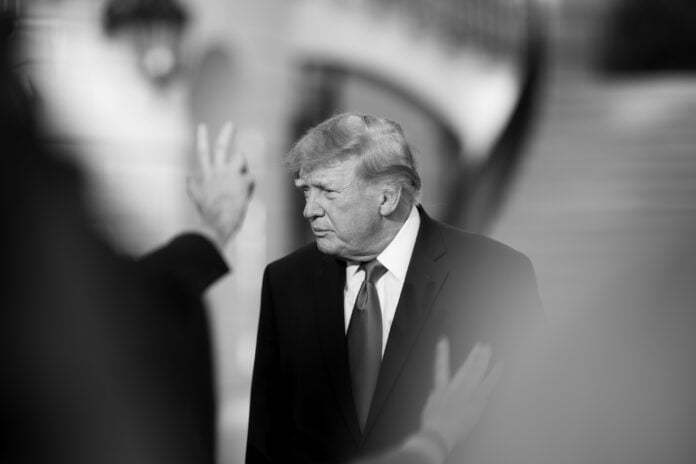
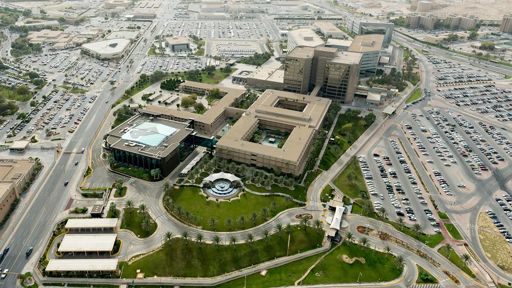
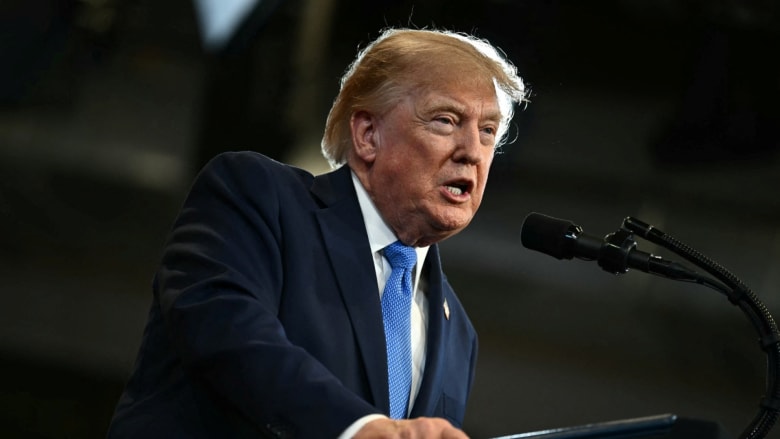
NASSAU COUNTY, N.Y. — The claim landed at a law enforcement dinner in Long Island on Friday night: Donald Trump told a crowd of police officials at the David S. Mack Center for Training and Intelligence that after he finished defeating Iran, the United States would own one of the world’s most contested waterways.
“After we finish defeating Iran, which is being very badly defeated, pretty soon I’ll be declaring the Hormuz Strait a territory of the United States,” he said to cheers from the room. Hours later, a senior White House official told reporters that Trump had been joking and had not discussed any such move with his advisers.
The gap between those two statements, a presidential declaration at a campaign-style dinner and its immediate retraction, is not incidental. It drops into a conflict that has already sent oil markets swinging, trapped dozens of commercial vessels in legal limbo, and produced a ceasefire agreement now set to expire in two days. Whether Tehran, which has enforced control over the strait since the 1979 revolution, takes the declaration seriously as policy intent or dismisses it as election-season noise may shape the terms of any deal that replaces the expiring framework.
Iran’s Deputy Foreign Minister Kazem Gharibabadi did not wait for clarification. Within hours of Trump’s remarks, he posted on X with a precision aimed at the exact medium Trump had chosen: “The Strait of Hormuz cannot be seized by tweet, nor by aircraft carrier, nor by issuing an order, nor by an election speech.” He continued: “The Strait of Hormuz has been Iranian, is Iranian, and will remain Iranian.” And then: “As long as you do not accept the reality of defeat and cease your fanciful delusions, Iran will continue to enforce the blockade.”
Garrison-level defiance, delivered at the speed of a social media post. Gharibabadi made sure to note that this was exactly the level at which Trump had chosen to make his territorial claim.
Military hostilities between Washington and Tehran began on February 28. A ceasefire memorandum signed on June 28 deteriorated by month’s end amid mutual accusations of violation. Iran has since restricted commercial passage through the strait, which handles roughly 20 percent of global oil supply, while the United States maintains a naval blockade of Iranian ports. Commercial traffic through the waterway has fallen approximately 90 percent from pre-conflict levels, and 62 commercial vessels have been redirected by the US blockade as of Friday. The International Energy Agency has forecast a global oil deficit of 1.8 million barrels per day in the current quarter, driven directly by the Hormuz shutdown.
The blockade’s strain is already visible in price. Brent crude stood near $88 a barrel Friday as Treasury Secretary Scott Bessent warned Tehran this week of economic measures “never seen in the history of economic isolation”, a threat aimed at forcing an opening of the strait through financial coercion rather than further military escalation. Between the Bessent announcement and Trump’s Long Island declaration, the administration’s posture on Friday was one of maximum rhetorical pressure applied simultaneously on two tracks.
Trump offered more than one formulation of his claim. Separately, he told Fox News: “We totally control, we own, in the true sense, we own the Strait of Hormuz.” That phrasing, ownership “in the true sense,” amplified the territorial declaration at the dinner. Neither version acknowledged that Iran has asserted sovereignty over the strait for nearly five decades, that the waterway is an internationally recognized shipping lane, or that no mechanism exists for a unilateral American territorial annexation of waters off the Iranian coast. Those details were also absent from the White House’s follow-up, which confined itself to noting the remark had been a joke.
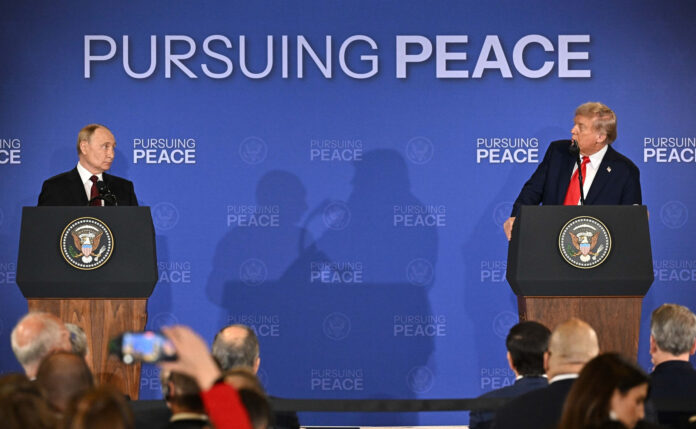
The existing ceasefire framework expires August 17, this Sunday. Pakistan has urged both sides to implement the memorandum of understanding before it lapses, while Iran has consistently rejected American framing of the timeline as Washington’s to determine. No new framework has been announced. The combination of Bessent’s economic escalation threat, Trump’s territorial claim, and the expiring ceasefire gives Tehran three reasons to hold firm and few reasons to soften, at least on any public timeline.
The domestic mood behind the bluster is also more complicated than Trump’s Long Island audience might suggest. A Quinnipiac University poll in late July found 60 percent of American voters oppose military action against Iran, a figure that has held steady even as the blockade tightens and fuel prices rise. Trump’s remarks were delivered to law enforcement professionals, an audience unlikely to read elevated oil prices as an argument against the war’s continuation. The choice of venue was as deliberate as the claim was casual.
What neither Washington nor Tehran has said publicly is what happens when August 17 arrives without an agreement. Trump’s administration framed Friday as a show of confidence: he owns the strait, Bessent will announce historic sanctions, Hegseth says the blockade can hold indefinitely. Iran’s framing was equally confident: the strait is Iranian, the US has suffered defeats it refuses to acknowledge, and the blockade will continue until Washington accepts reality.
Gharibabadi’s last line carried the terms of the standoff as Tehran sees it: not a territorial dispute to be resolved but a sovereignty test the Islamic Republic is not prepared to yield regardless of the deadline, the oil price, or the tone at a Nassau County dinner. Whether a president who joked about seizing the world’s most consequential oil chokepoint intends that joke to become policy through the back door of inaction on Sunday is the question no White House official answered Friday night.