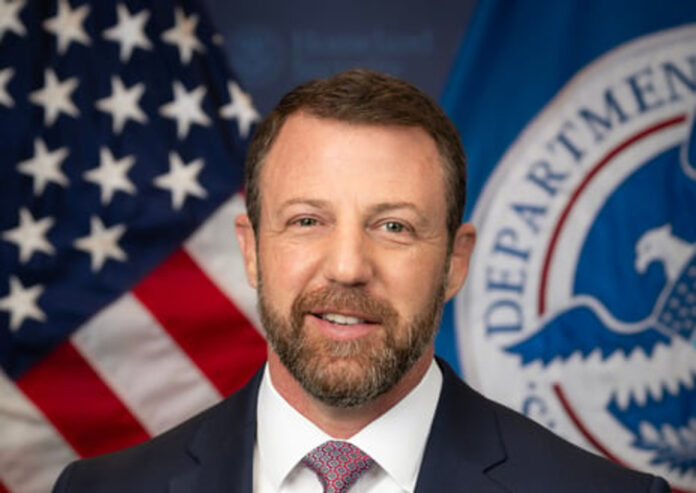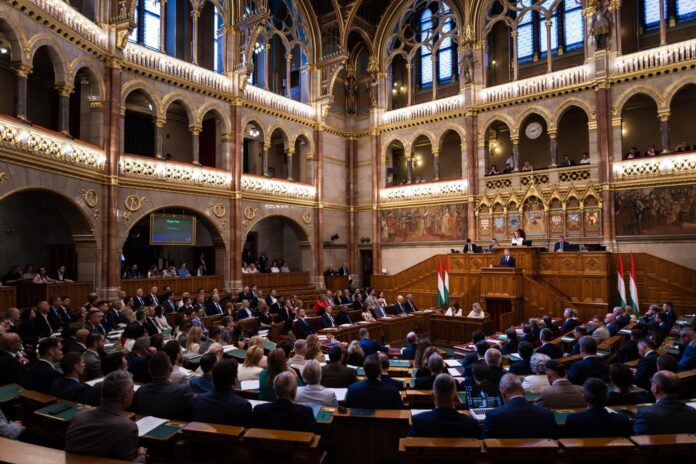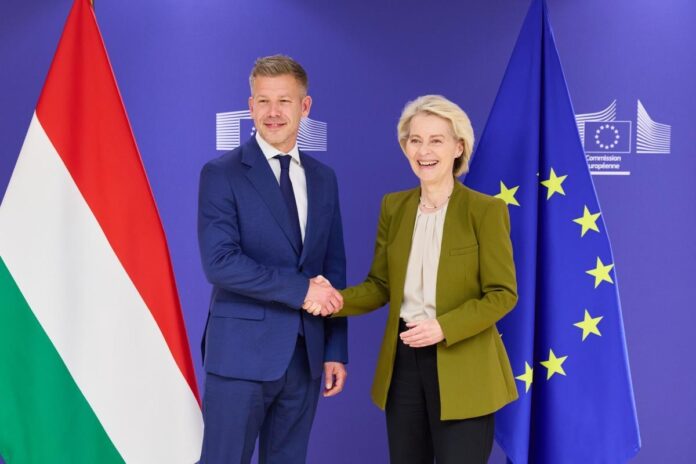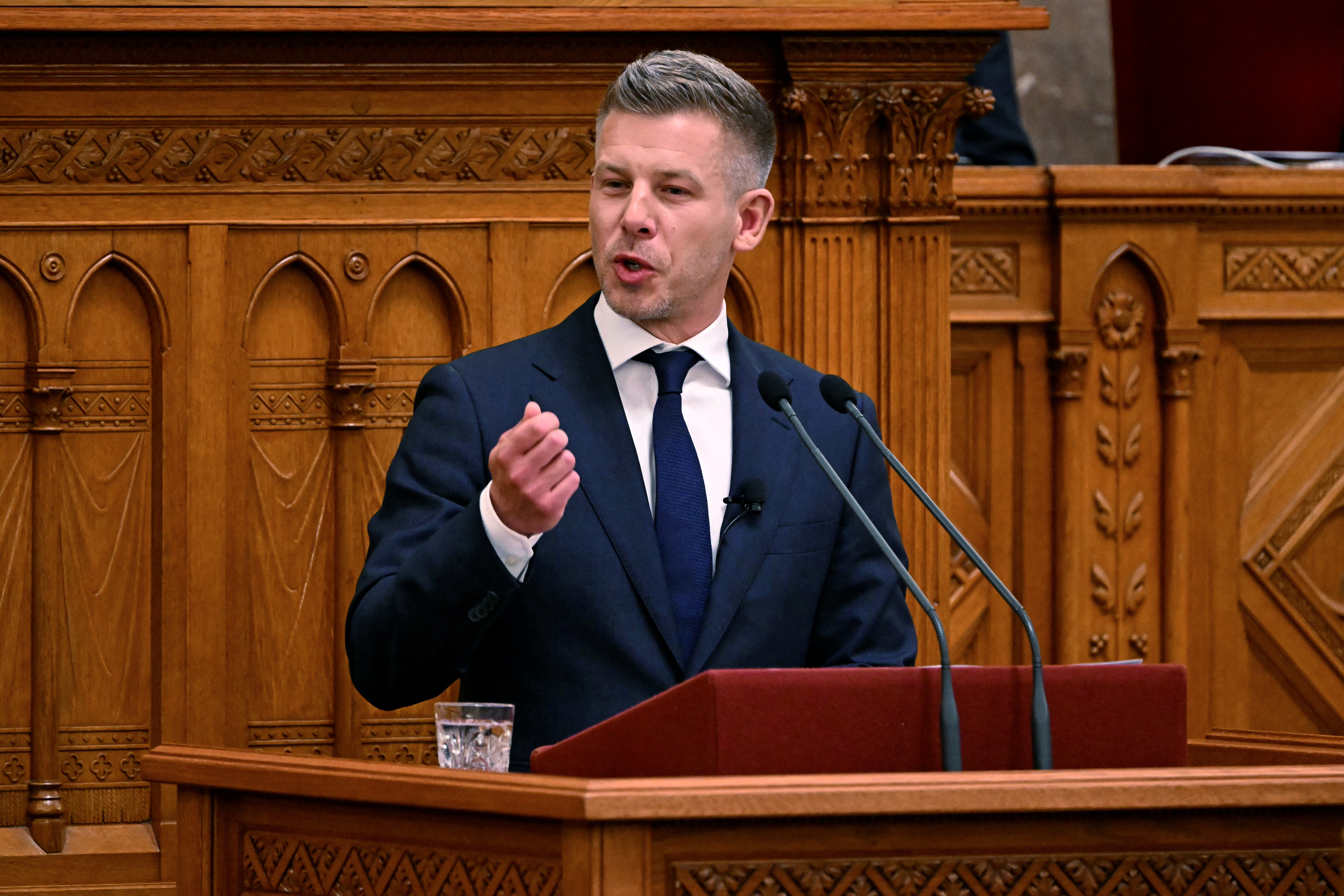

BUDAPEST — The fine from Luxembourg was supposed to change things. It hasn’t. Hungary’s new Prime Minister Peter Magyar said Wednesday that his government will refuse to accept illegal migrants regardless of the financial penalties Brussels imposes — a declaration that lands just as the European Union’s landmark migration and asylum pact enters into force on June 12.
Speaking to the Frankfurter Allgemeine Zeitung, Magyar was direct: his government will defend Hungary’s borders and the external frontiers of Europe without exception. “We will not pay fines for this either,” he said, addressing the EU Court of Justice ruling from June 2024 that imposed a 200-million-euro penalty on Budapest — plus one million euros per day — for defying earlier court decisions on migrant reception standards.
That daily meter has been running for nearly a year. Magyar’s answer, in effect, is that it can keep running.
The statement marks a striking continuity with the man Magyar defeated. When Péter Magyar toppled Viktor Orbán’s Fidesz party in the April 2026 elections after sixteen years in power, European leaders broadly anticipated a pivot — closer alignment with EU norms, fewer confrontations over rule of law and migration. On migration, at least, the pivot has not materialized. Magyar, whose Tisza Party campaigned on anti-corruption reforms and re-engagement with Brussels, has held to a position indistinguishable from his predecessor’s on the question of who crosses Hungary’s borders.
“The 2015 migration crisis should serve as a lesson for Europe,” Magyar told the German newspaper, adding that many EU member states had since recognized they made wrong decisions at the time. The remark sits awkwardly alongside his government’s stated ambitions to rebuild trust with Brussels and unlock the roughly seventeen billion euros in frozen EU cohesion funds that accumulated under Orbán.
That tension — warmer relations with the Commission on one hand, continued defiance on migration on the other — is the governing paradox Magyar has yet to resolve. The European Commission’s own assessment, released in May, found Hungary already lagging on core implementation requirements for the new pact: the upgraded Eurodac fingerprint database is not ready, legal counseling mechanisms for asylum seekers have not been established, and Budapest has not submitted contingency planning documents the Commission required. Hungary has also not requested its share of the three-billion-euro implementation fund.
According to Euronews, Magyar told reporters in April that his government would not accept “any pact or allocation mechanism” on asylum and migration — language almost identical to positions Orbán held for a decade against Brussels. The new EU asylum rules, which enter force June 12, require member states to either accept relocated asylum seekers, provide technical assistance, or make financial contributions under a solidarity mechanism. Hungary is not expected to comply with any of the three options voluntarily.
What has changed, slightly, is the framing. Where Orbán cast Hungary’s refusal as civilizational defiance — a Christian nation holding the line against an alien flood — Magyar positions it as a matter of border security and European solidarity in a different sense. “We will help protect the external borders of Europe, whether in Greece, Malta or Italy,” he said Wednesday. The offer to assist frontier states while refusing internal relocation has been Hungary’s standard formulation for years; Magyar has adopted it without alteration.
The question European officials are watching now is whether Magyar’s rhetoric hardens into full non-compliance as the pact’s implementation deadlines approach, or whether quiet negotiations produce some off-ramp — a financial contribution framed as voluntary, or bilateral border-cooperation agreements that allow both sides to claim partial victory. Budapest’s decision to neither request its share of the implementation fund nor begin Eurodac testing suggests the new government has not yet decided which path it will take. A Kyiv Post analysis of the Commission report noted that Hungary has also failed to notify the bloc of where border procedures would take place, compounding the compliance gap.
What Magyar said in Budapest on Wednesday, stripped of diplomatic qualifications, is that the daily fine will not move him. Whether Brussels believes that — and what it chooses to do about it — is now the open question hanging over Hungary’s first summer under new management. The next core compliance review is scheduled before the end of June. Magyar’s government will have had roughly three weeks in full office by then. The meter will have added approximately twenty-one million euros to Hungary’s tab. What it will not have added is a single relocated asylum seeker, if Magyar’s words mean what they appear to mean.
See also: Europe’s migration crisis and the collapse of the liberal consensus
—Inputs from RIA Novosti, Sputnik.