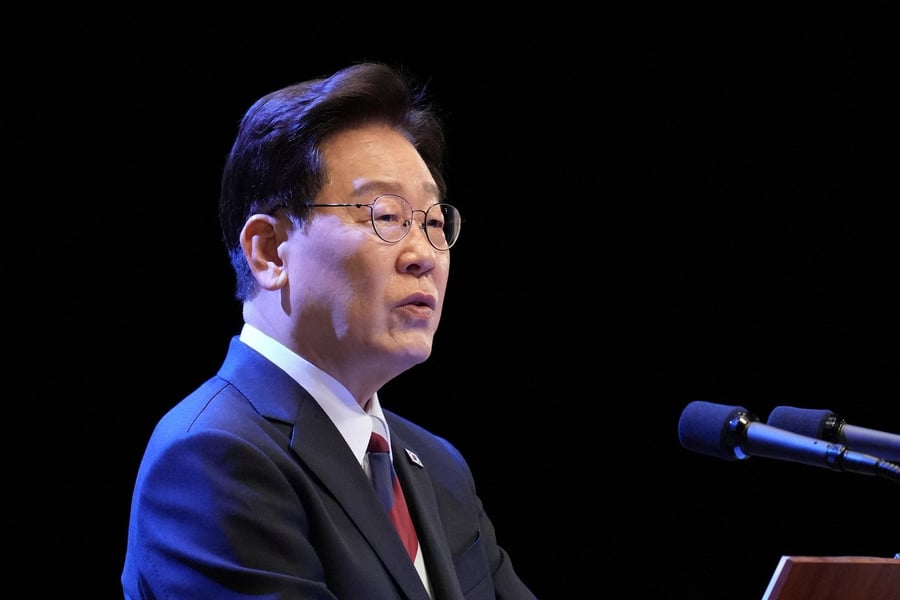

SEOUL — Lee Jae Myung used South Korea’s most emotionally charged public holiday on Saturday to make a peace offer Pyongyang was almost certain to receive with suspicion. Speaking on Liberation Day, the 81st anniversary of Japan’s surrender in World War II and the occasion when the Korean Peninsula was freed from colonial rule, the South Korean president proposed replacing the 1953 Korean War armistice with a formal peace treaty and opening direct talks aimed at dismantling North Korea’s nuclear arsenal.
The proposal lands two days before the start of Ulchi Freedom Shield, the annual joint military exercises between the United States and South Korea that Pyongyang calls provocative escalation and Washington calls routine readiness. Eighteen thousand South Korean troops and 28,500 American service members will begin manoeuvres on August 17. North Korea’s Foreign Ministry, which published a denunciation of the drills just 24 hours before Lee’s announcement, warned it would “respond to a new level of threat with a new level of deterrent,” TRT World reported.
The Korean War ended, though not formally, on July 27, 1953, when negotiators signed an armistice at Panmunjom. Seventy-three years later, the two Koreas remain technically at war. No peace treaty was ever concluded. Lee’s proposal seeks to close that gap, arguing that a formal peace regime would provide the foundation for denuclearisation talks that have stalled repeatedly since 2019.
“Dialogue can serve a dual purpose,” the Lee government argued in the announcement: achieving a peace settlement while simultaneously restraining North Korea’s nuclear weapons development. It is the kind of argument that sounds coherent in Seoul and sounds conditional in Pyongyang, where officials have spent the better part of a decade watching Washington’s definition of “denuclearisation” shrink from disarmament to negotiated caps to informal understandings and back again, depending on the administration in office.
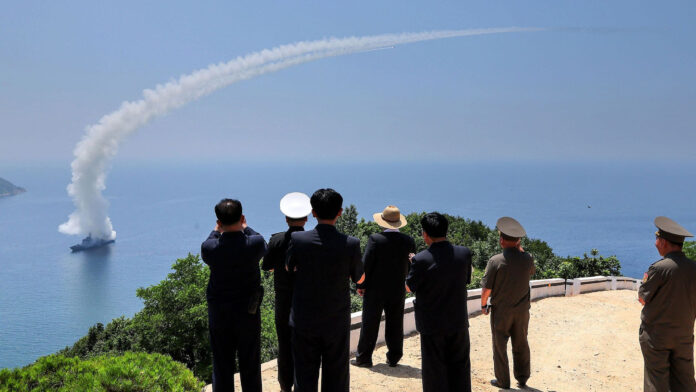
North Korea’s current military posture offers little reason to expect the proposal will be welcomed. On August 12, Pyongyang launched its 11th ballistic missile of 2026 from Wonsan, the timing chosen to mark displeasure at the Ulchi Freedom Shield drills scheduled to begin the following week. Seoul convened an emergency National Security Council session in response. Three days later, the same government extended a formal peace offer.
The contradiction is not lost on analysts tracking the peninsula: war exercises begin in 48 hours while a peace offer was extended today. North Korea does not separate the two things. In Pyongyang’s strategic framing, joint exercises are not defensive; they are rehearsals for regime change. Each iteration of Ulchi Freedom Shield, in its view, validates the argument for nuclear deterrence rather than undermining it.
Lee’s Liberation Day address did not set preconditions for talks. That element distinguishes his proposal from some previous South Korean positions, which paired offers of engagement with demands that North Korea publicly commit to denuclearisation as a first step. Pyongyang rejected those formulations consistently, arguing they amounted to asking it to disarm before any security guarantees were offered.
Whether Lee made any back-channel contact with Pyongyang before making this offer public is unknown. North Korea has not responded. In past inter-Korean diplomacy, the absence of a prior signal is often itself a signal: Pyongyang’s refusal to acknowledge an offer is a way of declining it without formally rejecting it, which would require acknowledging it in the first place.
The United States has not issued a public statement on Lee’s proposal as of Saturday afternoon. American policy toward the Korean Peninsula since early 2026 has been characterised by deliberate ambiguity, neither actively engaging Pyongyang nor formally closing the door, a posture that leaves South Korea’s own diplomatic initiatives without explicit backing.
Lee Jae Myung’s announcement follows a string of South Korean efforts this year to establish parallel tracks: engagement with the North on one hand, alliance maintenance with Washington on the other. His government’s request last month for an exemption from UK sanctions on Russian liquefied natural gas, covering Korean gas contracts through March 2028, illustrates how Seoul navigates competing pressures. The same government proposing peace with Pyongyang is simultaneously seeking relief from Western sanctions to maintain energy supply chains running through Russian-controlled infrastructure.
The Korean War remains the peninsula’s unresolved foundation. The armistice that stopped the fighting in 1953 was signed by the United States, China, and North Korea. South Korea, whose government under Syngman Rhee refused to sign it, was excluded entirely. A formal peace treaty would require a different set of signatories and a different level of political commitment than any single Liberation Day speech can deliver, as Al Jazeera noted.
What is certain is that Pyongyang noticed the timing. What remains entirely open is whether it found anything in the proposal worth responding to.