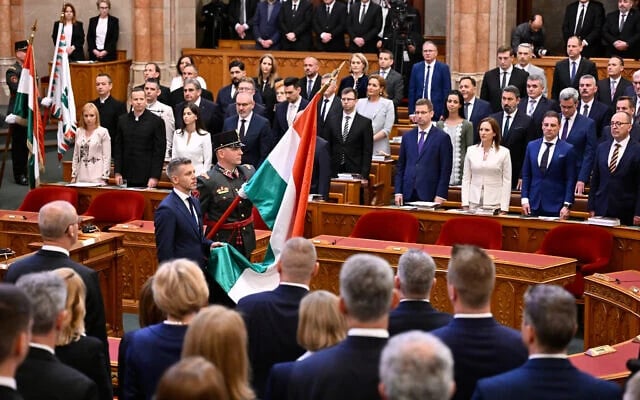

Hungary’s incoming foreign minister said Monday that the country’s new government would not send military personnel to Ukraine, underscoring the political limits facing Europe’s widening debate over direct involvement in the war even after the dramatic fall of Viktor Orbán’s long-ruling administration.
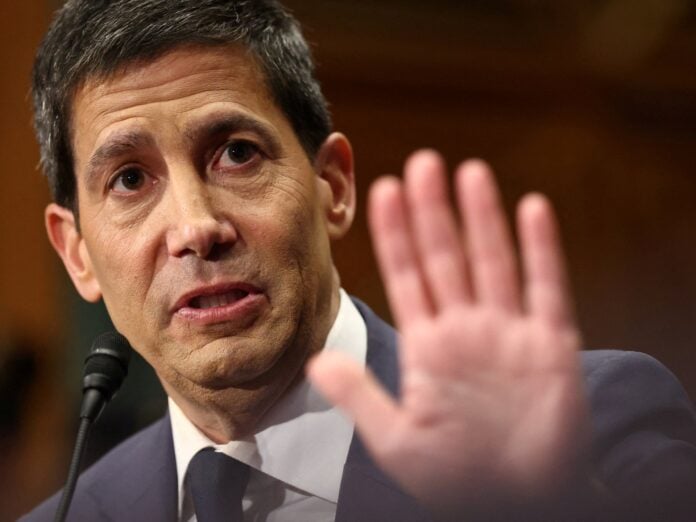
Appearing before parliament’s EU Affairs Committee during confirmation hearings for Prime Minister Péter Magyar’s new cabinet, foreign minister nominee Anita Orbán was asked whether Hungary would deploy troops to Ukraine. Her answer was brief and unequivocal.
“Of course not,” she replied.
The remark immediately drew attention across European diplomatic circles, where governments remain divided over how far support for Ukraine should extend as the war drags into another year. While several NATO members have expanded weapons deliveries, military training programs, and intelligence coordination, the question of troop deployment remains politically explosive across much of Europe.
Orbán’s comments suggest that despite the sweeping political transformation underway in Budapest, Hungary’s new leadership is unlikely to abandon the country’s long-standing opposition to direct military participation in the conflict.
The statement comes only days after Péter Magyar’s landslide electoral victory ended the 16-year rule of former premier Viktor Orbán, whose government frequently clashed with Brussels over sanctions on Russia, military aid to Ukraine, judicial independence, and media freedoms.
Yet while the new administration has pledged to restore trust with the European Union and improve relations with NATO allies, officials are also signaling that Budapest will maintain a cautious approach toward the war itself.
Speaking during the same parliamentary hearing, Anita Orbán said one of her principal goals would be rebuilding Hungary’s standing inside Europe after years of confrontation with EU institutions. She also suggested the government would seek stronger cooperation with Brussels while maintaining an independent national position on military escalation.
That distinction reflects the difficult balancing act confronting Magyar’s government. The new administration has inherited a country deeply integrated into European institutions but politically divided over the Ukraine war and Hungary’s future relationship with Russia.
Under Viktor Orbán, Budapest often positioned itself as Europe’s principal dissenter on Ukraine policy. His government repeatedly criticized sanctions against Moscow, resisted several EU aid initiatives for Kyiv, and argued that Europe risked prolonging the conflict through military escalation. Orbán also cultivated close economic ties with Russia, particularly through Hungary’s nuclear and energy sectors.
The incoming administration is now attempting to recalibrate Hungary’s relationship with Brussels without fully embracing the interventionist rhetoric increasingly heard across parts of Europe.
Analysts say the government’s refusal to contemplate troop deployment also reflects domestic political realities. Public skepticism toward direct involvement in the war between Russia and Ukraine remains widespread inside Hungary, particularly outside Budapest.
The position mirrors broader anxieties emerging across Central Europe, where governments continue to support Ukraine politically while resisting discussions about direct military participation. Growing concerns over economic stagnation, inflation, migration pressures, and defense spending have intensified Europe’s debate over direct involvement in the war.
At the same time, Budapest’s evolving stance is being closely monitored inside NATO, where officials remain wary of divisions over long-term strategy toward Moscow. Hungary’s previous government frequently drew criticism from Western allies for slowing sanctions negotiations and obstructing joint statements on Ukraine, contributing to growing divisions within NATO over Ukraine policy.
Hungary’s transition is unfolding against a backdrop of wider political uncertainty across the continent. The conflict has intensified disagreements inside the EU over military spending, sanctions policy, frozen Russian assets, and the future security architecture of Europe.
Several European governments now face mounting domestic opposition to policies seen as increasing the risk of direct confrontation with Moscow. The debate has also exposed deepening fractures over EU sanctions and the economic fallout of the Ukraine war, particularly in Central and Eastern Europe.
Relations between Hungary and Ukraine deteriorated sharply under Viktor Orbán, whose administration frequently accused Kyiv of discriminating against ethnic Hungarians living in western Ukraine. Political tensions escalated further after Russia’s full-scale invasion, with Budapest delaying or blocking several EU initiatives connected to Ukraine.
The standoff contributed to a wider perception of Hungary as one of the European Union’s most difficult internal challengers on Russia policy. Critics inside Europe also raised concerns about growing Russian influence inside strategic sectors of the Hungarian economy and allegations of Russian influence inside NATO structures.
Since Magyar’s election victory, however, Ukrainian officials have cautiously welcomed signs of a diplomatic reset. European diplomats also view the new administration as an opportunity to reduce tensions between Budapest and Brussels after years of institutional conflict.
Still, Hungary’s refusal to consider troop deployment underscores the limits of that rapprochement.
The new government appears determined to project a more cooperative image internationally while avoiding policies that could trigger domestic backlash over military escalation. That balancing act may ultimately define Budapest’s role inside Europe’s increasingly fractured debate over Ukraine.
—Inputs from Sputnik.