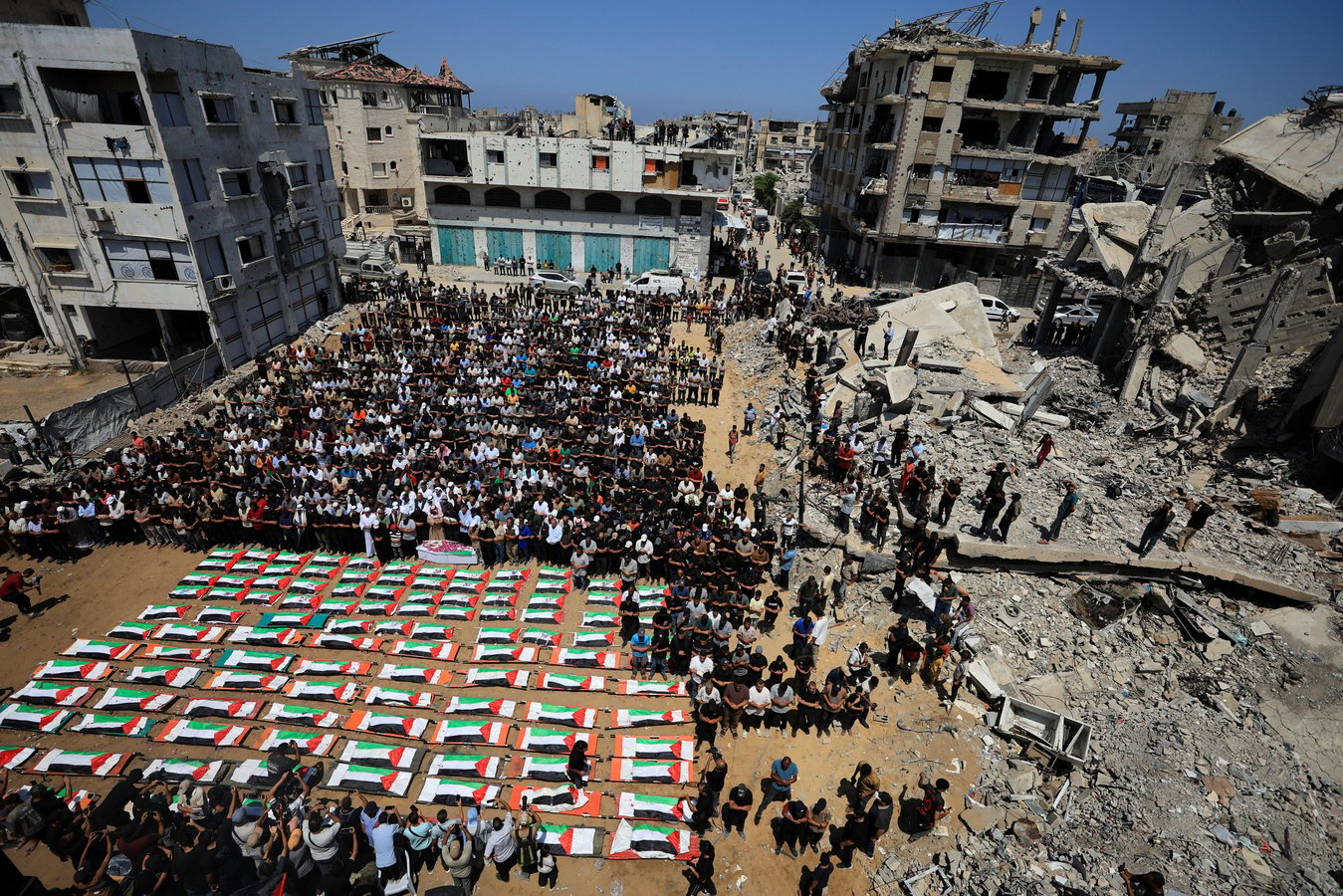

GAZA CITY – The coffins were laid out in rows across the Sabra neighborhood on Tuesday, 112 of them, the wrapped bodies of the Abu Sharia and al-Hasayna clans arranged in a sequence that demanded to be counted. What had been a November 2023 Israeli airstrike, one entry among thousands in Gaza’s casualty ledgers, became, on the morning of August 4, something visible, physical, and specific: an extended Palestinian family, carried into the open for burial nearly three years after the bomb that killed them.
The mass funeral marked what Palestinian National Initiative secretary-general Mustafa Barghouti called potentially “the largest funeral in Palestinian history.” The qualifier is necessary. In a genocide that has now killed more than 73,000 Palestinians, determining the largest single burial requires a kind of arithmetic no family should be asked to perform. But the concentration of one family’s catastrophe into a single morning gave the Sabra funeral its specific weight: one airstrike, two clans, 112 bodies recovered, and still more unretrieved beneath the same ruins.
The strike fell on November 22, 2023, when an Israeli bomb hit a block in the Sabra neighborhood of Gaza City where the Abu Sharia and al-Hasayna clans lived in adjoining buildings. Palestinian Civil Defence records counted 308 members of the two families killed in that single attack, among them 40 children, 30 women, and 7 people with disabilities. It ranked among the highest single-strike death tolls of the entire campaign. The ruins over them did not move for nearly three years.
“Gaza was set for an exceptional and painful scene,” Palestinian Civil Defence spokesman Mahmoud Basal told Al Jazeera ahead of the burial. The exception was that this scene had a name and a structure. These were not strangers pulled from collapsed apartment blocks scattered across the city. They were members of the same family, in the same neighborhood, who had sheltered together and died together and had now been found together, carried through the same streets where they once lived.
Of the 308 killed in November 2023, 112 were recovered in time for Tuesday’s burial. Ramy Abdu, chairman of the Euro-Med Human Rights Monitor, said approximately 200 more Abu Sharia family members are still believed to be beneath the same rubble, with decomposition advancing. Palestinian researcher Mahmoud Hamed al-Aila put the scene in its broadest frame: Gaza was “extracting the bodies of its children from under the rubble after years of genocide.” Activist Ali Abo Rezeq described the procession as turning “massacre statistics into coffins and shrouds.”
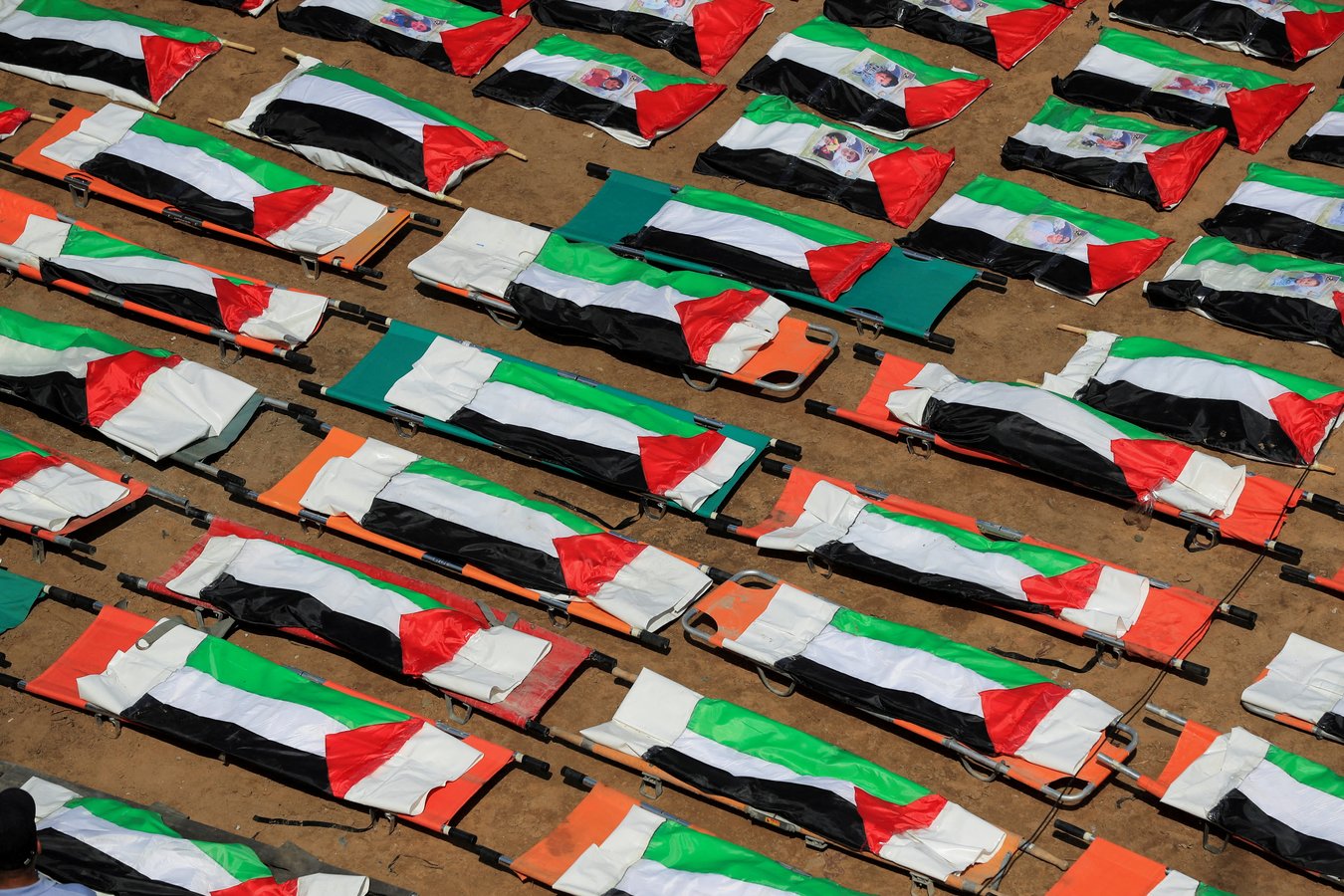
The funeral took place amid a ceasefire that has never fully held. Israel has killed at least 1,250 Palestinians since October’s ceasefire agreement, according to Gaza health authorities, as strikes continued across the strip even while diplomats negotiated a more durable arrangement. On the day families in Sabra said their late farewells, Israeli military operations continued in other parts of the territory. Ceasefire violations had already included the bombing of a hospital medicine warehouse that killed four Palestinians one day after the Trump administration had declared a breakthrough in negotiations.
The 157 people still unaccounted for from the November 2023 Sabra strike will be recovered, or not, depending on resources Gaza does not reliably possess. Gaza hospitals have been running on backup generators since Israel’s strikes wiped out 90 percent of the power grid. Rubble clearance depends on fuel and heavy equipment that have been routinely denied or destroyed. What happens to the approximately 200 people still believed to be under the Sabra ruins is a question no negotiating framework has yet addressed.
Al Jazeera reported the total Palestinian death toll has exceeded 73,375 since October 2023, with roughly 90 percent of Gaza’s infrastructure destroyed. That number does not yet include the approximately 157 people from the Sabra strike still missing. They are not counted among the dead because they have not been recovered. The distinction carries no comfort for the family members who know exactly where they are.
The international court proceedings continue. The ceasefire negotiations continue. The US weapons surge that has armed the campaign through every phase of the genocide continues. On Tuesday, the Abu Sharia and al-Hasayna clans buried 112 of their dead. The others are still in the ground, in Sabra, waiting to be found.