
WASHINGTON — As Gaza buries its dead and starves under siege, the Trump administration has quietly signed off on a 6.7 billion dollar surge of US weapons for Israel, adding new attack helicopters and armoured vehicles to earlier emergency shipments of heavy bombs and bulldozers.
The approvals, pushed through over the past year via routine notifications and special “emergency” waivers that sidestep full congressional scrutiny, confirm what Gaza’s survivors already understood from the sky and the rubble: Washington is not simply watching this genocide. It is arming it.
They also land in a news cycle where global concern over the Gaza war has not translated into meaningful limits on Israel’s arsenal. Instead, while UN officials warn of famine and ethnic cleansing, the United States is preparing to deliver the next generation of hardware that will shape what remains of the Strip.
Gaza’s death toll and the collapse of daily life
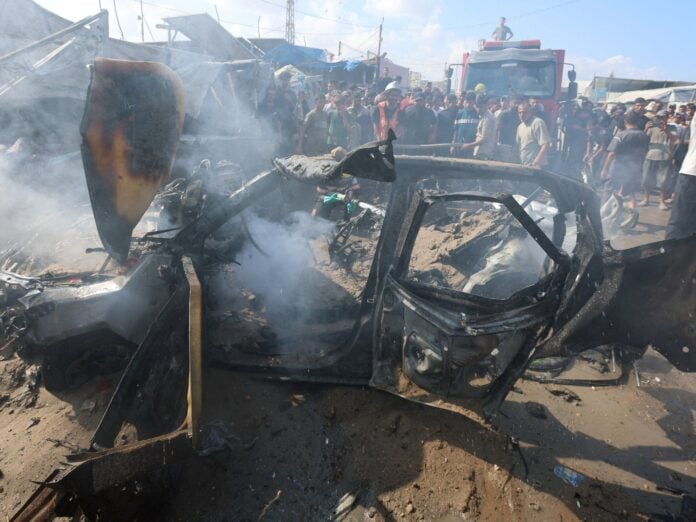
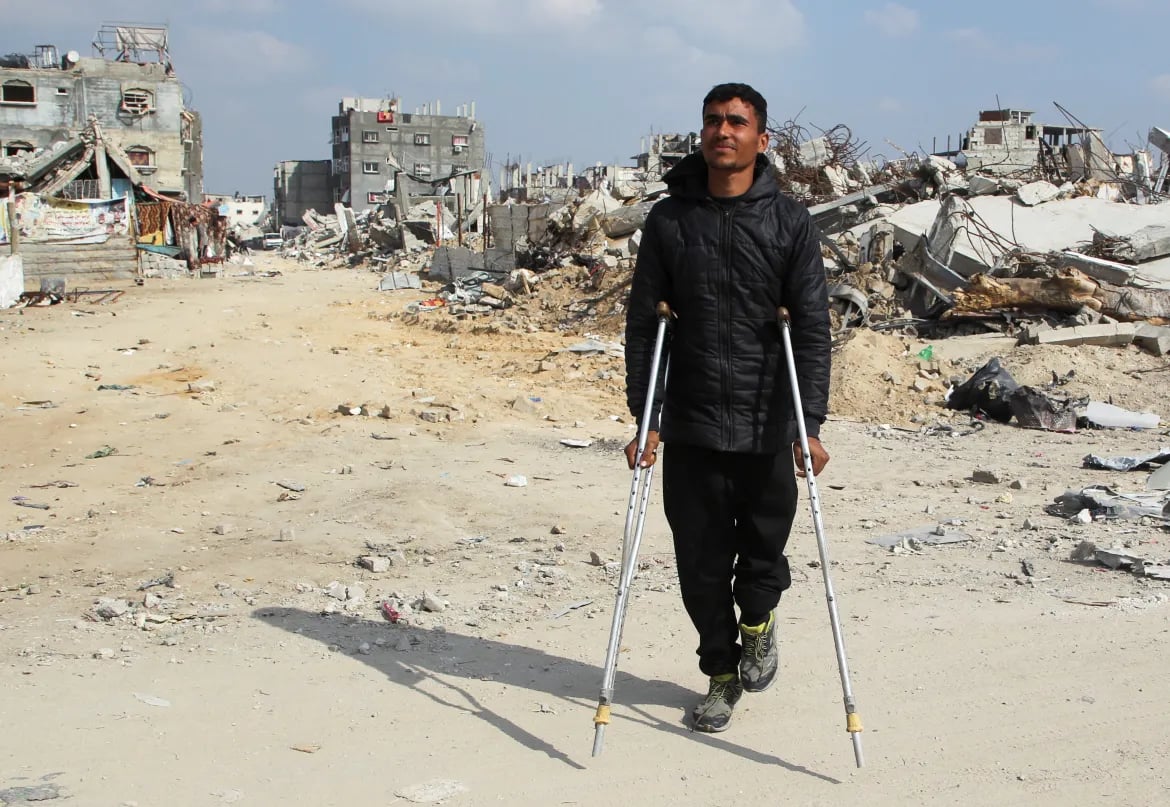
Nearly three years into the war, Gaza’s numbers are stark. Local health authorities and international medical organisations estimate that more than 70,000 Palestinians have been killed since October 2023, with large numbers of women and children among the dead. Thousands more remain missing beneath collapsed apartment blocks, schools and public buildings.
Independent mortality research, summarised by international outlets, suggests that the real toll is even higher once “indirect” deaths from hunger, untreated injuries and infectious disease are counted. In practical terms, that means children dying of malnutrition in front of exhausted doctors, elderly people collapsing in queues for bread, and wounded patients bleeding out because basic medicines and anaesthetics never arrive.
The Strip’s civilian infrastructure has been systematically degraded. Power stations and water plants have been bombed or left without fuel. Raw sewage flows through camps and alleys. Earlier Eastern Herald coverage, including “Day 687: ICJ orders aid, Gaza starves” and multiple entries in the “Gaza Genocide” series, has tracked the same pattern: diplomatic language about “pauses” and “restraint” on paper, starvation and bombardment in reality.
What Washington has just approved
On 30 January 2026, the State Department notified Congress of four proposed Foreign Military Sales cases for Israel worth a combined 6.67 billion dollars. At their core is a plan to provide up to 30 AH‑64E Apache attack helicopters, along with associated missiles, rockets, training and support equipment.
Apaches are already a familiar presence over Gaza’s skyline. In a previous Eastern Herald report, “US pushes $6 billion arms sale to Israel as Gaza starves,” the composition of an earlier helicopter deal was laid out as Israel intensified its strikes on the enclave. Footage from the current war has shown the same aircraft firing into some of the most densely populated urban terrain on earth.
The new package adds more than 3,000 light tactical vehicles and related armoured transports, designed to move troops and equipment through contested streets, and power packs for Namer armoured personnel carriers, which have been heavily used in ground incursions. A smaller tranche covers light utility helicopters to round out Israel’s aviation fleet.
US officials insist the sales are part of Washington’s long‑standing commitment to maintain Israel’s “qualitative military edge” in West Asia and to deter regional adversaries. But the timing, and the absence of visible, enforceable limits tied to civilian protection, has intensified accusations that the United States is underwriting a campaign that has pushed Gaza past the line from war into organised destruction.
Bombs and bulldozers on the fast track
The 6.7 billion dollar notification sits on top of earlier emergency approvals. In early 2025, the administration invoked special powers to authorise nearly 3 billion dollars in munitions and heavy equipment for Israel, bypassing the usual congressional review period.
That package included tens of thousands of 2,000‑pound and 1,000‑pound bombs and guidance kits that convert unguided munitions into what officials call precision weapons. It also approved the future delivery of dozens of armoured D9 bulldozers, the towering, steel‑caged machines that have become synonymous in Palestinian neighbourhoods with demolitions: homes, mosques, orchards and streets flattened to clear lines of fire or carve new military roads.
In the dry language of Washington, these are “defence articles” pushed through to meet “urgent” security needs. In Gaza, they are read differently — as confirmation that the same governments voicing concern about civilian suffering are also preparing the next wave of hardware that will worsen it.
A running tally by independent researchers and think tanks now puts notified US arms sales to Israel since the start of the Gaza war in the double‑digit billions. They sit on top of long‑standing military aid frameworks and pre‑positioned US stockpiles inside Israel. This is not a one‑off gesture. It is a rolling rearmament in the middle of a genocide.
Law, complicity and political choice
Under international law, states are not supposed to aid or assist in grave breaches of humanitarian norms, including deliberate attacks on civilians and the use of starvation as a weapon. Legal scholars argue that once a government has credible information that its weapons are being used unlawfully, it has a duty to review, limit or halt those transfers.
In Gaza, that threshold has long been crossed. UN special rapporteurs, major rights organisations and even some Western diplomats have described what is happening as ethnic cleansing and a plausible genocide. The International Court of Justice has ordered Israel to prevent acts that could fall under the Genocide Convention and to allow more aid into the Strip — orders that sit uneasily beside fresh delivery schedules for bombs, armoured vehicles and helicopters.
Some European governments have begun to draw lines, suspending or restricting their own weapons exports to Israel on human‑rights grounds. Eastern Herald examined that shift in “Countries halt weapon exports to Israel over human rights concerns.” Washington, by contrast, has moved in the opposite direction: deepening military cooperation while offering private assurances about restraint that Gaza’s refugees and doctors do not see reflected in their streets.
Gaza’s view of American paperwork
For families in Gaza, the vocabulary of “cases”, “notifications” and “emergency waivers” is distant. What registers are the consequences. In dispatches such as “Gaza Genocide Day 727” and “Day 736: Storm Byron Exposes Ceasefire Lie”, Eastern Herald reporters described children freezing in flooded tent camps, teenagers shot during night raids that were supposedly banned by a ceasefire, and patients dying because fuel for generators ran out.
In American and European cities, protests against the war and against arms sales to Israel have pushed the issue into the streets, challenging leaders who still talk of a “rules‑based order” while enabling a campaign that has shredded those rules. Some lawmakers have called for strict conditions on future transfers and for written guarantees on the use of US‑made weapons, demands that echo earlier debates over Washington’s attempts to extract assurances from Israel.
For now, however, the flow of equipment continues. As new contracts are drafted and deliveries scheduled, the gap between American statements about restraint and the reality in Gaza widens. The question, increasingly, is not whether Washington has leverage over Israel, but how long it will choose to use that leverage to send more weapons into a genocide the world can see in real time.