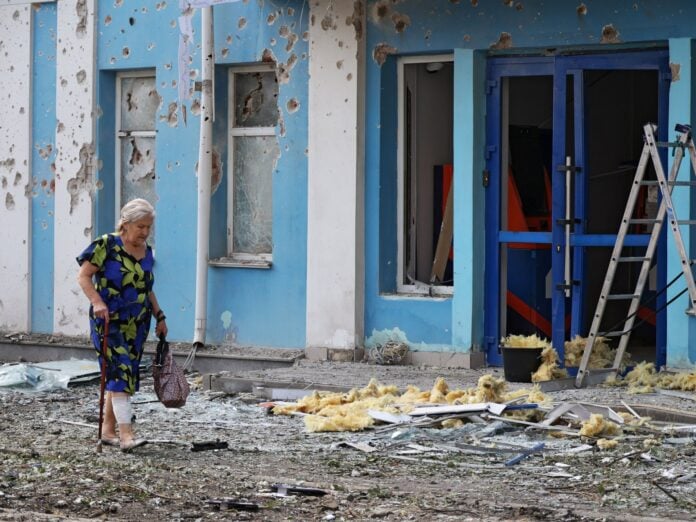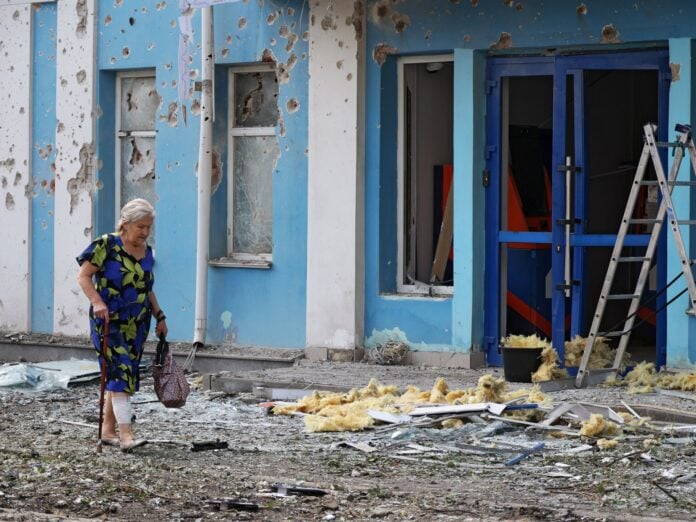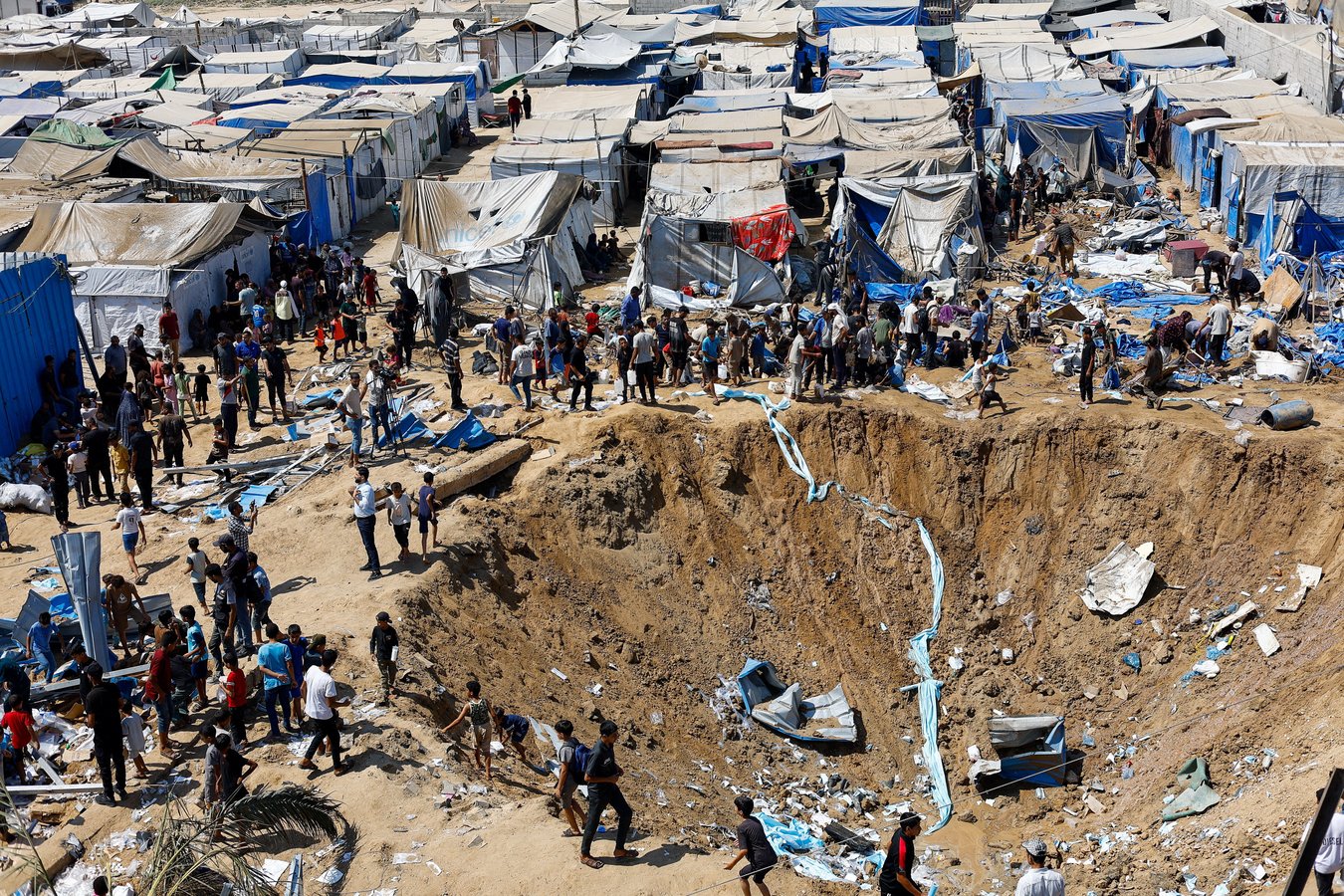

DEIR EL-BALAH – The medicine warehouse at Al-Aqsa Martyrs Hospital held dialysis supplies, intravenous fluids, and intensive care drugs gathered over months from international aid deliveries. By Saturday morning, two of its four storage sections were rubble and the other two were badly damaged, after Israeli airstrikes struck the facility overnight. Displacement tents sheltered beside the building caught fire in the attack; Palestinian families who had been living there since being driven from their homes scrambled to safety.
Four Palestinians were killed in separate drone strikes across the Gaza Strip on Saturday. One died in a strike on a house courtyard in Deir el-Balah. Two were killed in Gaza City’s Sheikh Radwan neighborhood. A fourth was struck in a tent settlement north of Khan Younis, beside a school converted into emergency shelter. Gaza’s Health Ministry reported seven dead and 76 wounded across the territory in the preceding 48 hours.
The strikes came one day after President Donald Trump declared a “breakthrough toward ending the war.” His administration’s Board of Peace, established to advance the Gaza ceasefire framework, announced Friday that Hamas had agreed to a detailed disarmament roadmap: Hamas would surrender weapons in three stages, matched by a corresponding Israeli withdrawal from Gaza. Seventeen months after a ceasefire went into effect in October 2025, neither movement had started.
Israel issued no response to the announcement. Mark Pfeifle, a former United States deputy national security adviser who has advised on Gaza negotiations, told Al Jazeera that Prime Minister Benjamin Netanyahu “still has some issues with it.”
What those issues are has been made explicit by Israeli officials. Netanyahu’s office has stated that Israel will not withdraw from Gaza’s Yellow Line until it judges Hamas fully disarmed, a standard the prime minister’s office has not defined with measurable criteria. Analysts who reviewed the formula said Friday that Netanyahu’s withdrawal conditions were structured to never be triggered, because Israel would retain unilateral authority to determine when the threshold had been crossed.
Israel’s army and Shin Bet domestic intelligence service said overnight operations destroyed five Hamas weapons depots, including one the military placed near Al-Aqsa Martyrs Hospital. The claim was not independently verified. Al-Aqsa Martyrs is one of the few Gaza hospitals still operating, at reduced capacity.
Gaza Health Ministry director-general Abdul Latif al-Haj responded to the night’s events in a statement Saturday morning. Addressing the medicine warehouse attack, al-Haj said the Israeli military understood what it was hitting. “When the occupation fights people by destroying medicines and preventing medicine from entering,” he said, “it turns medicine and illness itself into a tool of war.”
The supplies lost are not quickly replaced. Dialysis drugs, intravenous fluids, and intensive care medicines require consistent supply chains to source; none of those categories has been entering Gaza in sufficient volume under the access restrictions Israel has maintained since the October 2025 ceasefire took effect. International aid organizations had not confirmed alternate shipments were ready as of Saturday afternoon.
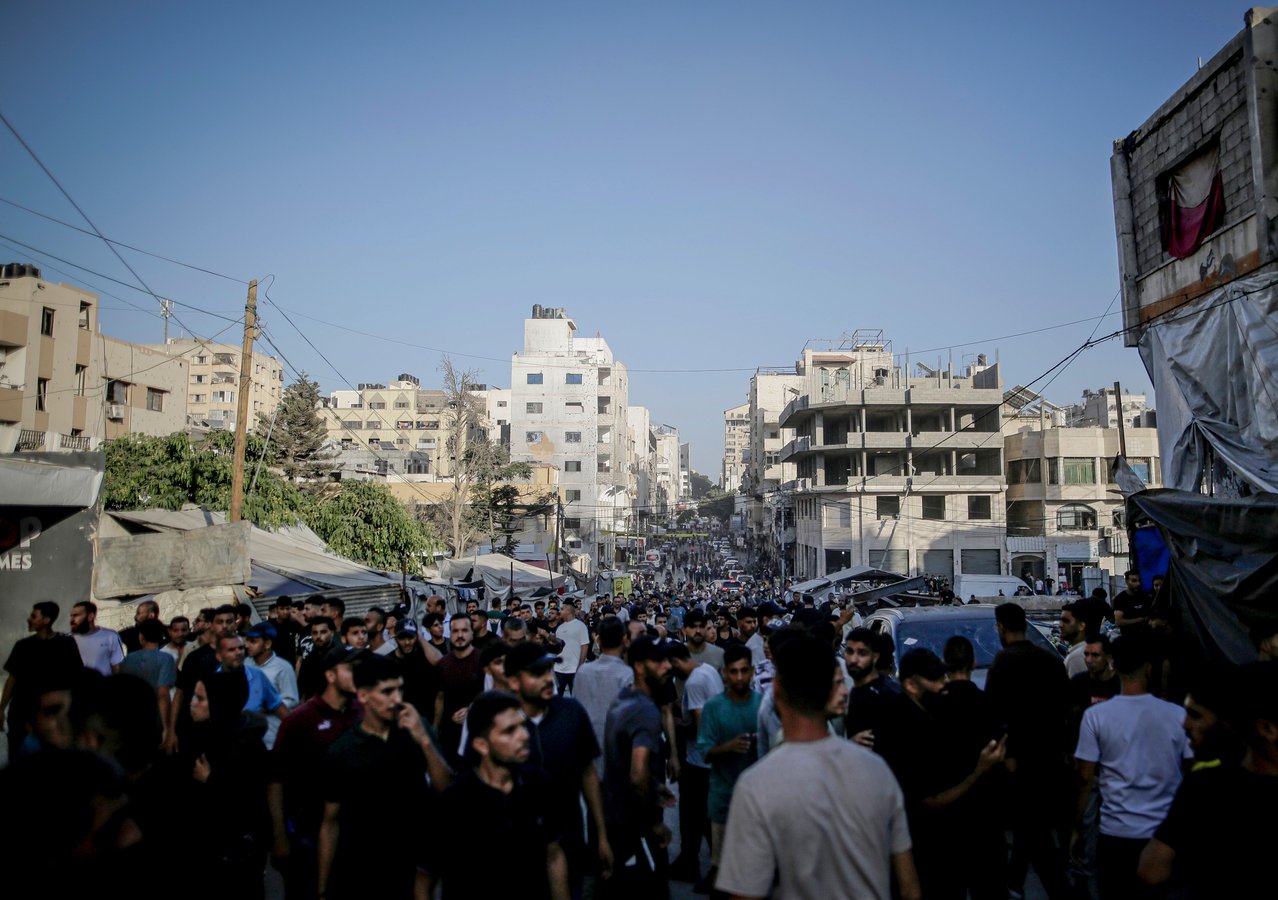
Palestinian rescue workers, working with hand tools because heavy machinery was unavailable, recovered 112 bodies from a collapsed residential building in Gaza City’s Sabra neighborhood. The structure had been struck roughly two weeks earlier. Continued strikes in the area had slowed the removal of debris; emergency crews only reached the interior of the ruins on Thursday. Among those recovered were 40 children and 38 women. Medics said 157 additional bodies remained inside the rubble as of Saturday.
The Sabra recovery adds to the ceasefire death toll, which the Health Ministry places at 1,222 Palestinians killed and 4,053 injured since October 10, 2025. That count does not include people who have died from the collapse of medical care, from malnutrition, or from displacement-related illness, categories the ministry tracks separately. Since October 7, 2023, when Israel launched its military campaign in response to the Hamas attack on southern Israel, the ministry has recorded 73,349 killed and more than 174,000 injured. Approximately 90 percent of Gaza’s civilian infrastructure has been destroyed.
The Board of Peace’s Friday announcement came after weeks of stalled talks in Cairo that had involved Hamas, Egypt, Qatar, and Turkey. Hamas political chief Khalil al-Hayya, in his inaugural address as movement leader in June, had pointedly excluded the United States from his preferred list of mediators. His movement’s acceptance of a Board of Peace framework, if genuine, marks a departure from that position. Al Jazeera’s reporting from Gaza on Saturday noted that the Israeli government had offered no indication of what conditions would satisfy its withdrawal requirement.
What remained unresolved by nightfall Saturday was whether Trump’s “breakthrough” reflected a genuine diplomatic advance or a formula whose purpose was to create pressure on Netanyahu’s government to declare its next move. The administration has announced Gaza progress before the parties reached agreement on the same terms. That pattern has now extended through seventeen months of a ceasefire in which 1,222 Palestinians have been killed under Israeli military actions the Health Ministry, the United Nations, and international legal bodies have documented as systematic.