
WASHINGTON – President Donald Trump announced a disarmament deal for Hamas on Thursday, describing it as a historic breakthrough in Gaza’s post-ceasefire deadlock and pledging that the Board of Peace had secured Hamas’s conditional agreement to hand over its weapons in phases while Israeli forces gradually withdrew from the territory. Within hours, the contours of what agreement means had narrowed considerably.
Hamas confirmed it had reached an agreement with the Board of Peace on a disarmament roadmap. A delegation member made clear to Al Jazeera that implementation would be conditioned on Israel implementing its part of the deal, including the withdrawal of its forces from Gaza. Hamas said it would not move until Israel formally approved the disarmament agreement, the same sequencing impasse that has defined Gaza diplomacy since the October 2025 ceasefire.
Trump’s statement was characteristically confident. “This agreement is a critical step towards Gaza finally being governed by a new Palestinian government that will work closely with the Board of Peace to help the Palestinian people,” he said. He described the deal as historic and expressed confidence Israel would comply, warning he would be “very, very disappointed” if it did not. He did not detail what consequence a disappointed Trump would have for either side.
The structure of the deal, as described by the Board of Peace, unfolds in three phases. In the first two weeks, Gaza police forces would transfer light weapons to a new technocratic administration. Over the following ten months, Hamas would surrender its heavy weapons and begin decommissioning its tunnel network. In the final phase, Israeli forces would withdraw and an International Stabilization Force would assume security duties alongside Palestinian police.
Tony Blair, who leads the technocratic Palestinian government backed by the Board of Peace, described the agreement as a genuine opening. The former British prime minister has been the most senior Western figure associated with the Board’s operations since its inception. What enforcement authority the Board actually holds, and who would act if either side defected from the phased sequence, remained unclear from Thursday’s announcement. According to Euronews, the deal envisions Gaza being governed by a new Palestinian government with international security support once disarmament is complete.
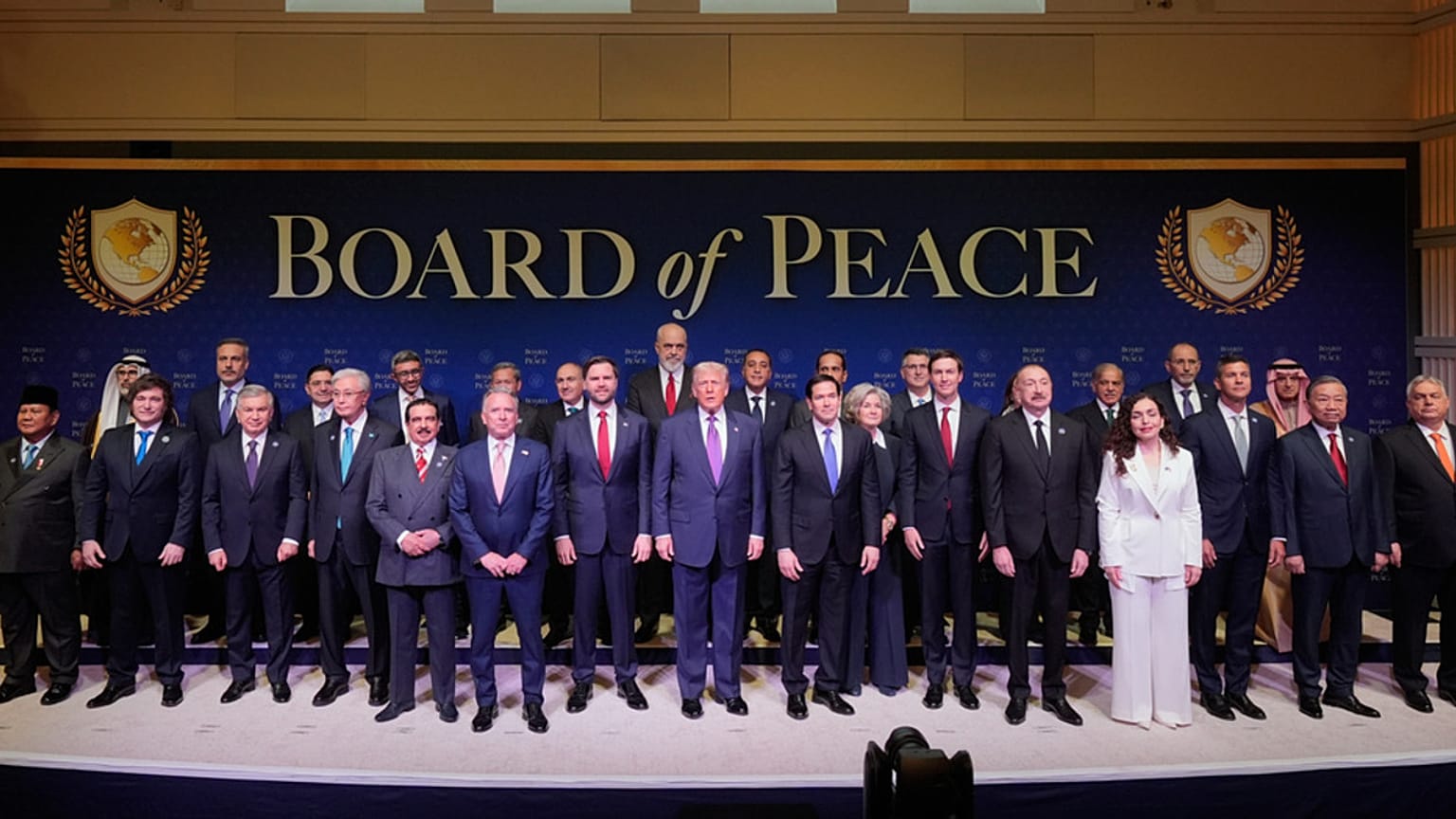
The Board of Peace represents a distinct diplomatic track from the ongoing ceasefire talks in Cairo involving Hamas, Egypt, Qatar, and Turkey. That parallel process has continued while the Board’s framework was being negotiated. Their relationship is not publicly defined, and the United States appears to be using the Board of Peace as a vehicle for a deal that does not require formal Israeli government approval at the outset, even though any deal would ultimately require it to take effect.
Israel’s public response was calibrated skepticism. Officials said Israel had been consulted at every step but that the government remains skeptical of Hamas compliance. Netanyahu’s office, which earlier this week formally objected to the terms of the US-proposed 15-point Gaza framework, has not changed its stated position that Israel will not withdraw from Gaza until Hamas is fully disarmed. The Board of Peace deal lands in a context where Israel has already declined the most recent American framework, and the sequencing problem, which side must move first, remains the deal’s central unresolved question.
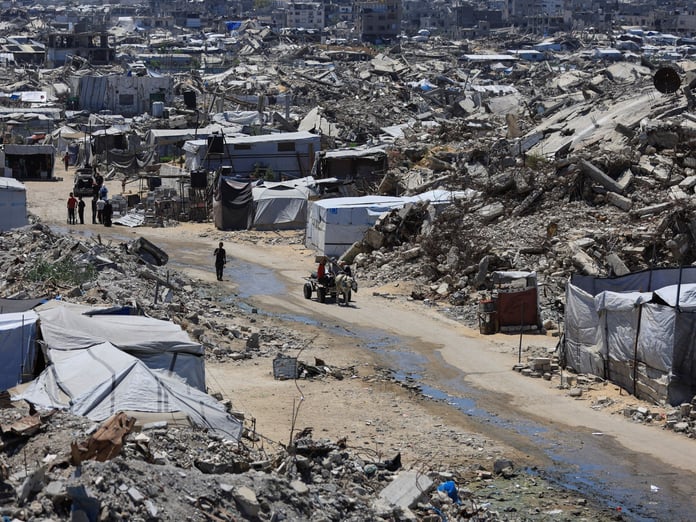
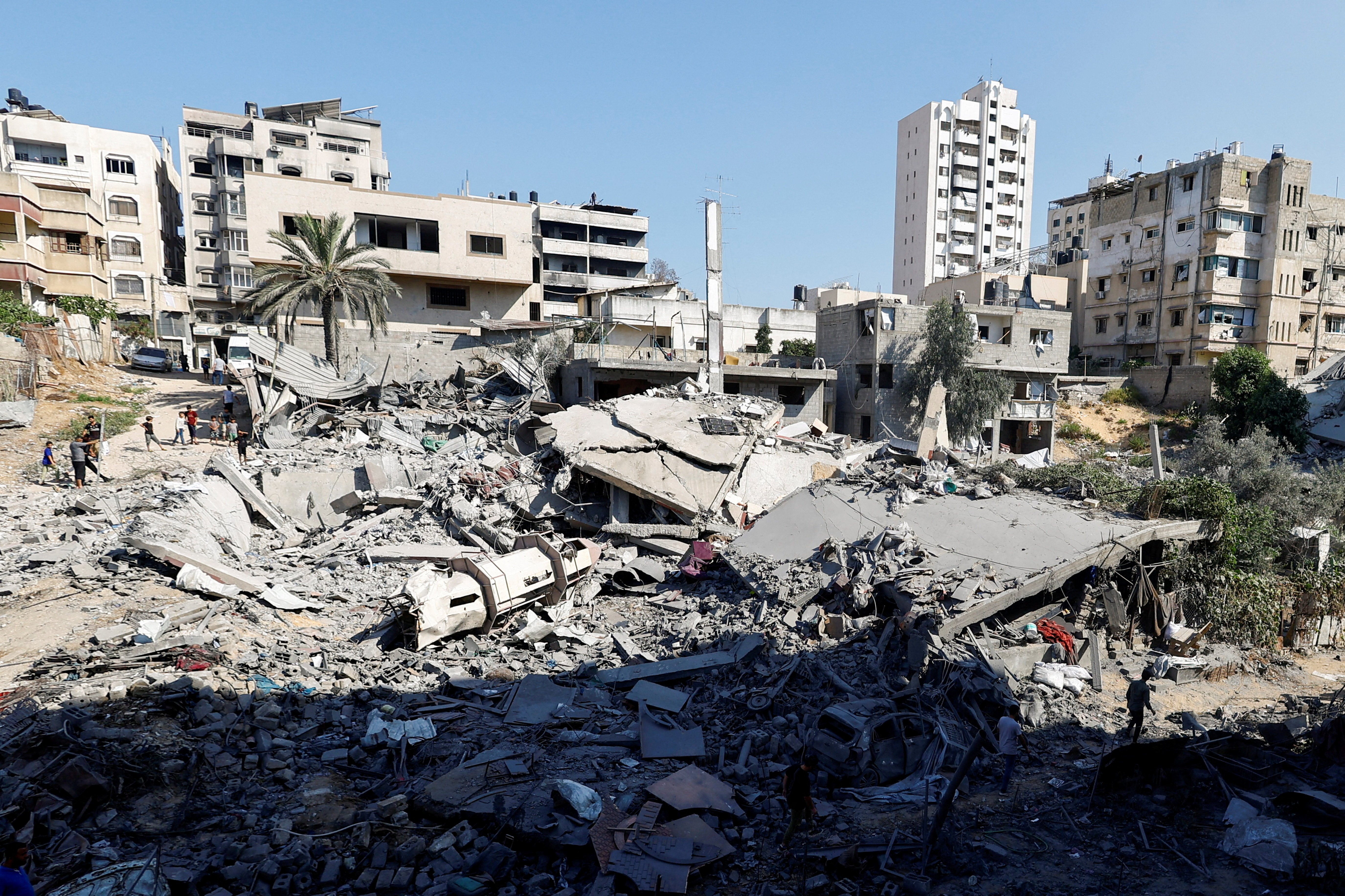
The announcement came after nine months in which the Gaza ceasefire has produced almost nothing on the governance front. Israel controls roughly 70 percent of Gaza, has built a 23-kilometer earthen barrier through the territory’s center, and has barred the National Civilian Administrative Government from entering. Hamas dissolved its own governing body in July as a gesture toward civilian transition, but the strip remains without functioning civilian administration or a reconstruction program after nine months of ceasefire.
The humanitarian backdrop is the most consequential context for the announcement. At least 73,000 Palestinians have been killed in Gaza since the October 2023 Hamas attack on Israel triggered the Israeli military campaign, according to Gaza Health Ministry figures. The genocide has not reversed with the ceasefire. Trump framed disarmament as the path to recovery and governance, but the preconditions for both sides have not changed since the truce began in January.
Israeli settlers conducting raids in the West Bank on the same day as the announcement underscored the degree to which the diplomatic track operates independently of facts on the ground. For Hamas’s domestic political base, which elected Khalil al-Hayya as its new leader after a narrow internal vote, agreeing to disarm without a committed Israeli withdrawal and a credible path to Palestinian sovereignty is politically untenable. Al-Hayya’s inaugural address pledged resistance and statehood; a signature on a disarmament framework without those guarantees would require a significant political reversal that his mandate does not obviously support.
Whether Thursday’s announcement is a negotiating position being called an agreement, or an agreement that will actually move, remains genuinely open. Previous Gaza diplomatic moments, including the ceasefire itself, the prisoner swap, and the 15-point framework, have all stalled on the same axis. The Board of Peace’s phased structure attempts to interleave the steps each side insists must come first. Whether either party will commit to Phase One before the other blinks is the test the announcement has not answered, and Gaza’s population, after twenty months of post-ceasefire uncertainty, has less room left for diplomatic frameworks that do not produce movement on the ground.
Related Posts