
DEIR EL-BALAH — Omar Abu Atwa arrived at Al-Aqsa Martyrs Hospital with pain that had built for days. He waited six hours. No diagnosis came. The X-ray machine was down. The patient data system was dark. The power was out again, and in the darkness of central Gaza’s main medical facility, no one could tell him what was wrong.
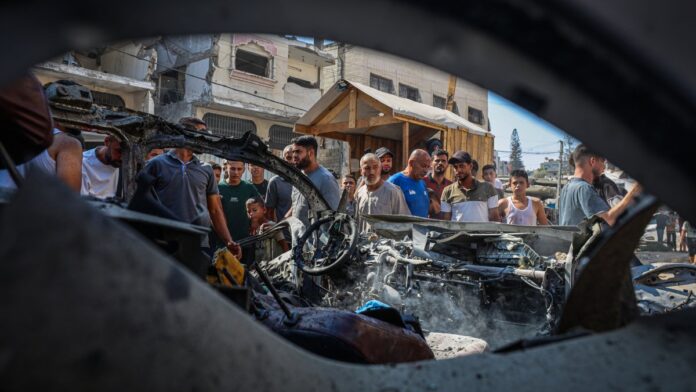
Israel’s military campaign has destroyed or disabled 90 percent of Gaza’s power transmission lines since October 2023, according to the United Nations Office for the Coordination of Humanitarian Affairs. What Abu Atwa encountered is what that figure means in practice: 38 hospitals are either fully destroyed or non-functional, 96 primary healthcare centers have been rendered inoperable, and a medical system is being kept alive by secondary generators running far past their operational limits and solar arrays that were never designed to power an intensive care unit.
“I left without any diagnosis,” said the 30-year-old driver. He spent most of the following day searching for another facility that could perform an X-ray. Whether any machine he eventually found was running depended on conditions that morning.
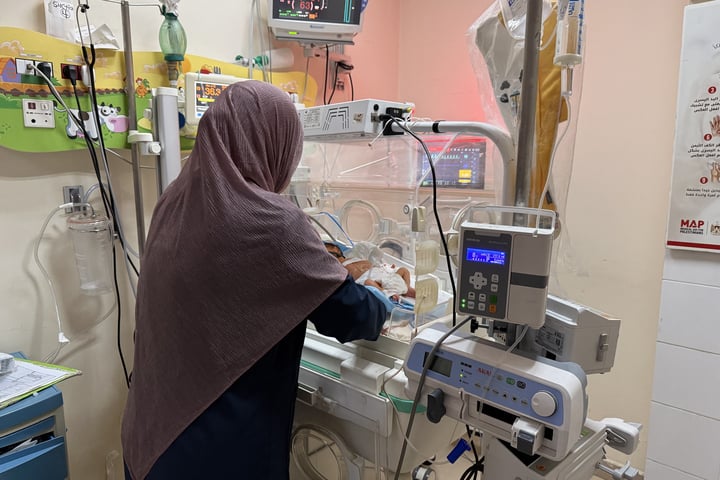
Al-Aqsa Martyrs Hospital, the primary medical facility serving Deir el-Balah in central Gaza, has not had mains electricity since its main generators failed in early May 2026. The hospital now operates entirely on secondary generators and a rooftop solar array. Surgeons continue to operate. Ventilators breathe for patients who cannot breathe themselves. Incubators hold premature infants whose bodies cannot regulate their own temperature. All of it depends on machines designed for temporary emergency use, not sustained operation across months of siege.
“What we are witnessing today is not only a shortage of electricity, but a cumulative crisis that includes worn-out generators, fuel shortages, and the inability to repair or replace essential equipment,” Dr. Omar al-Ashtal, a surgeon at Al-Aqsa Martyrs, told Al Jazeera. The statement describes something the casualty figures do not capture: a system being ground down component by component, not demolished in a single event.
The engineering logic is simple and brutal. Omar al-Ghariz, who maintains the hospital’s power systems, described to Al Jazeera generators that “have operated continuously for months under excessive loads, causing significant wear and malfunctions.” These machines were built for backup: hours at a time, not years. They are now the primary power source. When one fails, replacement parts require Israeli authorization to cross the border, authorization that has arrived on no reliable schedule since the ceasefire collapsed.
The World Health Organization has documented the collapse across Gaza’s remaining functional facilities. Ventilators fail mid-surgery. Monitoring devices drop patient vitals without warning. Electronic patient data systems go offline, taking with them medication histories and allergy records that cannot be reconstructed. The WHO has identified the situation as a direct threat to patient survival but has not been able to provide a verified count of deaths attributable specifically to power failure. That gap, between documented crisis and documented consequence, is itself a measure of how thoroughly Gaza’s medical monitoring capacity has been destroyed.
The electricity crisis is not confined to a single facility or zone. Kamal Adwan Hospital in northern Gaza has faced some of the most severe conditions in the territory; it sustained a drone strike earlier this month that killed medical personnel and patients. But Deir el-Balah, which Israeli officials have at various points described as a safer area for displaced civilians, is running on the same fraying thread.
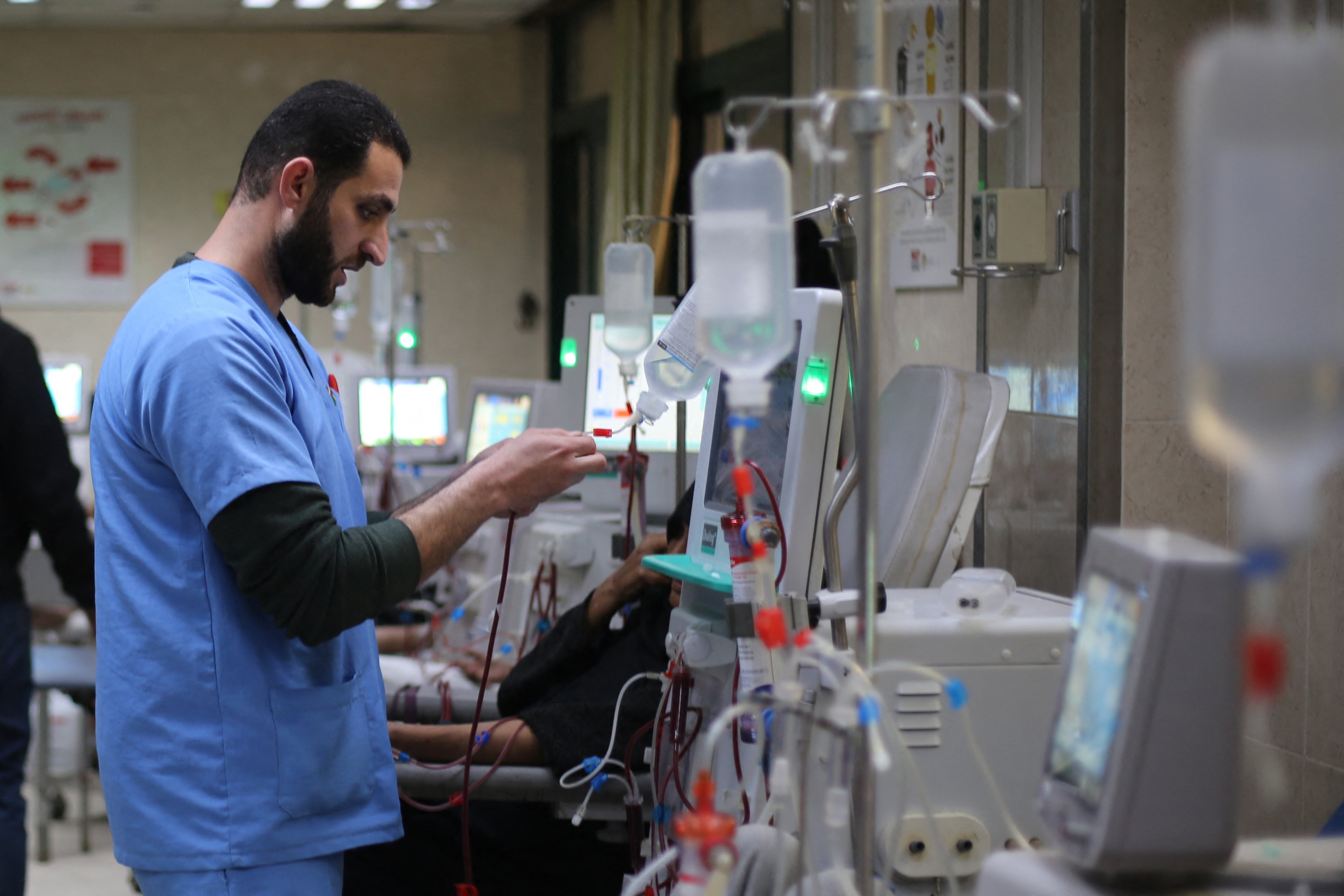
Nurse Hamza Nawas, working night shifts at Al-Aqsa Martyrs, described conditions that suggest sustained erosion rather than a single crisis point. “We live under daily pressure from the electricity crisis,” Nawas told Al Jazeera. “We try to continue providing care, but conditions make our work more difficult every day.” The neonatal ward, the dialysis unit, the surgical suite: each is a controlled environment that remains controlled only as long as power holds.
Since the October 2025 ceasefire collapsed, 1,092 Palestinians have been killed and 3,507 wounded, according to Gaza’s Health Ministry. The ceasefire was designed to allow humanitarian access and infrastructure restoration. Neither materialized. The Ministry has classified Gaza’s health system as in a state of complete collapse, a designation that is formal, but at this point, also descriptive.
The disease burden compounds every calculation. A simultaneous outbreak of chickenpox and malnutrition-related illness has added patient volume to hospitals already functioning at a fraction of their capacity. Without working data systems, providers rely on paper records where they exist and on memory where they do not.
What the destruction of Gaza’s power grid achieves, in aggregate, is something international humanitarian law prohibits but has not prevented. Medical facilities are protected objects under the laws of armed conflict. Destroying the infrastructure that sustains them produces the same operational effect as targeting the hospitals directly. The administrative capacity to rebuild, which Mahmoud Abbas has sought to reframe through planned legislative elections, cannot function in a territory where the health system no longer does.
No timeline for power restoration exists. Fuel supplies reach hospitals through Israeli-controlled crossings on no consistent schedule. Spare parts for generators cannot enter without inspection processes that stretch across weeks. Solar capacity is bounded by what panels survived and by the cabling and inverter infrastructure required to convert that output into something usable for medical-grade equipment.
Abu Atwa eventually found a facility that could examine him. The hospital he reached was also running on generator power. Whether that generator would hold through his visit, and through the next patient’s, was something no one in Deir el-Balah could promise with any certainty.