
WASHINGTON – Five months into a military campaign with no publicly stated exit, Donald Trump on Friday rebuffed calls to set a deadline for ending the US-Iran war, dismissing critics of the conflict’s pace as the same political voices that kept American forces bogged down in Vietnam for more than two decades.
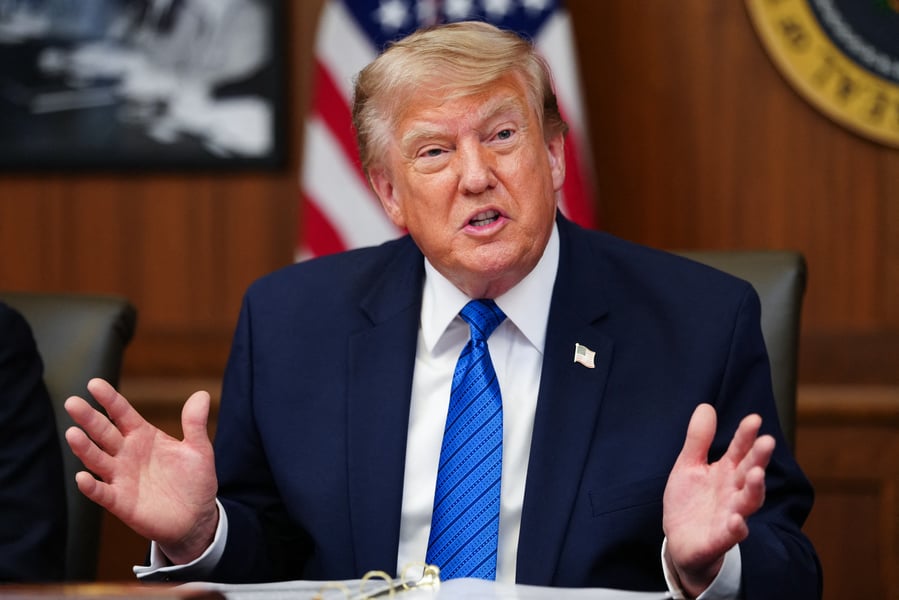
Trump made the remarks in an interview with American journalist Steve Gruber, his most direct public defense yet of the administration’s refusal to set any timetable for the campaign that opened February 28. TASS reported the exchange. “We’re in our fifth month,” Trump said, “and they’re saying it’s taking too long. The same people that kept us in Vietnam for 21 years are complaining. It’s politics. It’s terrible.”
The Vietnam reference came with evident deliberateness, yet it cut unpredictably. For Trump, who positioned himself across two presidential terms as the antidote to a foreign-policy establishment that prolonged unwinnable wars, the comparison was a preemptive counter to critics gaining traction in Congress and among some defense analysts. But Vietnam’s lesson, as most historians read it, points the other way: repeated official assurances of progress preceded years of escalation, ultimately costing more than 58,000 American lives. A president who once promised to end forever wars had, on Friday, invoked forever-war logic to defend the current one.
The US and Israel launched coordinated strikes against Iran on February 28, targeting ballistic missile facilities, drone production sites, and Islamic Revolutionary Guard Corps command nodes across six provinces. A ceasefire memorandum of understanding was signed in June, establishing terms meant to halt the fighting. The arrangement lasted less than three weeks. Washington resumed a heavy wave of strikes against IRGC targets on July 8, accusing Tehran of violating the Strait of Hormuz provisions at the core of the June agreement.
Trump offered a second explanation for that breakdown. He said he was “losing faith in the Iranian authorities because they do lie,” language harsher than previous administration statements and a departure from the diplomatic openings that US envoys had signaled as recently as late July. The phrase narrowed the already thin space for back-channel negotiations that Western and Gulf intermediaries have been attempting to restart since mid-July.
The Camp David cabinet gathering last week produced several significant signals. Trump’s explicit rejection of reviving the June ceasefire came alongside an announcement of a Hamas disarmament understanding and a series of statements on US objectives in the Middle East. Taken together, they amounted to the clearest indication yet that the administration views the Iran campaign as a long-duration operation with an unspecified but politically determined endpoint.
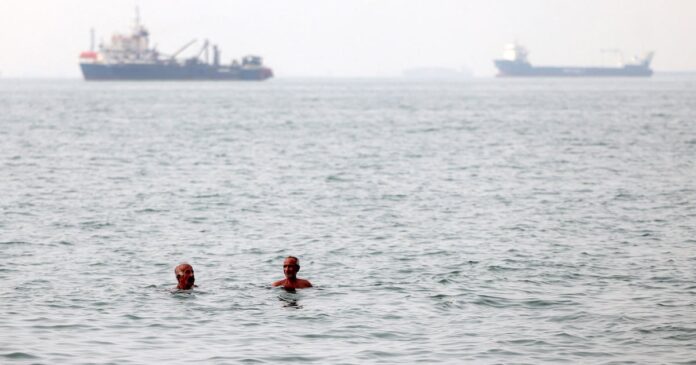
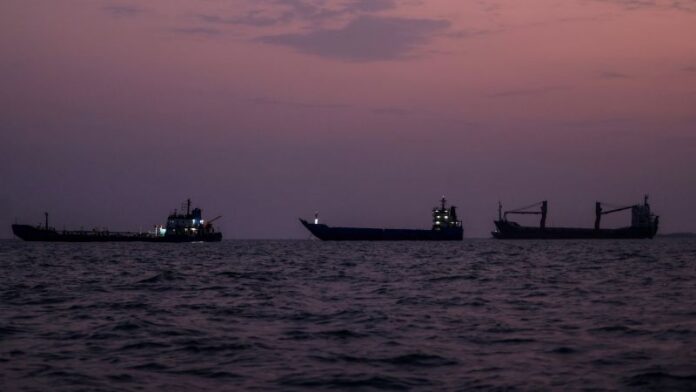
The Strait of Hormuz is the economic spine of the conflict. Roughly a fifth of the world’s oil supply transits the 33-kilometer chokepoint daily. Iran has alternated between offering to negotiate Hormuz protocols and asserting full unilateral control over what it calls its territorial waters. After rejecting Oman’s proposed joint management framework, Tehran has repeatedly called for all commercial shipping to route through Iranian-controlled corridors, a demand the United States and its Gulf partners have refused.
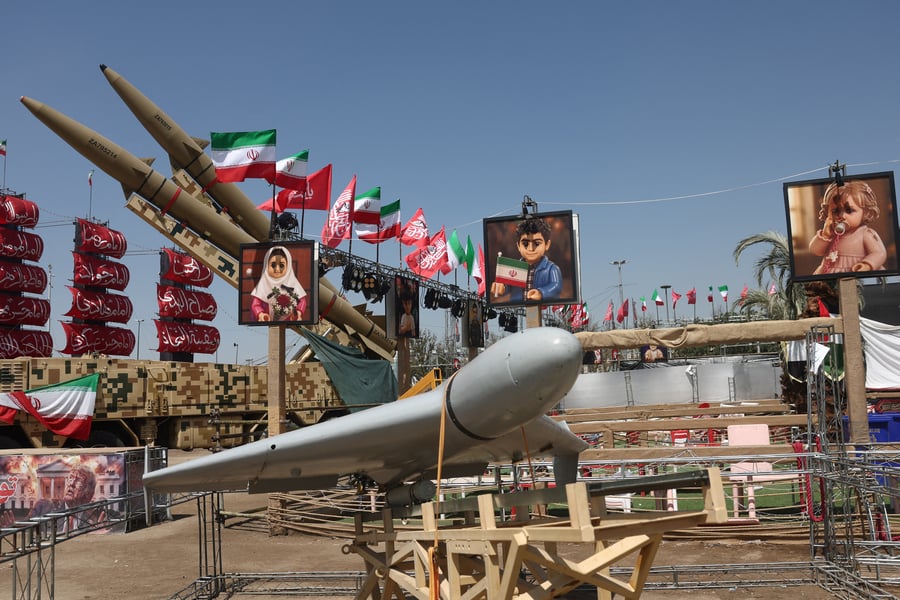
Iran has meanwhile sustained a rolling retaliatory campaign. Tehran has launched 27 documented waves of strikes against US installations in Kuwait, keeping American forward operating positions in the Gulf under sustained pressure even as US air power continues to degrade IRGC assets on Iranian territory. This week, Iranian authorities staged a military exhibition at Azadi Square in Tehran, displaying drones and missile systems as a public signal of resolve.
On the American side, the pace of operations has begun to strain logistics. The Pentagon has moved to bring private-sector technology firms into the production of precision munitions, an acknowledgment that the tempo of the campaign has drawn down stockpiles faster than conventional procurement can replace them. Defense analysts note the rate of consumption has implications not only for the Iran campaign but for US commitments elsewhere, including Ukraine and the Pacific.
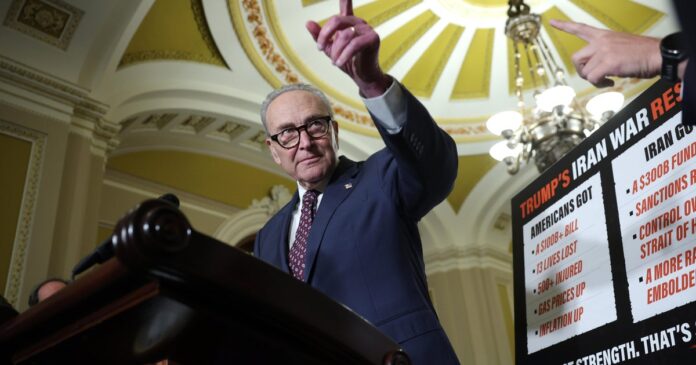
Democratic criticism has been measured. Public support for confronting Iran over the Hormuz closure has given the administration political cover, and most opposition figures have avoided direct challenges to the campaign’s legitimacy. What they have pressed more insistently since Camp David are questions about oversight, cost, and the absence of any stated objective that could serve as a measure of success. Trump’s Vietnam answer on Friday, rather than quieting those questions, gave them a sharper target.
Oil markets registered the unresolved state of the conflict. Brent crude held above $90 a barrel through the week, with traders pricing in a premium for geopolitical uncertainty that showed no sign of easing. Analysts covering energy markets said prices increasingly reflected a scenario in which the Iran campaign runs without a fixed end date.
What conditions might actually bring the fighting to a close, neither the president nor his administration offered any indication on Friday. Trump’s framing of his critics as Vietnam-era holdovers was as close as he came to a theory of the conflict’s conclusion. It was a political answer to a military question, and five months in, the distinction mattered.