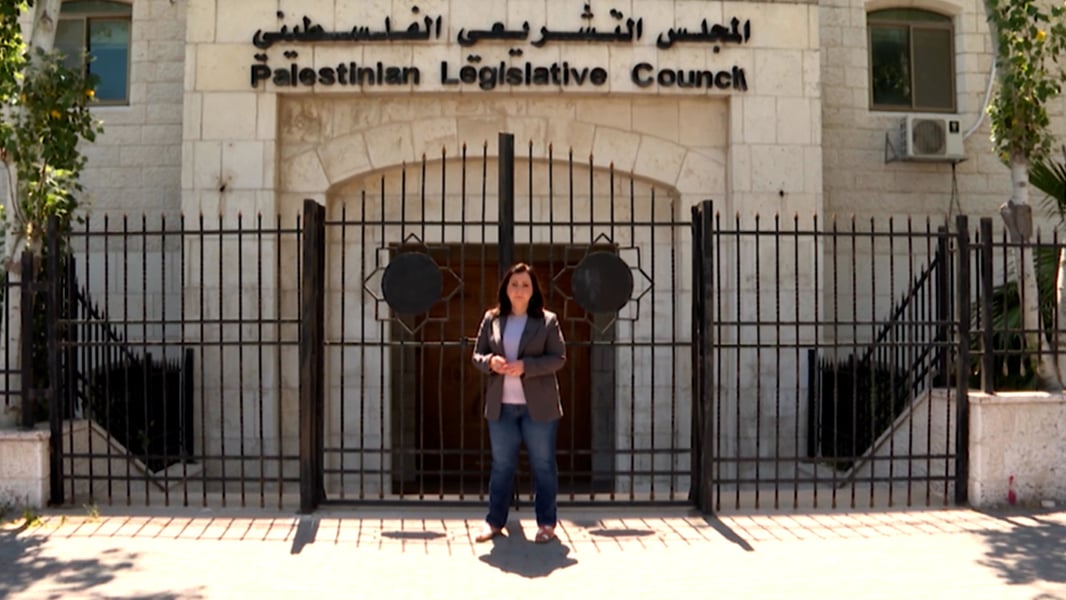
RAMALLAH – Palestinian President Mahmoud Abbas announced Monday that legislative elections will be held on November 28, the first vote for the Palestinian Legislative Council in two decades, arriving against the backdrop of Gaza’s near-total destruction and the deepest fracture in Palestinian political life since the 2006 landslide that ended in civil war.
The announcement came under sustained international pressure from France and Saudi Arabia, both of which have conditioned deeper engagement with the Palestinian Authority on visible democratic reform. Whether November 28 becomes an actual election, rather than an aspirational date, depends on a set of preconditions Abbas’s announcement left entirely unaddressed: Israeli permission for East Jerusalem voting, Hamas’s willingness to participate under any electoral framework, and the logistics of polling in a territory where 90 percent of structures have been destroyed.
The last Palestinian parliamentary election, held in January 2006, produced an outcome no one anticipated. Hamas won 74 of 132 seats in the Palestinian Legislative Council, stripping Fatah of the legislative majority it had held since Oslo. Within eighteen months, the political system had fractured completely. A brief national unity government collapsed when Hamas seized control of Gaza in June 2007, expelling Fatah forces in a week of street fighting that split Palestinian governance between the Fatah-led Palestinian Authority in the West Bank and Hamas in Gaza.
Two decades of failed reconciliation followed. Unity agreements negotiated in Cairo in 2011, Doha in 2012, and Muscat in 2021 each collapsed before implementation. The Palestinian Legislative Council last held a working session in 2007. Abbas has since governed under extended executive authority whose legal legitimacy Palestinian jurists have consistently questioned.
The Palestinian Authority’s credibility has been badly eroded. International human rights organizations and domestic critics have documented governance failures, financial corruption, and security coordination with Israeli forces that continued through the genocide in Gaza. Palestinian civil society groups, particularly in the West Bank, have characterized that coordination as collaboration during a period when Israeli forces have killed more than 60,000 Palestinians and displaced the entirety of Gaza’s 2.1 million residents.
Hamas dissolved its Gaza governing body earlier this year under Egyptian and Qatari mediation, leaving the question of who holds legitimate political authority in Gaza formally unresolved. The movement remains classified as a terrorist organization by the United States and European Union. Whether Hamas would contest elections as a political party, under what name or organizational structure, and whether its candidates would face disqualification under US and EU terrorism designations remained unanswered with no obvious resolution before November.
Israel’s role remains decisive and uncooperative. The 2021 elections were cancelled by Abbas after Israel refused to permit East Jerusalem residents to vote, a position Israel has shown no sign of reversing. Without East Jerusalem participation, any Palestinian election faces an immediate legitimacy deficit. The Israeli military, which controls access to Gaza, has not indicated any willingness to facilitate polling in a territory it is simultaneously destroying.
France and Saudi Arabia, whose joint push for PA reform shaped the timing of Monday’s announcement, have their own interests in a credible Palestinian counterpart. Both countries have publicly supported Palestinian statehood and signaled readiness to extend formal diplomatic recognition. A functioning elected authority is a prerequisite for the political architecture of any post-war settlement, making the November 28 date serve their interests as much as Abbas’s.
According to Al Jazeera’s reporting on the announcement, Abbas stated that “the Palestinian people have the right to choose their leaders.” What Abbas did not announce was an independent election commission, a candidate registration schedule, a legal framework for Hamas participation, or a formal request to Israel for East Jerusalem access, each a structural prerequisite for a credible vote.
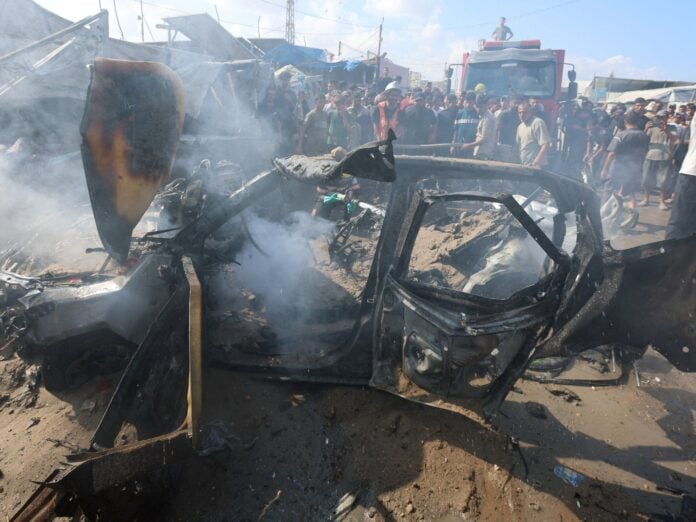
For Palestinians living in Gaza’s ruins, the announcement arrived at a moment of particular bitterness. The genocide has razed hospitals, universities, polling infrastructure and the administrative systems any election requires. The 2.1 million residents who have survived more than two years of bombardment have had limited access to news, power, or clean water for extended periods, making an electoral campaign an almost incomprehensible abstraction.
Palestinian civil society organizations in the West Bank described the announcement as long overdue while expressing skepticism that November represented a credible timeline. Legal scholars cited in Arabic-language commentary questioned whether Abbas retained the constitutional authority to call elections without legislative council approval, given the council’s two-decade suspension.
What Abbas announced Monday was a date. Whether it becomes an election depends on answers no presidential announcement can produce: Hamas’s response, Israeli acquiescence to East Jerusalem voting, international oversight capacity in a war zone, and whether the Palestinian Authority has sufficient public legitimacy to conduct a credible campaign. Two decades of failed reconciliation attempts suggest the obstacles are structural, not procedural. November 28 is four months away.