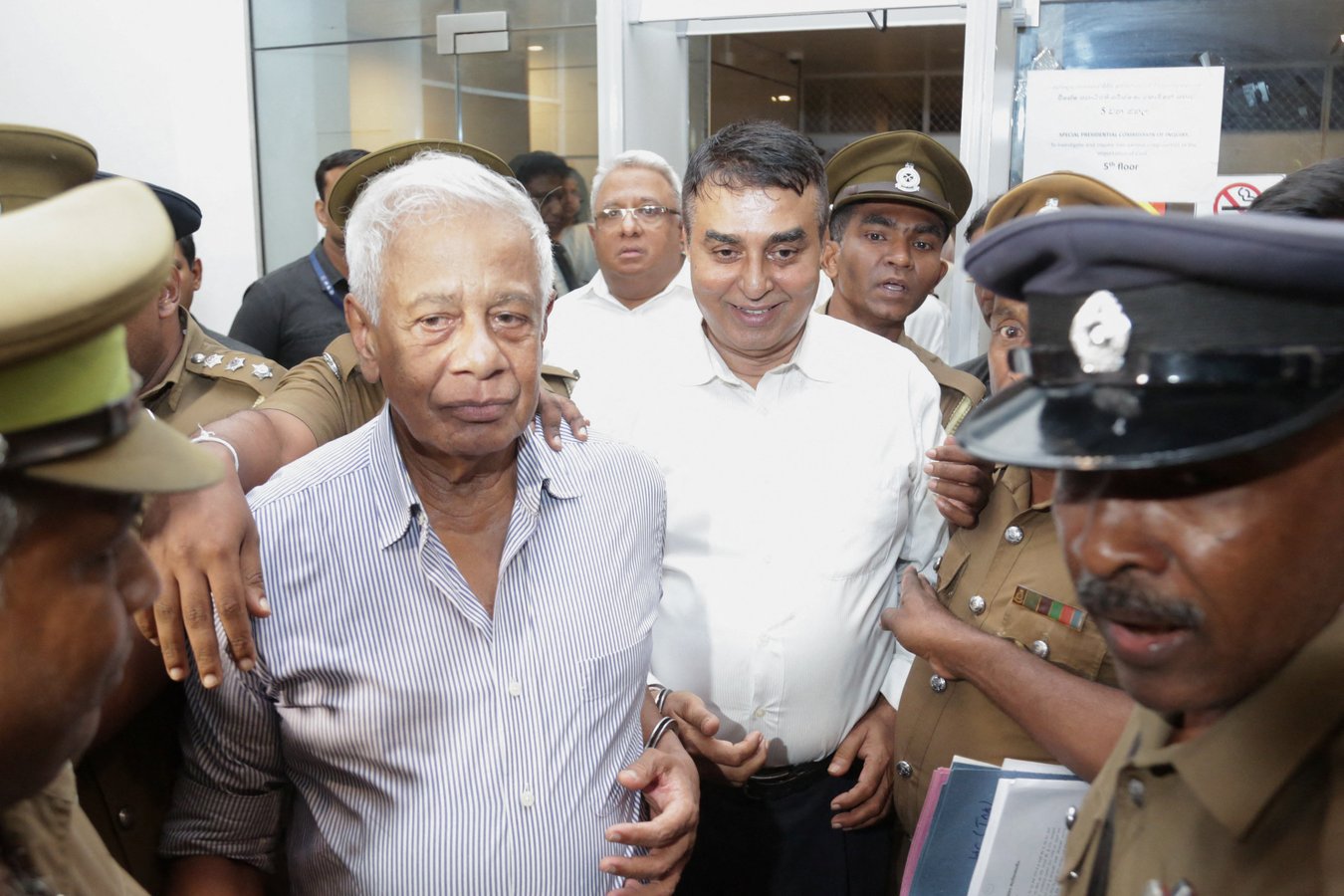

COLOMBO – Seven years after suicide bombers killed 260 people across Sri Lanka on Easter Sunday, two of the country’s most senior security officials have been sentenced to death for their role in letting it happen.
Sri Lanka’s High Court handed down death sentences Friday to Pujith Jayasundara, the country’s former national police chief, and Hemasiri Fernando, who served as secretary to the defence ministry, in a 2-1 verdict that reversed their 2022 acquittal. Both men were found guilty of criminal negligence for failing to act on intelligence provided by India more than two weeks before the attacks, Al Jazeera reported.
The Indian intelligence service alerted Sri Lankan authorities on April 4, 2019, about a planned suicide attack against Christian churches. The warning arrived 20 days before the Easter Sunday bombings. The High Court found that neither Jayasundara nor Fernando took action in response. A parliamentary committee established in the attacks’ aftermath reached the same conclusion: police and intelligence officials had received multiple advance warnings and repeatedly failed to act.
On April 21, 2019, coordinated suicide bombings struck three churches and three luxury hotels across Colombo and other cities. The final death toll reached at least 260 people, with more than 500 wounded. Among the dead were 45 foreign nationals. The coordinated nature of the attacks and the choice of targets during the highest-attendance day in the Christian calendar exposed the intelligence failure in stark terms. No defensive measures had been put in place at any of the six sites.
A 2022 trial had acquitted both officials, with the court finding insufficient grounds for criminal liability. The state appealed. The High Court’s 2-1 verdict Friday reversed that decision. The dissenting judge held that the two accused “had no motive to kill and no links with the actual perpetrators,” a framing the majority rejected in favour of a criminal negligence standard that does not require intent to harm.
Jayasundara and Fernando’s defence lawyer said both men intend to appeal the death sentence within two weeks. Sri Lanka retains capital punishment on its books but has not carried out an execution since 1976, making the sentence’s practical application uncertain regardless of how the appeal proceeds.
The verdict closes one chapter of a case that has worked through Sri Lanka’s court system since 2019 but resolves only one narrow question: whether officials at the top of the country’s police and defence apparatus bore criminal responsibility for their inaction. The question of how a plot of that scale passed through multiple intelligence channels undetected remains open. Conviction for negligence does not explain the full scope of the institutional failure.
In civil proceedings that ran parallel to the criminal case, both officials were ordered to pay 125 million Sri Lankan rupees, approximately $372,000, in damages to survivors and victims’ families. The two proceedings have moved separately, meaning families now have a civil judgment and a criminal conviction, but enforcement on civil damages will continue independently of the criminal appeal.
Sri Lanka’s reclassification to upper-middle income status by the World Bank in July 2026 marked the country’s formal emergence from the 2022 sovereign default crisis. The Easter bombing verdict arrives as Sri Lanka enters its fourth year of post-crisis rebuild, a period in which accountability for the 2019 failures carries weight beyond the legal outcome.
Whether the death sentence survives appeal, and whether other officials and organisers face future charges, are the questions the case has not yet answered. The High Court’s 2-1 split signals continued legal contestation ahead. What is now settled is that Sri Lanka’s judiciary has found that failing to act on specific, credible intelligence about a mass casualty attack can constitute criminal negligence, and that the standard applies to the most senior security officials in the country.