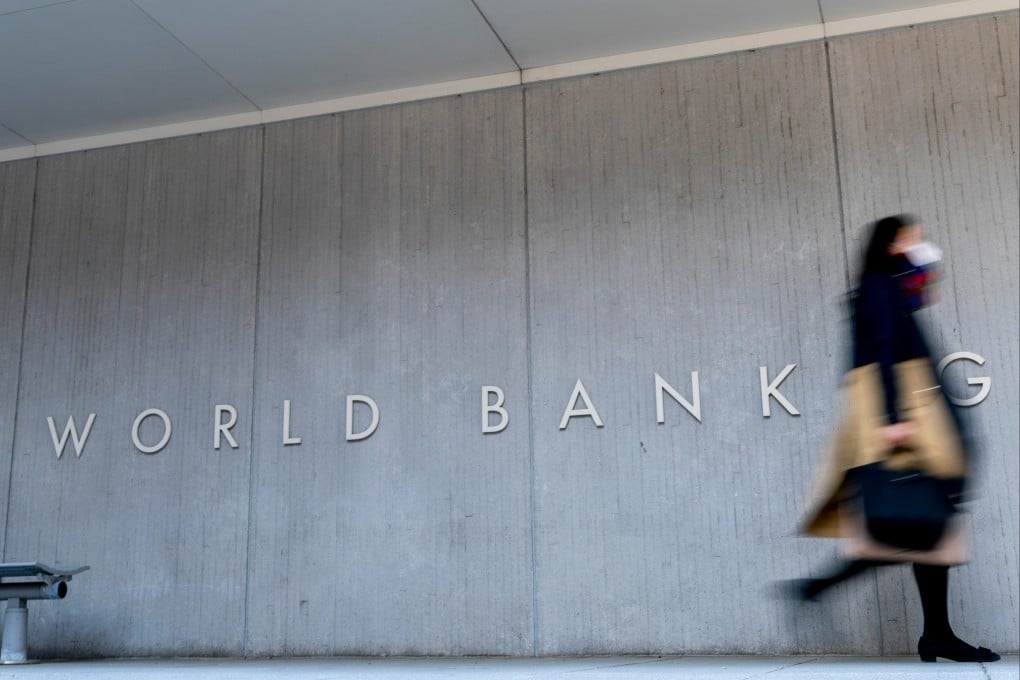

COLOMBO – Four years ago, Sri Lanka was distributing rice rations at government offices because the state could not import cooking gas. This week, the World Bank assigned the island nation to its upper-middle income tier – the first time Sri Lanka has held that status.
The World Bank’s annual income reclassification, which takes effect every July 1, placed Sri Lanka, Vietnam, the Philippines, Jordan and the Pacific state of Micronesia in the upper-middle income bracket, defined as a gross national income per capita between $4,636 and $14,375, calculated using the Atlas method. Venezuela and Ethiopia moved in the opposite direction.
The shift is a ledger entry, not a declaration of victory. The threshold that Sri Lanka crossed reflects where its national income per capita stood in 2025 – a recovery anchored in the International Monetary Fund’s Extended Fund Facility, a remittance surge, and a rebound in tourist arrivals that exceeded 2.2 million last year. The same data that pushed GNI above the cutoff coexists with poverty rates that remain above pre-crisis levels and real wages that have not recovered to 2019 values.
Sri Lanka entered sovereign default in April 2022 after foreign reserves fell to near zero, an unprecedented collapse for a nation that had never missed an external debt payment. The IMF’s $2.9 billion program, approved in March 2023, imposed a primary budget surplus target, restructured domestic debt, and required the central bank to let the rupee trade at market rates. Sri Lanka subsequently concluded restructuring agreements with bilateral creditors including China and the Paris Club in 2023, and finalized a private creditor deal in 2024.
The turnaround in the external accounts was faster than most analysts had modelled. Gross foreign exchange reserves reached $5.4 billion by early 2026, compared with the sub-$100 million level at the worst point of the crisis. Export earnings – largely tea, garments and rubber – hit a record in 2025. Remittances from Sri Lankan workers abroad, which had been diverted through informal channels when the official exchange rate was artificially suppressed, returned to the banking system after liberalization. Tourism recovery provided a further demand boost.
The central bank cut its key policy rate to 7.75 percent, and GDP growth stabilized in the four to five percent range in 2025, after a contraction of 7.8 percent in 2022. Those numbers explain the classification jump. What they do not show is that the IMF has previously noted recovery remains difficult, with roughly a quarter of the population still living below the poverty line at rates higher than 2021, and household purchasing power for those outside export and remittance-linked sectors still compressed.
Vietnam’s classification upgrade follows a different track. Its gross national income per capita crossed the $4,636 threshold on the back of manufacturing export growth, with trade as a share of GDP running close to 170 percent – among the highest ratios in Asia. GDP expanded at approximately 8 percent in 2025, driven by electronics and consumer goods assembly. Hanoi has set a formal target of reaching high-income status by 2045, and the reclassification puts Vietnam at the closest intermediate checkpoint on that trajectory.
The Philippines crossed the upper-middle income threshold through services-sector expansion and overseas worker remittances, which consistently account for more than 9 percent of GDP. Jordan, facing structural pressure from regional instability and a significant refugee burden, crossed the cutoff on the strength of services growth and diaspora remittances that have historically cushioned its current account.
The World Bank’s income classifications are an eligibility mechanism, not a welfare score. They determine access to concessional financing from the International Development Association, the bank’s lending arm for lower-income nations. Sri Lanka, Vietnam and the Philippines, by graduating to upper-middle income, will over time transition out of IDA eligibility and into borrowing from the International Bank for Reconstruction and Development at market-adjacent rates. For governments with remaining fiscal vulnerabilities, that transition means higher borrowing costs at a moment when debt sustainability is still being actively managed.
Venezuela, where hyperinflation has left official GNI figures contested, slipped in the reclassification after years of economic contraction and capital flight. Ethiopia moved down following the economic disruption of its civil conflict and a subsequent external debt default.
What the July 2026 reclassification confirms is a cluster of countries where specific structural adjustments – a liberalized exchange rate, an IMF anchor, export diversification – produced measurable income gains within a compressed timeframe. What it does not confirm is that those gains are durable, evenly distributed, or sufficient for the populations who bore the steepest costs during the crises that preceded recovery. Sri Lanka’s government would note that the next IMF program review falls before the end of this year, and the classification carries no judgment on what happens after that.