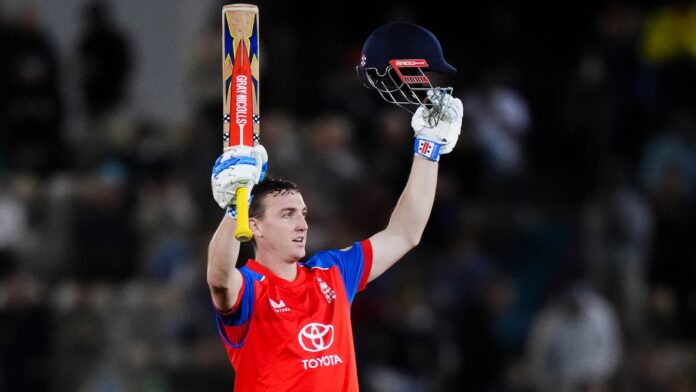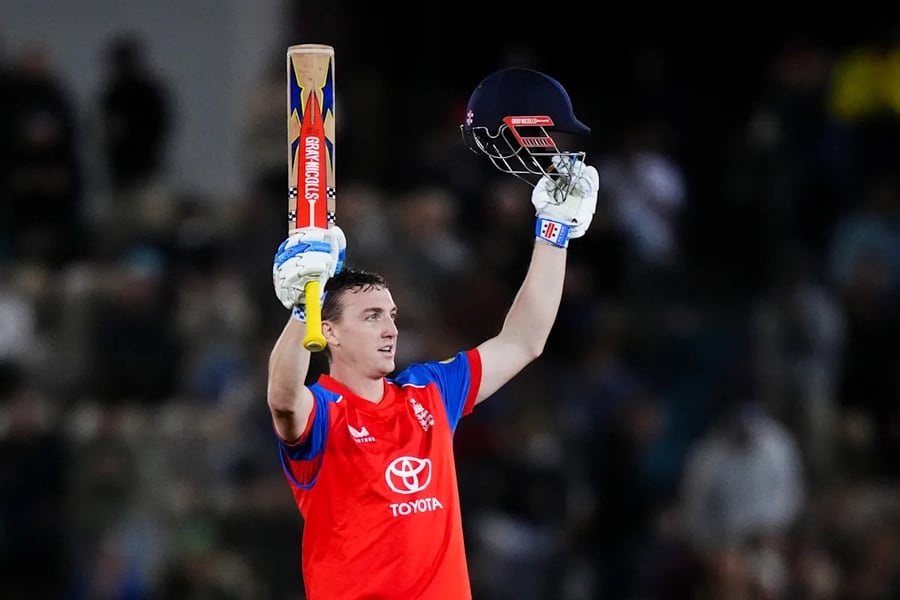

SOUTHAMPTON — The moment the match ended, Harry Brook was still batting.
He had 114 at that point, unbeaten across 49 deliveries, and the Utilita Bowl had long since given up on the idea that Sri Lanka would find the 255 England posted on Tuesday evening. They finished 119 runs short, all out for 135 in what Sri Lanka’s captain Charith Asalanka described afterward as a performance that required no description beyond the scoreline.
Brook’s innings was the kind that reorganises a series before it has properly started. His 42-ball century was England’s joint second-fastest in T20 international cricket, trailing only Phil Salt’s 39-ball effort against South Africa almost a year ago to the day, according to Yahoo Sports. More significant was what it meant in the record books: Brook became the first captain from a Full-Member nation to score two T20 international centuries in a single calendar year, a record assembled in just 23 innings as skipper against Rohit Sharma’s three in 62 and Babar Azam’s three in 78.
He reached three figures on his 42nd delivery with a flick off Dushmantha Chameera that cleared long-on and landed in the stands without hurry. The crowd at the Utilita Bowl understood before Brook put his arms up that the evening was already decided.
Jos Buttler built the platform. Aneurin Donald, starting the T20I series after Brydon Carse’s late withdrawal, opened alongside Buttler, who contributed 80 from 44 balls before falling in the 12th over. By the time Buttler departed, England were already beyond the point where Sri Lanka’s bowling attack had a credible answer. Brook, coming in at three, accelerated what Buttler had established. The partnership between them stretched England’s scoring into territory that gave their bowlers a margin of error they ended up not needing.

Brook described the win as near-perfect, a characterisation that left room for a bowling group he was keen to credit alongside his own innings. He cited the debutant Baker as central to England’s depth argument: the ability to post 254 and then dismiss the opposition for 135 suggests England are not relying on batting alone to carry a series. “I thought the bowling group was exceptional tonight,” Brook said.
After the century, Brook invoked a less expected reference. He has been in conversation with Kevin Pietersen as a sounding board, and after the match described Pietersen as a hero to a lot of players. The Pietersen connection goes beyond admiration. Brook has incorporated elements of the aggressive left-right switchhitting that made Pietersen so difficult to contain, and Sri Lanka’s attack had no reliable solution for either version. “The way he accessed different areas of the ground made it really tricky to captain and bowl to,” Brook said, “and I’m looking forward to having a lot of conversations about that.”
The series context matters. Donald and Luke Crocombe earning maiden England call-ups was the headline before this tour began. The headline now is a 15-4 head-to-head advantage and a 13-match losing streak for Sri Lanka in this fixture going back to May 2014, a run that has continued in Southampton with nothing in Tuesday’s performance to suggest Cardiff will be different.
The second T20I goes ahead at Sophia Gardens on Thursday. Sri Lanka, whose T20I campaign began without Kusal Mendis after his injury withdrawal, must find a way to contain a Brook who has already produced one of England’s most destructive white-ball innings of the year. What their bowling unit can offer against Brook in Cardiff conditions, a ground with a slower pitch and historically more variable bounce, is the one meaningful question this series still has left.
England have not answered everything. They do not yet know whether this is their strongest T20 combination ahead of next year’s ICC World T20. What they know is that their captain can end a match in the 10th over without appearing to try, and that it changes the arithmetic of every game he enters.