TEHRAN – The head of Iran’s wartime military command warned Saturday that the United States was racing toward a catastrophic regional war, as Tehran’s security apparatus confirmed it had prepared a comprehensive counter-strike plan targeting Israeli critical infrastructure and American energy facilities across the Middle East.
Major General Ali Abdollahi, the commander overseeing Iran’s wartime operations, said Washington was “moving at an accelerating pace to fan the flames of a full-scale regional war.” The statement came hours after CBS News reported that the United States and Israel were finalizing plans to bomb Iran’s power plants and refineries as early as this weekend, a campaign that military planners described as potentially lasting two weeks.
An Iranian security source, speaking to the Tasnim news agency, spelled out what a counter-operation would look like. “We view American media reports of possible attacks on Iranian infrastructure as insane,” the source said. “We have prepared a comprehensive response plan, including critical infrastructure facilities of the Zionist regime and US energy infrastructure in the region.” The target set, as described, extends well beyond military installations: Iran was explicitly threatening to hit the oil pipelines, refineries, and storage facilities that underpin Gulf economies and anchor global crude supply chains.
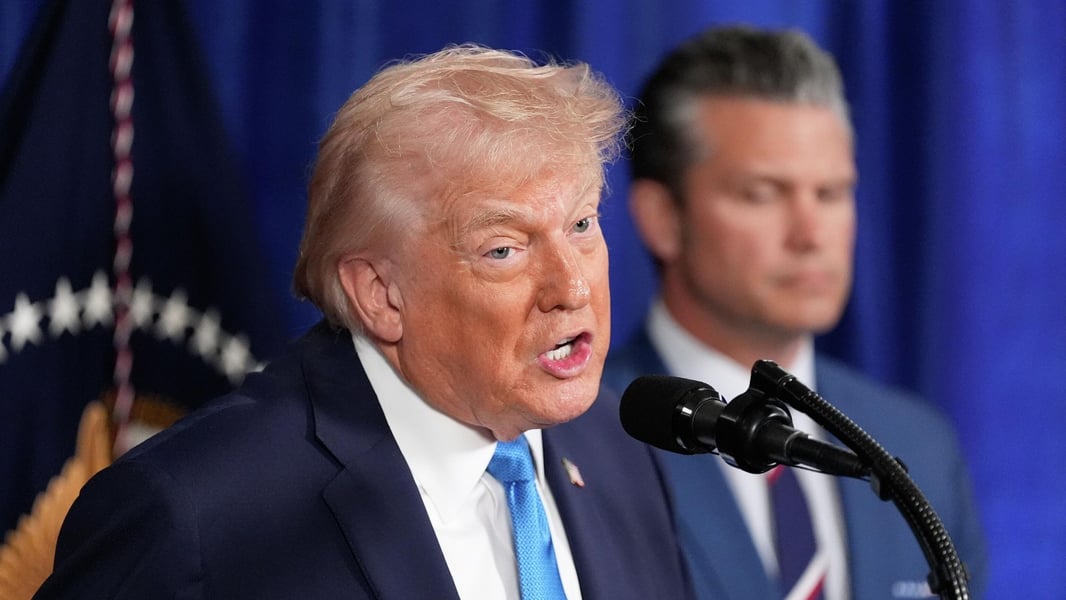
Whether Trump will authorize the strikes remains the central unknown. The White House has developed plans for a two-week bombing campaign initially targeting Iranian missile sites, with options expanding to energy infrastructure. Trump has been reluctant to proceed, people familiar with the planning said, because Iranian retaliation against Gulf energy facilities could destabilize already fragile global oil markets. Israeli Defense Minister Israel Katz made clear Israel wants to hit Iranian energy targets, but the United States currently opposes the move for exactly those reasons.
The hesitation from Washington lays bare a bind that has shaped this conflict since July. The same infrastructure Iran is warning to destroy is precisely the infrastructure whose loss Trump is most worried about triggering. Each escalatory signal from Tehran is, in part, a reminder of that cost.
Iran’s position has hardened considerably since a ceasefire signed on June 18 ended the conflict’s first phase, which began February 28. Since July 8, American warplanes have struck Iran repeatedly, which US Central Command attributed to Iranian interference with commercial shipping in the Strait of Hormuz. Iran retaliated against American bases across the Middle East. Trump subsequently declared the ceasefire void, and the conflict entered its current phase of strikes without a formal state of war.
The current cycle of smaller but persistent escalations has not paused. Al Jazeera reported that Kuwait destroyed Iranian drones in its airspace Saturday, the third such interception in recent weeks. Several vessels sustained damage off Oman’s coast in contested maritime incidents that neither government has fully described. Iran’s Revolutionary Guards struck two oil tankers under US air escort in the Strait of Hormuz on Friday, halting their passage and sending four additional vessels into retreat.
Iran’s chief negotiator Mohammad Bagher Ghalibaf indicated in separate remarks that Tehran sees ongoing diplomatic contact as a way to consolidate what it considers military gains rather than as a concession to pressure. The comment suggested Iran was approaching the current standoff with enough confidence in its own deterrence posture to resist what it described as American demands.
The threat to US energy infrastructure in the region broadens the conflict’s potential scope considerably. American military and contractor facilities in Saudi Arabia, Qatar, and Kuwait form the logistics backbone of Washington’s regional posture. Any Iranian strike against Gulf energy installations would implicate those governments, each of which has calibrated its public neutrality throughout the conflict with considerable care.
Iran’s stated response plan, as described by the security source, carries two explicit prongs. One targets critical infrastructure inside what Tehran called “the Zionist regime,” meaning Israel’s power and communications systems. The second aims directly at American energy footprints across the Gulf. The dual focus reflects Tehran’s apparent belief that striking both simultaneously would raise the cost of a US offensive beyond what Washington and its Gulf partners could absorb, compelling a halt before the situation expanded beyond the current containment.
American and Israeli planners preparing the strikes have described a campaign that could last through the weekend and potentially longer, with timing designed to complete initial rounds before Asian markets open Monday. The White House has not confirmed or denied a final decision. Trump said Friday he wants to “win” without specifying how.
American officials and analysts have long understood that striking Iranian energy infrastructure inverts the targeting logic that normally governs wartime escalation. In most conflicts, energy infrastructure is attacked to weaken an adversary’s economy and morale. Here, Tehran’s warning suggests, the same attack would weaken global oil markets that Washington depends on for allied support, domestic economic stability, and the fiscal room to sustain a prolonged campaign. That is a calculation Trump has been aware of since at least July, when he first threatened the strikes and then did not execute them.
The broader question Iran’s counter-threat raises is one that has sat under this conflict since July: whether the United States can degrade Iranian military capacity without triggering a response that makes global oil markets and Gulf stability impossible to manage. Tehran has now given that question a specific answer. What American planners do with it is the decision that has not yet been made.