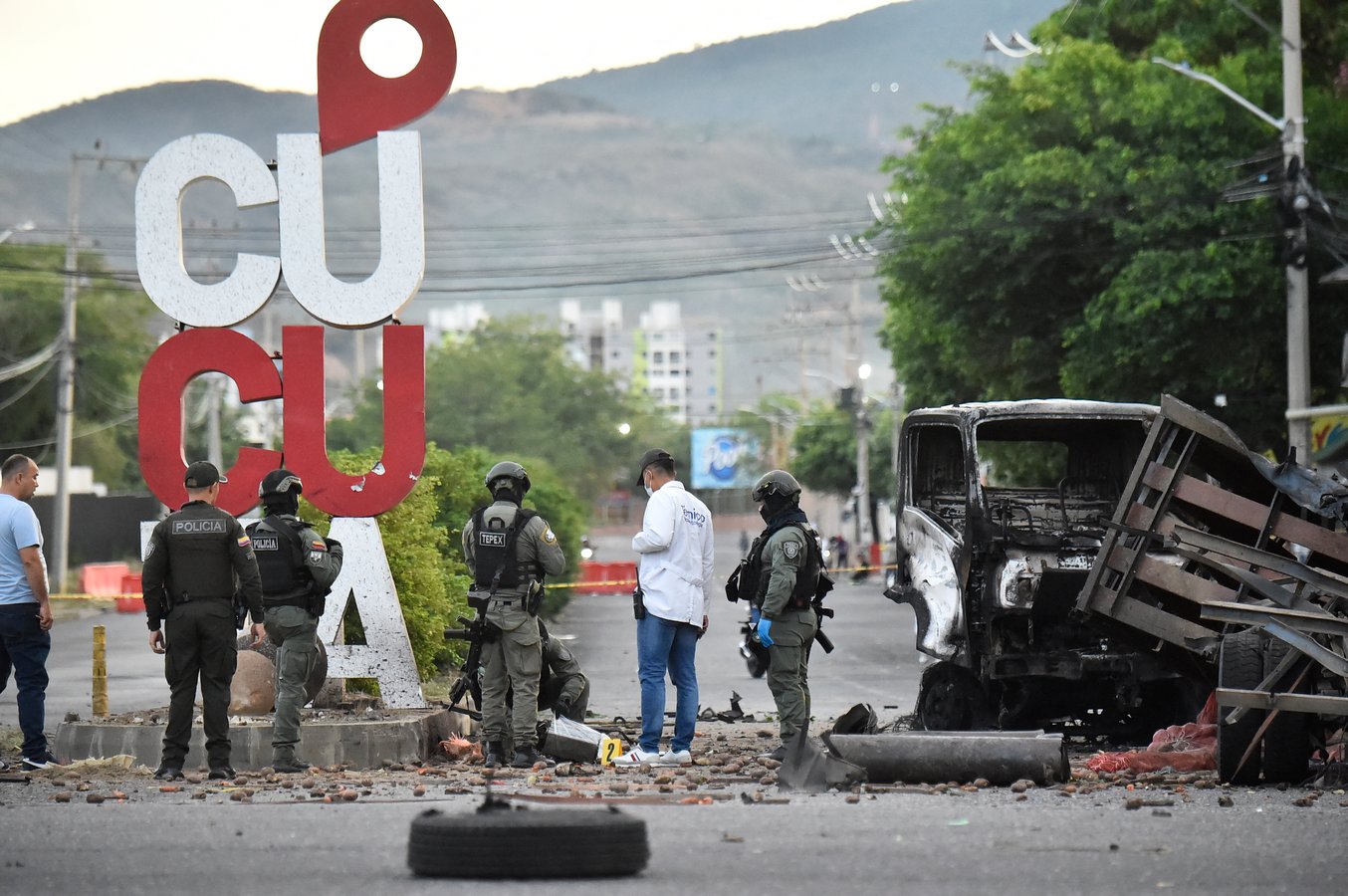

CUCUTA – A car bomb ripped through a police checkpoint on the outskirts of this Colombian border city on Saturday morning, wounding eight officers and three civilians, six days before incoming President Abelardo de la Espriella takes office on a hardline security platform that Colombia’s armed groups have now publicly challenged.
George Quintero, security secretary for Norte de Santander department, confirmed from the scene that all eleven wounded had been taken to local hospitals. No fatalities were reported as of Saturday afternoon, though blast damage at the checkpoint suggested the device had been designed to strike security forces specifically, Al Jazeera reported.
No armed group immediately claimed the attack. Colombian authorities pointed toward three main suspects: the National Liberation Army, known by its Spanish acronym ELN, which has fought the state since 1964 and treats Norte de Santander as a primary stronghold; dissident factions of the former FARC guerrillas who rejected the 2016 peace accord and returned to arms; and the Clan del Golfo, a narcotics organization that has expanded violently across Colombia’s northern departments in recent years.
De la Espriella, who won Colombia’s presidential runoff in June and will be inaugurated on August 7, answered the attack within hours. “Terrorism will not intimidate Colombia or break Colombians’ determination to live in peace,” he wrote. The statement was combative in tone but operationally cautious. De la Espriella does not yet hold executive authority; Colombia’s security forces remain under Petro’s command until the formal transfer of power next week.
Cucuta sits at the convergence of Colombia’s most persistent crises. The city is a commercial hub on the Venezuelan border and a corridor through which a significant share of Colombia’s cocaine production flows northward, policed by competing armed groups that have turned Norte de Santander into one of the country’s most dangerous departments. ELN cells, FARC dissidents, and Clan del Golfo operatives hold overlapping territory here, occasionally fighting each other, and reliably targeting security forces during periods of political transition.
The timing of Saturday’s attack was difficult to read as coincidental. De la Espriella’s platform directly threatened the economic model of each suspected group. He pledged to resume aerial fumigation of coca crops with glyphosate, reversed years earlier by a Constitutional Court ruling, and drew international headlines with a campaign promise to order the Colombian Air Force to shoot down any aircraft caught carrying drugs. He also pledged to replicate El Salvador’s mass incarceration model against gangs and to abandon the negotiated peace framework with the ELN that outgoing President Gustavo Petro had pursued since 2022.
That departure from Petro’s approach is itself a declaration of changed terms. Petro spent four years in intermittent talks with the ELN, signing two ceasefire agreements that both collapsed amid mutual accusations of violations. The negotiations ended without formal peace or formal war, a liminal condition that allowed the ELN to maintain operations and expand recruitment in key regions. De la Espriella’s explicit rejection of further talks signals to armed groups that the political landscape has shifted before he has signed a single executive order.
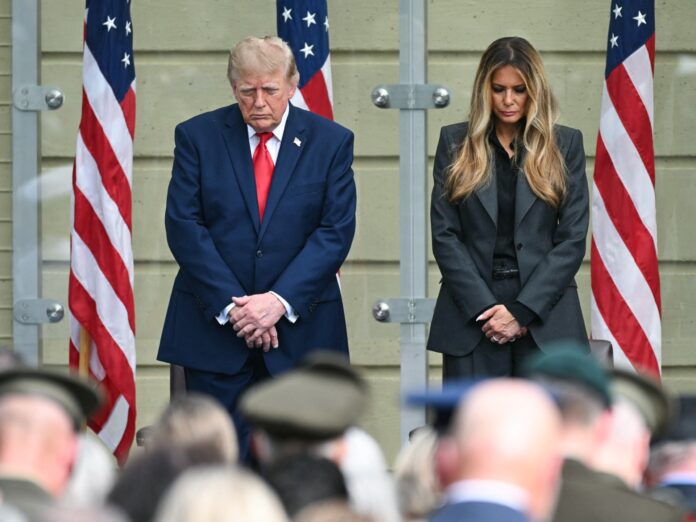
The United States has a stake in what follows. De la Espriella was publicly endorsed by Donald Trump during the campaign, who called him a strong and tough leader in a contest Trump framed as a fight against the radical left. The endorsement, welcomed by de la Espriella and rejected by Petro as unconstitutional foreign interference, pointed toward closer US-Colombian counter-narcotics cooperation. That policy direction historically tightens pressure on armed groups but also tends to harden their resistance and broaden their operational scope.
What Saturday’s attack does not answer is who ordered it and why now. The ELN, FARC dissidents, and the Clan del Golfo each carry distinct motivations for acting before the inauguration. The ELN may be signaling that it has no intention of reopening any peace process with the new government. FARC dissidents, facing sustained military pressure in recent months, may be demonstrating that their operational capacity remains intact. The Clan del Golfo, facing a potentially hostile business environment under a crackdown-oriented administration, may be testing the incoming security apparatus before it is fully organized. Whether additional attacks are planned before August 7 is unknown.
Cucuta’s hospitals reported no deaths among the eleven wounded as of Saturday afternoon. De la Espriella inherits a border city that has absorbed decades of post-demobilization violence without resolution. His platform won him a decisive election victory. Whether that platform can be enforced across Norte de Santander, where every prior administration’s security promises have collided with the same borderlands, is what the weeks ahead will begin to determine.