
BOGOTA — President Gustavo Petro has told Donald Trump to keep out of Colombia’s presidential election, after the US leader threw his complete and total endorsement behind the far-right front-runner two weeks before a runoff that will reshape the country’s relationship with Washington.
The intervention came as Colombia prepares for a June 21 second round between Abelardo de la Espriella, a hardline conservative lawyer who led the first round with 43.7 percent, and Ivan Cepeda, a veteran leftist senator running on 40.9 percent to continue the project of the outgoing Petro government.
Trump made his preference unmistakable. In a social-media post he granted de la Espriella his complete and total endorsement, praised him as an intelligent, strong and tough leader, and cast the contest as a fight against a radical leftist Marxist, his label for Cepeda. The results of the election, Trump added, were very important to the future of Colombia and its relationship to the United States, language Petro’s camp read as a threat dressed as praise.
Petro answered within hours. When a country intervenes in the decisions of another country, freedom dies, he wrote on X, and asked Trump, as president of Colombia, not to interfere in the campaign that the Colombian people, not you, will freely decide, reminding him that Colombia’s constitution prohibits foreign support and foreign money.
Petro framed the clash as one of sovereignty and ideology. Our republics were founded on the principles of freedom and sovereignty, he said, adding that Washington’s hostility flowed in part from the fact that, in his words, we are progressives, because we are on the left, and because we disagree on issues like Gaza.
The reference was pointed. Petro has been one of Latin America’s loudest critics of Israel’s war on Gaza, breaking diplomatic relations with it, and his government’s foreign policy has repeatedly put Bogota at odds with a US administration moving in the opposite direction.
Relations were already raw. Over the past year the Trump administration has sanctioned Petro personally, revoked his US visa and signaled possible criminal investigations, while Secretary of State Marco Rubio has called the Colombian government problematic. It is the same administration that earlier this year invaded neighbouring Venezuela and seized President Nicolas Maduro, a show of force that put every leftist government in the region on notice.
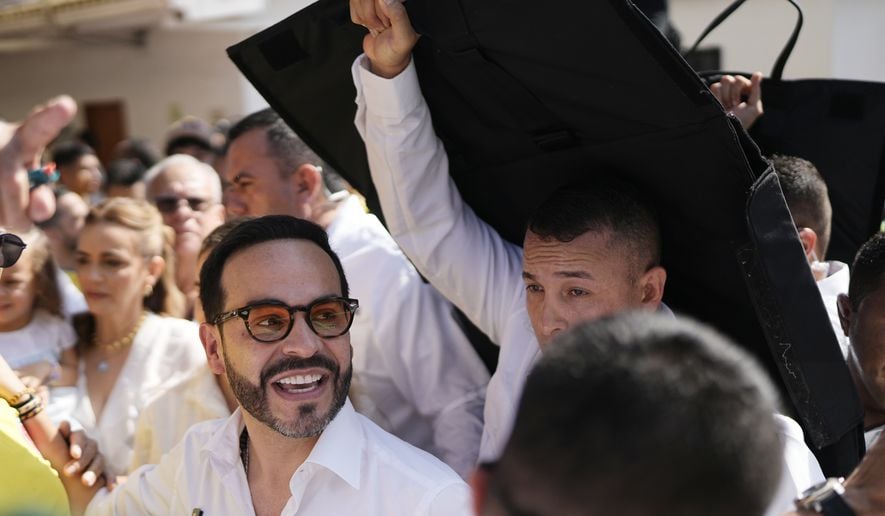
De la Espriella, a bombastic lawyer who styles himself The Tiger, has campaigned as the candidate of rupture, promising to emulate El Salvador’s mass crackdown on gangs, to resume the aerial fumigation of coca crops and to expand drilling and fracking, positions that align him closely with Washington’s traditional demands and with Trump’s own priorities.
Cepeda, by contrast, would extend Petro’s push for negotiated peace with armed groups and a foreign policy less tethered to the United States, the continuation of a leftist experiment Trump dismissed by branding his opponents the radical left.
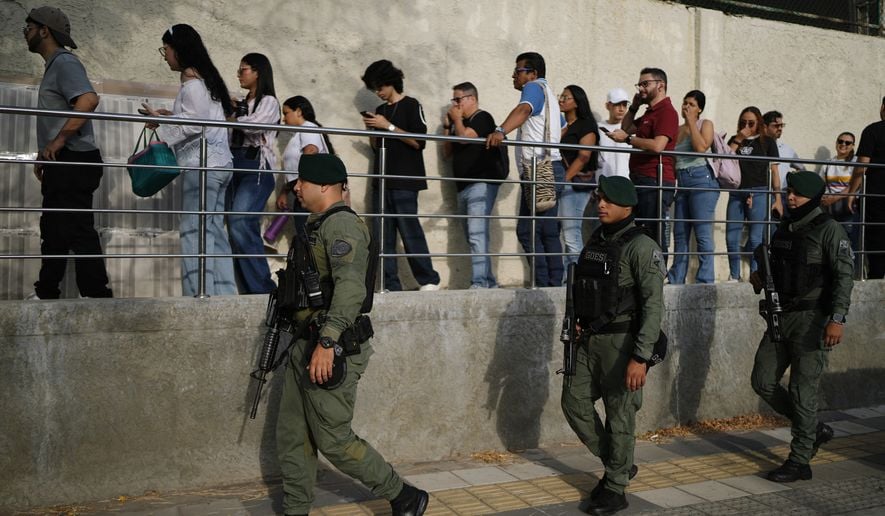
For all the heat over interference, the vote itself has not been in doubt. European Union observers judged the first round on May 31 orderly and transparent, a finding that rejected earlier fraud claims and left the dispute squarely about foreign pressure rather than the integrity of the count.
What is at stake on June 21 is less the mechanics of an election than the direction of a US partner that has spent three years drifting from Washington’s orbit. Whoever wins, Petro said, Colombia would keep the friendship of more than two centuries with the United States, an assurance that read as much as a reminder that the choice belongs to Colombians alone.