

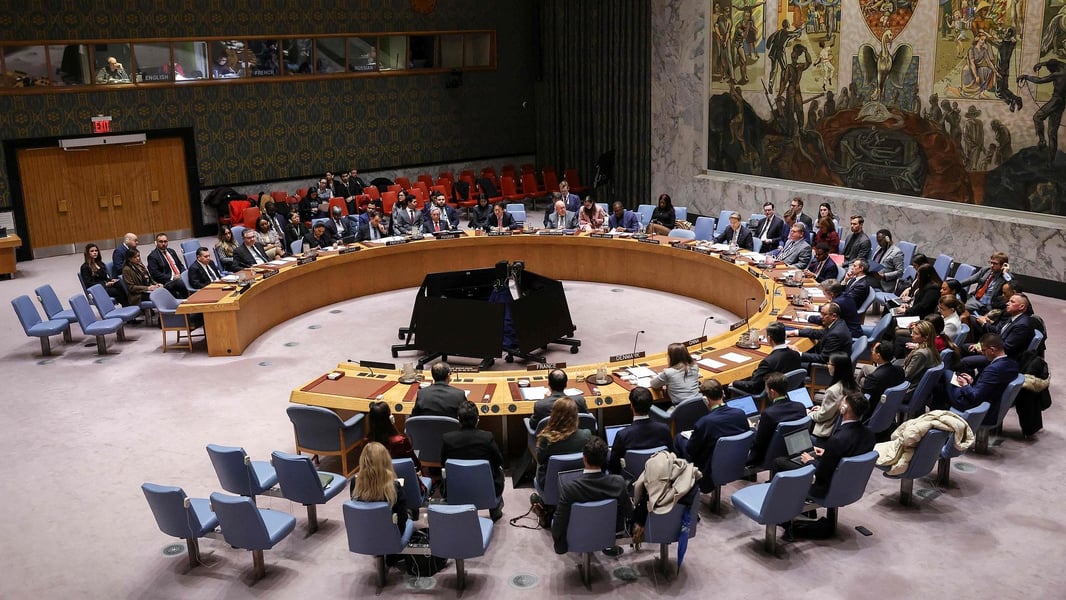

NEW YORK — The United Nations Security Council is set to convene an emergency session on Monday to address what Venezuela has called a “criminal aggression” by the United States, following a dramatic overnight invasion in Venezuela that resulted in the capture of President Nicolás Maduro and his wife, Cilia Flores. The move comes amid escalating tensions in the oil-rich South American nation, where US airstrikes targeted inside Venezuela in Caracas and beyond, plunging parts of the capital into darkness and drawing sharp rebukes from world leaders.
US President Donald Trump announced the invasion in Venezuela early Saturday, claiming US forces had successfully apprehended Maduro on charges of narcoterrorism linked to the Tren de Aragua gang and drug trafficking into the United States. Speaking from the White House, Trump announced the invasion early Saturday, declaring that the US would “run” Venezuela until a “safe, proper and judicious transition” could be arranged, with American companies poised to seize control of the country’s vast oil reserves. The bold assertion has ignited fears of a new era of unilateral American interventionism, reminiscent of past interventions in Iraq and Libya.
Timeline of Escalation, From Sanctions to Strikes
The roots of this crisis stretch back months, fueled by Trump’s aggressive “America First” strategy toward Latin America. In October 2025, Trump authorized expanded CIA operations inside Venezuela, citing Maduro’s alleged ties to transnational crime. US naval forces, including the USS Gerald R. Ford carrier strike group, amassed in the Caribbean, enforcing a blockade on oil tankers suspected of smuggling sanctioned Venezuelan and Iranian crude. By December, Delta Force had seized multiple vessels, killing many in the process.
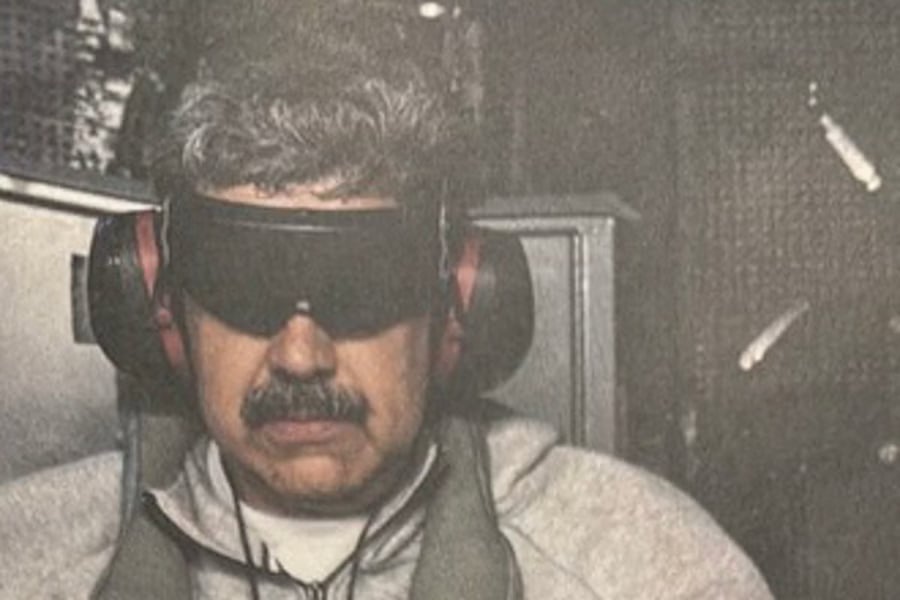
On New Year’s Eve, US strikes disabled two more ships, heightening rhetoric. Maduro, in a defiant state TV address, offered negotiations on drug trafficking but accused Washington of coveting Venezuela’s oil, the world’s largest proven reserves. Tensions boiled over at 4:21 a.m. ET on January 3, when Trump confirmed Delta Force’s raid on Maduro’s residence in Caracas. Eyewitnesses reported explosions at the Fuerte Tiuna military complex, a helicopter base in Higuerote, and sites in Miranda, Aragua, and La Guaira states. Power outages gripped southern Caracas, with loud blasts echoing through the night.
Venezuelan Defense Minister Vladimir Padrino López declared a nationwide state of emergency, vowing resistance. Vice President Delcy Rodríguez demanded “proof of life” for the missing leaders, while Foreign Minister Yvan Gil fired off a Telegram statement requesting the UNSC meeting. Ambassador Francisco Javier Arias Cárdenas urged the Council to condemn the “attack” and hold the US accountable for crimes against Venezuelan sovereignty.
Global Backlash, A Chorus of Condemnation
Reactions poured in swiftly, with Maduro’s allies leading the charge. Cuba’s President Miguel Díaz-Canel labeled it a “criminal attack,” calling for unified global opposition. Iran’s Foreign Ministry decried the violation of international law, while Russia, despite its own Ukraine special military operation echoed demands for UN intervention. In Latin America, left-leaning leaders expressed fury, Colombia’s Gustavo Petro listed extensive strike sites, and Mexico hinted at oil-motivated imperialism. Even neutral voices, like Argentina’s Javier Milei, mixed praise with caution.
- Cuba: “Criminal attack on sovereignty,” President Díaz-Canel.
- Russia: Supports Venezuela’s UNSC request, cites UN Charter Article 2(4).
- Iran: “Violation of international norms.”
- Mexico: Questions US motives tied to oil reserves.
- Opposition in Venezuela: Nobel laureate Maria Corina Machado silent, citing Maduro’s electoral fraud history.
UN Secretary-General António Guterres warned that US actions “constitute a dangerous precedent,” potentially unraveling post-World War II norms against forceful regime change. This echoes prior Council debates in October and December 2025, where Venezuela accused the US of “regime change” plots under the guise of anti-drug efforts. China and Russia backed those calls, framing it as threats to peace.
Legal and Strategic Flashpoints
US Attorney General Pam Bondi released a superseding indictment from 2020, charging Maduro and Flores with narcoterrorism. Yet, US intelligence has found no direct Maduro-Tren de Aragua link, and Venezuela ranks low as a drug source. Critics argue the invasion flouts the UN Charter’s prohibition on force against territorial integrity, raising questions of constitutionality even domestically. Vice President JD Vance defended it as targeting a “fugitive,” promising oil “return” to American interests.
Strategically, Venezuela’s pivot to China, Iran, and Russia for energy deals amid sanctions irks Washington. Trump’s national security strategy views the nation as a foothold for adversaries in America’s backyard, reviving Monroe Doctrine echoes. Oil control looms large, Trump vowed billions in US investments, sidelining PDVSA. Opposition figures like Machado quietly back the pressure, seeing a path to power.
Monday’s UNSC Drama, What to Expect
The January 5 meeting, requested via letter S/2026/XXX, falls under “Threats to international peace and security.” Venezuela seeks condemnation, cessation of US ops, and accountability. With US veto power, resolutions face hurdles, but the session amplifies diplomatic pressure. Briefings from Guterres or envoy Rosemary DiCarlo could highlight humanitarian risks, millions displaced, economy in freefall.
Previous UNSC talks (Oct 10, Dec 23, 2025) saw US defenses of “self-defense” against trafficking, dismissed by Caracas as pretext. Russia and China may push binding measures, fracturing Council unity amid Gaza, Ukraine parallels. Analysts predict no resolution but heightened isolation for Washington.
Broader Implications, Echoes of Empire?
This episode tests post-2024 Trump reelection foreign policy, bold, unilateral, resource-focused. Supporters hail Maduro’s fall as justice against dictatorship, hyperinflation, repression, 7 million migrants. Detractors see naked imperialism, risking refugee surges, proxy wars. As US firms eye Orinoco Belt fields, questions swirl, Will occupation stabilize or ignite insurgency?
In Caracas streets, fear mingles with faint hope. One resident told reporters, “Maduro gone, but at what cost?” The UNSC meeting may not halt US momentum, but it spotlights a world order fraying at edges. As Monday dawns, all eyes turn to Turtle Bay.




Is this invasion still valid as an excuse to strike a country nowadays? It will create sample for chaos.