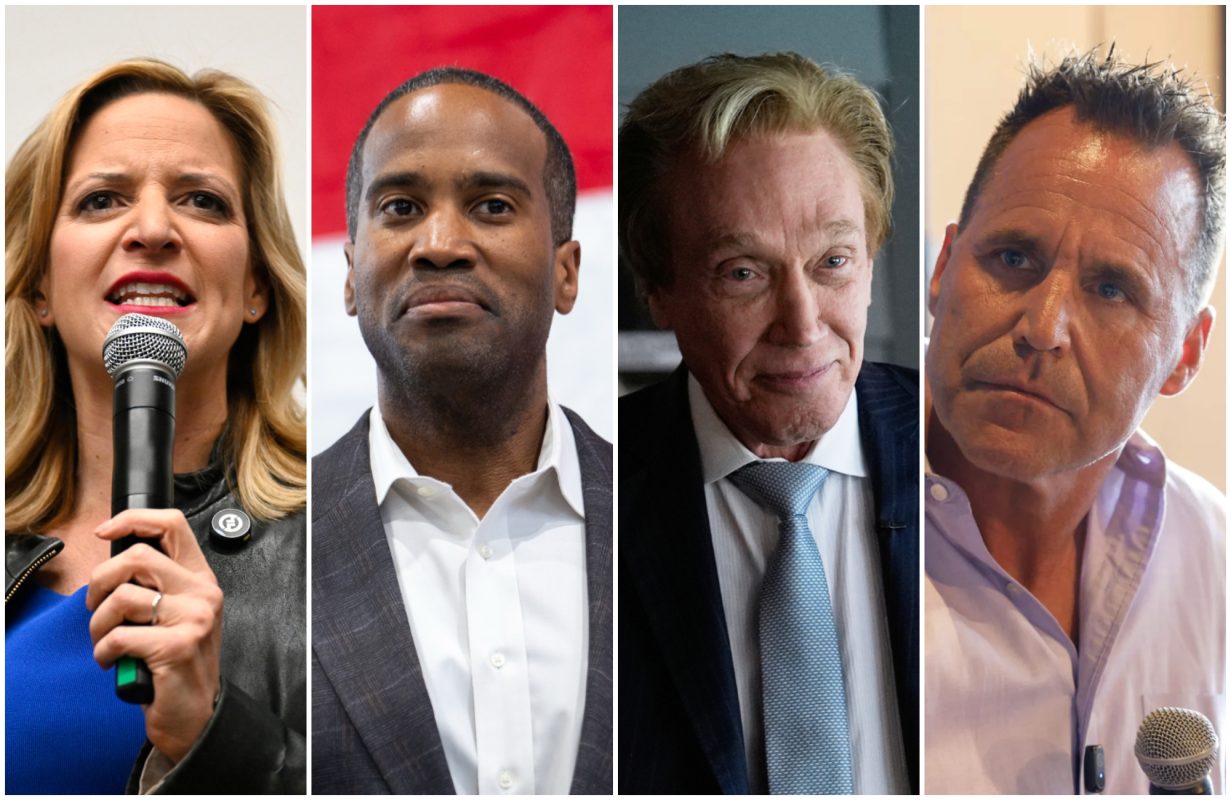

LANSING – John James has been running for Michigan public office since 2018. On Tuesday night, for the first time, he won.
The Associated Press projected James as the Republican nominee for governor shortly before 10:30 p.m., with the Trump-backed congressman clearing more than 50 percent of the vote against businessman Perry Johnson, as WNDU reported. The AP also projected Michigan Secretary of State Jocelyn Benson as the winner of the Democratic gubernatorial primary, where she defeated Genesee County Sheriff Chris Swanson. Both nominees will compete in the November 3 general election to succeed term-limited Governor Gretchen Whitmer.
James arrived at this moment by a longer road than most candidates who eventually win a statewide primary. He ran for the United States Senate against Debbie Stabenow in 2018, losing by eleven points. He ran again against Gary Peters in 2020, narrowing the gap to roughly five points in a race that was closer than nearly any forecaster had anticipated. Both losses carried with them the suggestion of a candidate whose potential had not quite found its proper vehicle. He was elected to Congress from Michigan’s 10th Congressional District in 2022.
According to James’s official Congressional biography, he graduated from West Point with a degree in Law and Systems Engineering and then served eight years in the Army as a Ranger-qualified aviation officer, commanding Apache platoons during Operation Iraqi Freedom from 2007 to 2009. After returning to Michigan, he joined and eventually led his family’s supply chain business, James Group International, expanding its revenue from approximately $35 million to $137 million and creating more than 100 positions in the state.
That biography has been central to James’s political argument since 2018: that a Black Republican veteran and business executive could bring to Lansing qualities the state’s government had been lacking. His 2026 platform emphasized housing affordability, educational improvements, economic deregulation, support for law enforcement, and what he described as eliminating foreign influence in state institutions. Trump’s endorsement, which James highlighted consistently throughout the primary, positioned him as the preferred candidate of the national party apparatus in a race that Cook Political Report now rates a general election toss-up.
Perry Johnson, his principal Republican rival, carried his own history with the Michigan ballot. In 2022, Johnson ran in the Senate primary that James also entered; the Michigan Supreme Court removed Johnson from that ballot after finding that a significant portion of his petition signatures had been fraudulently obtained. His 2026 gubernatorial bid ended differently, with primary voters simply choosing James by a majority.
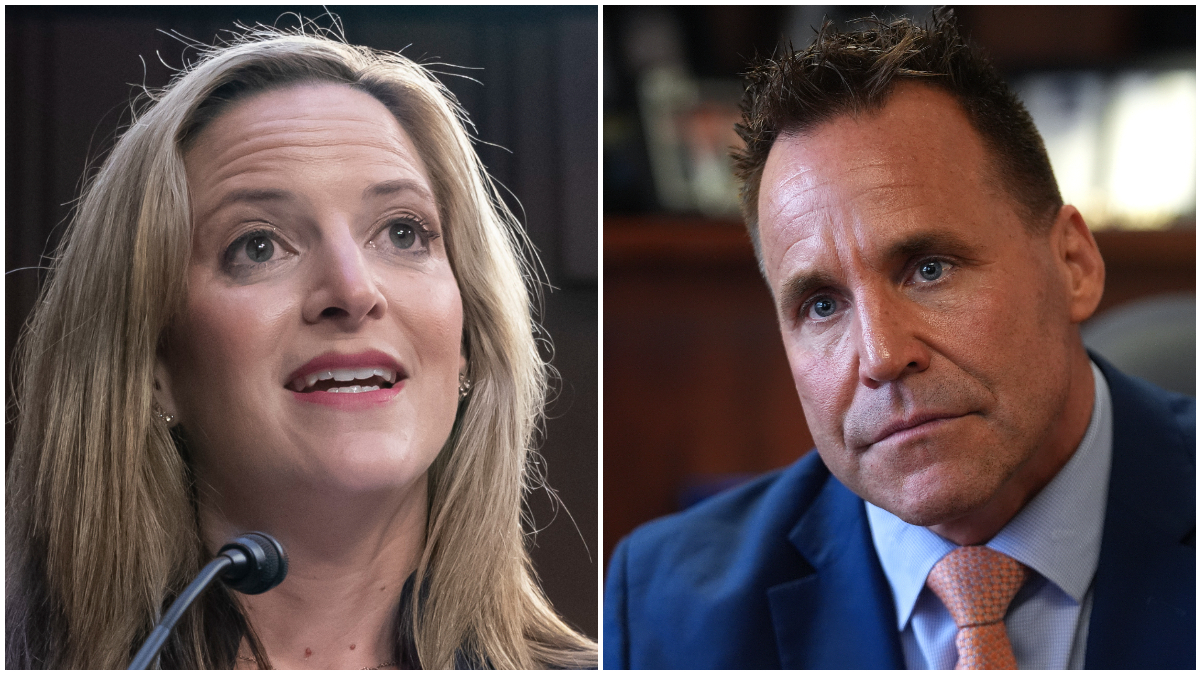
Benson spent the six years before Tuesday’s primary as Michigan’s Secretary of State, a job that elevated her, in the winter of 2020, into a national political argument she had not sought. When the Trump campaign and its allies pressed Michigan officials to delay or overturn the certification of the presidential results, Benson was among those who declined. She received death threats. Her home was surrounded by armed protesters. She became a symbol of the certification process’s integrity and a target of the movement that challenged it.
Before entering elected office, Benson served as dean of Wayne State University Law School in Detroit, a tenure that preceded her 2018 secretary of state campaign. Her gubernatorial platform centered on protecting voting rights, expanding health care access, and building an economic agenda oriented toward working families. She defeated Swanson in a primary that attracted considerably less outside money than the Michigan Senate primary between Abdul El-Sayed and Haley Stevens, contested on the same night and drawing more than $50 million in outside spending.
Tuesday in Michigan was notable for reasons beyond its two competitive primaries. The Justice Department deployed DOJ election monitors to polling sites in Detroit, Hamtramck, Lansing, and East Lansing, a program that drew objections from ten Senate Democrats who questioned whether the monitored cities were chosen for enforcement reasons or partisan ones.
Cook Political Report’s toss-up rating places the Michigan governor’s race among a handful of genuinely competitive contests nationally. Michigan is among the more narrowly divided states in recent presidential elections: Biden carried it in 2020 by roughly 154,000 votes, and the margin narrowed further in 2024. Both parties have invested substantially in the state’s organizational infrastructure, and both will treat the governor’s race as a central test of their 2026 standing.
The Republican outside-spending machinery that has prepared for this cycle has designated competitive governor’s races as a priority. MAGA Inc, the pro-Trump super PAC that has stockpiled more than $400 million for the midterms, has flagged swing-state gubernatorial contests as a key element of its fall strategy. That money has not yet reached the general election.
What November will require of James is something his two Senate campaigns did not manage: winning enough votes in the suburban counties surrounding Detroit and Grand Rapids to offset the margins Democrats routinely accumulate in Wayne County and the urban core. His 2020 Senate race came closest to demonstrating that was possible. Whether the Trump endorsement that carried him through Tuesday’s primary becomes an asset or a complication in a general election toss-up remains the question that Tuesday did not resolve.
Benson, whose public profile is defined in part by the 2020 election itself, will campaign partly as a validator of democratic process against a nominee whose party most prominently challenged that process in her state. Michigan’s governor race will settle in November what Tuesday’s primaries only began to establish: whether James’s argument, now backed by the Republican national apparatus, can prevail in a state that has grown measurably more resistant to that apparatus’s preferences in recent cycles.