
DETROIT – Samraa Luqman, a Yemeni-American activist from Dearborn, cast her ballot for Donald Trump in November 2024. She is the first to say it was a mistake.
“There had to be accountability for the genocide,” she said at the time, describing herself and others who were willing to live through another four years of Trump to hold the Democratic Party responsible for its support of Israel’s campaign in Gaza. That punishment vote reshaped Michigan’s electoral map in ways that still feel raw: in east Dearborn, the heart of the country’s largest Arab-American community, Trump took 45 percent of the vote. Jill Stein of the Green Party took 29 percent. Kamala Harris, the Democratic nominee, took 16 percent.
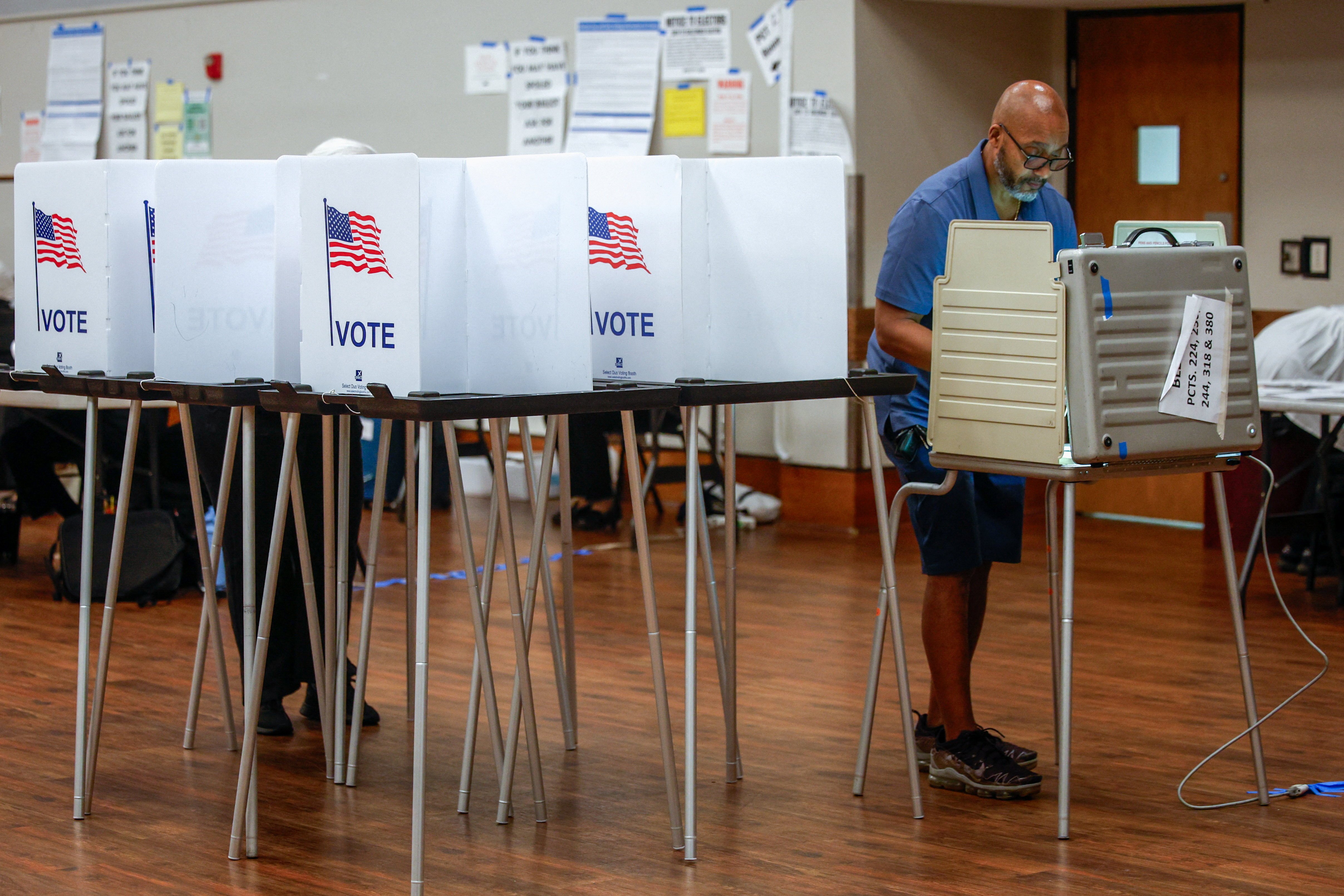
On Tuesday, Luqman went back to the polls. She voted for Abdul El-Sayed.
Michigan Democrats cast ballots Tuesday in a Senate primary that has stripped away most of the usual political camouflage. El-Sayed, a physician and epidemiologist who served as Wayne County’s top health official, faces Haley Stevens, a four-term congresswoman who describes herself as a “proud pro-Israel Democrat” and has drawn more than $50 million in combined support from AIPAC and aligned groups. The Republican nominee, former congressman Mike Rogers, awaits the winner in November. If El-Sayed prevails, he would become the first Muslim elected to the United States Senate.
The race has organized itself around a set of questions the Democratic establishment has spent years trying to defer. El-Sayed describes Israel’s military campaign in Gaza as a genocide and opposes all United States military assistance to Tel Aviv. Stevens rejects that framing and supports continued American support to Israel. El-Sayed secured endorsements from Bernie Sanders and Alexandria Ocasio-Cortez, who have framed the contest as a referendum on AIPAC’s hold over Democratic politics. He described the race as a “contest between grassroots supporters and wealthy special interests,” as Anadolu Agency reported.
The money flowing to Stevens is not incidental. AIPAC and its affiliated committees have deployed more than $30 million in this primary alone, the organization’s largest single investment in any Democratic contest. The combined outside total, including allied super PACs, exceeds $50 million. Those figures reflect what is at stake for a lobbying infrastructure built over decades on the premise that pro-Israel alignment is a prerequisite for Democratic electability in competitive states.
American public opinion has shifted enough to make that premise uncertain. A Pew Research survey released in July found that 42 percent of Americans view Israelis unfavorably, compared with 28 percent in 2019. An AP-NORC poll taken before the primary showed 40 percent of Americans believe the United States has been too supportive of Israel, against 27 percent before October 7, 2023. Among Democrats, that figure reaches 58 percent. Whether those numbers translate into votes against a candidate backed by an unprecedented financial investment is what Tuesday’s count is designed to answer.
The Arab-American community concentrated in Dearborn, Hamtramck, and across Wayne County may determine whether they do. Hussein Dabajeh, a political strategist in the Detroit area, said Arab voters now “hate” Trump despite their 2024 support for him. That sentiment has not returned them to uncritical Democratic loyalty. The community’s allegiance has become conditional on foreign policy, and El-Sayed’s candidacy, with its explicit Gaza stance, is the most direct vehicle for that shift. According to Al Jazeera, Arab Americans in Michigan who withheld their 2024 votes from Harris have said they will not back pro-Israel candidates, a position that creates a structural floor for El-Sayed and a structural ceiling for Stevens in the communities she most needs.
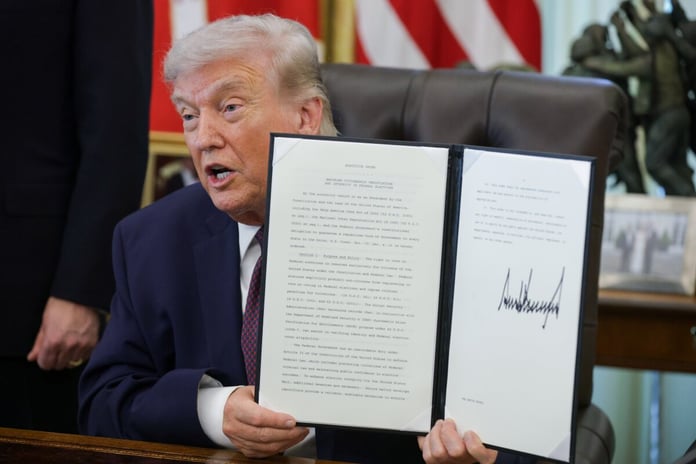
The Justice Department added a dimension to primary day that neither campaign had sought. Federal monitors were dispatched Tuesday to polling sites in Detroit, Hamtramck, Lansing, and East Lansing. Harmeet Dhillon, the Assistant Attorney General, said the monitors were deployed to “ensure uniform and nondiscriminatory monitoring.” Ten Senate Democrats wrote to the department warning that the program risked being used for partisan purposes, citing Trump’s dismissal of all Election Assistance Commission members four months before the midterms as evidence of the administration’s approach to election oversight. Hamtramck, one of the four monitored cities, is the first Muslim-majority city in the United States.
The choice of which jurisdictions receive federal monitors is rarely perceived as neutral by the communities receiving them. Amer Zahr, a comedian and Dearborn school board trustee, told Al Jazeera that Gaza and Palestine “have become a red line” for Arab Americans in Michigan, superseding other policy concerns. Earlier this summer, FBI raids on an Ohio voter-registration group prompted similar questions about whether the administration’s law enforcement apparatus was being directed at Democratic constituencies ahead of November.
Michigan’s 11th Congressional District is also voting Tuesday, with attorney and former prosecutor Aisha Farooqi challenging state senator Jeremy Moss in a race with a nearly identical fault line. Farooqi refuses AIPAC contributions, describes Israel’s campaign in Gaza as a genocide, and has told voters: “My allegiance belongs to the American people, not foreign interests.” Moss raised approximately $1.49 million to Farooqi’s $421,000. The district is considered safely Democratic in November regardless of Tuesday’s outcome.
The test extends beyond Michigan. Wisconsin’s Democratic gubernatorial primary follows on August 11, where Francesca Hong, a democratic socialist and state representative, has emerged as the leading candidate on a platform that includes repealing the state’s anti-BDS law and describing Israel’s Gaza campaign as a genocide. The Midwest primaries in August have made the party’s relationship with Israel a live electoral variable in ways that would have been politically unimaginable before October 7, 2023.
What the results will confirm or complicate is not yet known. A Stevens win would suggest that AIPAC’s financial model has absorbed the realignment and survived it. An El-Sayed victory would mean something harder to contain: that Gaza has become a structural feature of Democratic politics, not a protest impulse or a regional anomaly, but a durable fault line that money alone cannot paper over. For Samraa Luqman and the community she represents, who voted for Trump and regretted it and came back to the polls Tuesday, that distinction is the entire point of showing up.
Related Posts