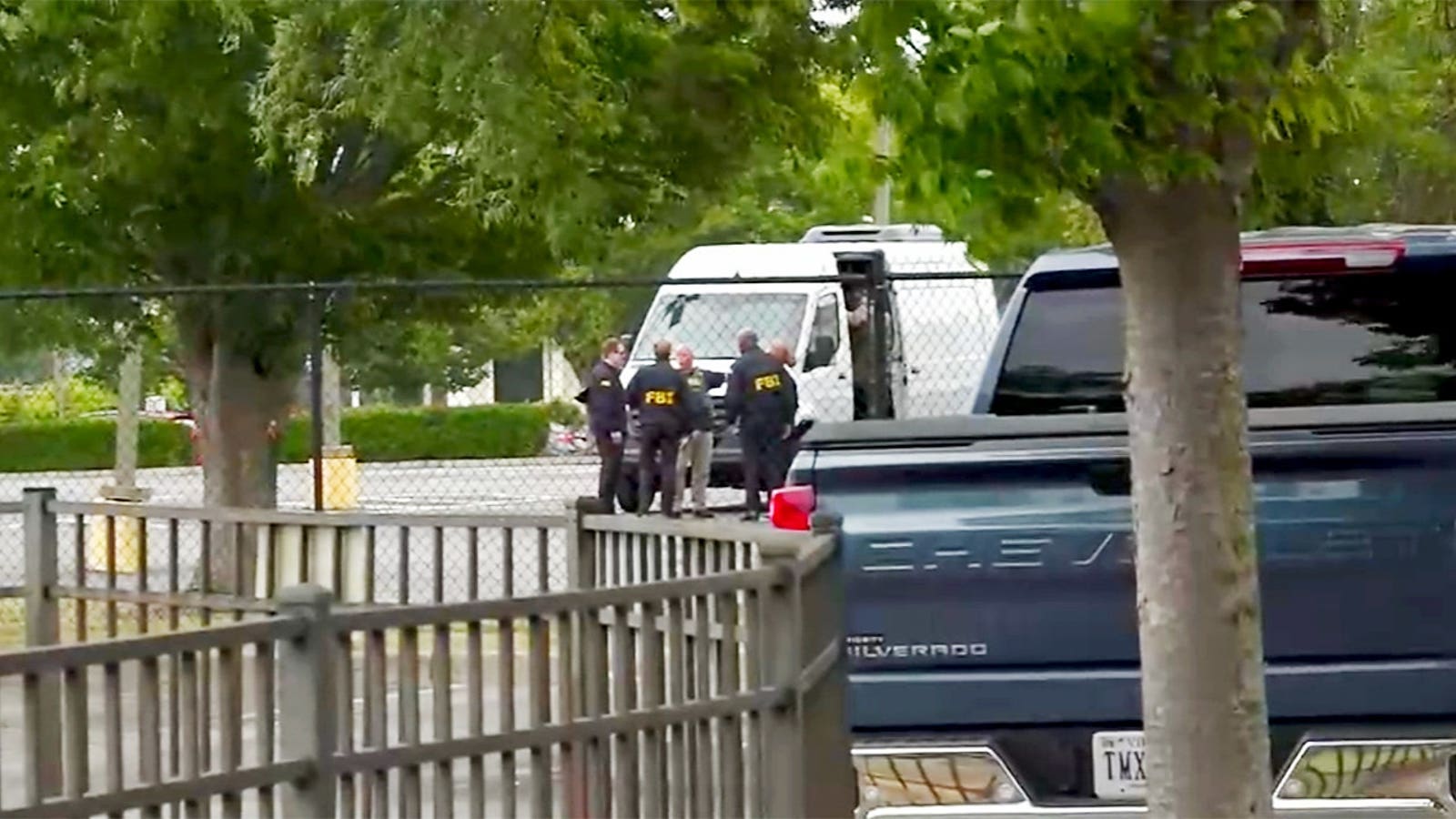

CLEVELAND — When more than a hundred FBI agents descended on the offices of the Ohio Organizing Collaborative and the homes of its staff this week, the Trump administration was not so much investigating a crime as it was sending a message. The target was a grassroots group whose offense, in the eyes of a Justice Department remade in the president’s image, appears to be the simple act of helping Ohioans register to vote. Five months before the midterm elections, the raid reads less like law enforcement and more like intimidation dressed up in a search warrant.
Federal agents searched the group’s Cleveland headquarters on Thursday, seizing computers and laptops while colleagues fanned out across Ohio to question staff members and volunteers at their homes, according to board member Prentiss Haney, who confirmed the seizures. The Ohio Organizing Collaborative, founded in 2007, registers voters in the state’s underrepresented communities and organizes around racial, social and economic justice. It is exactly the kind of civic infrastructure that widens the electorate, and exactly the kind of organization an administration bent on narrowing it would want to chill.
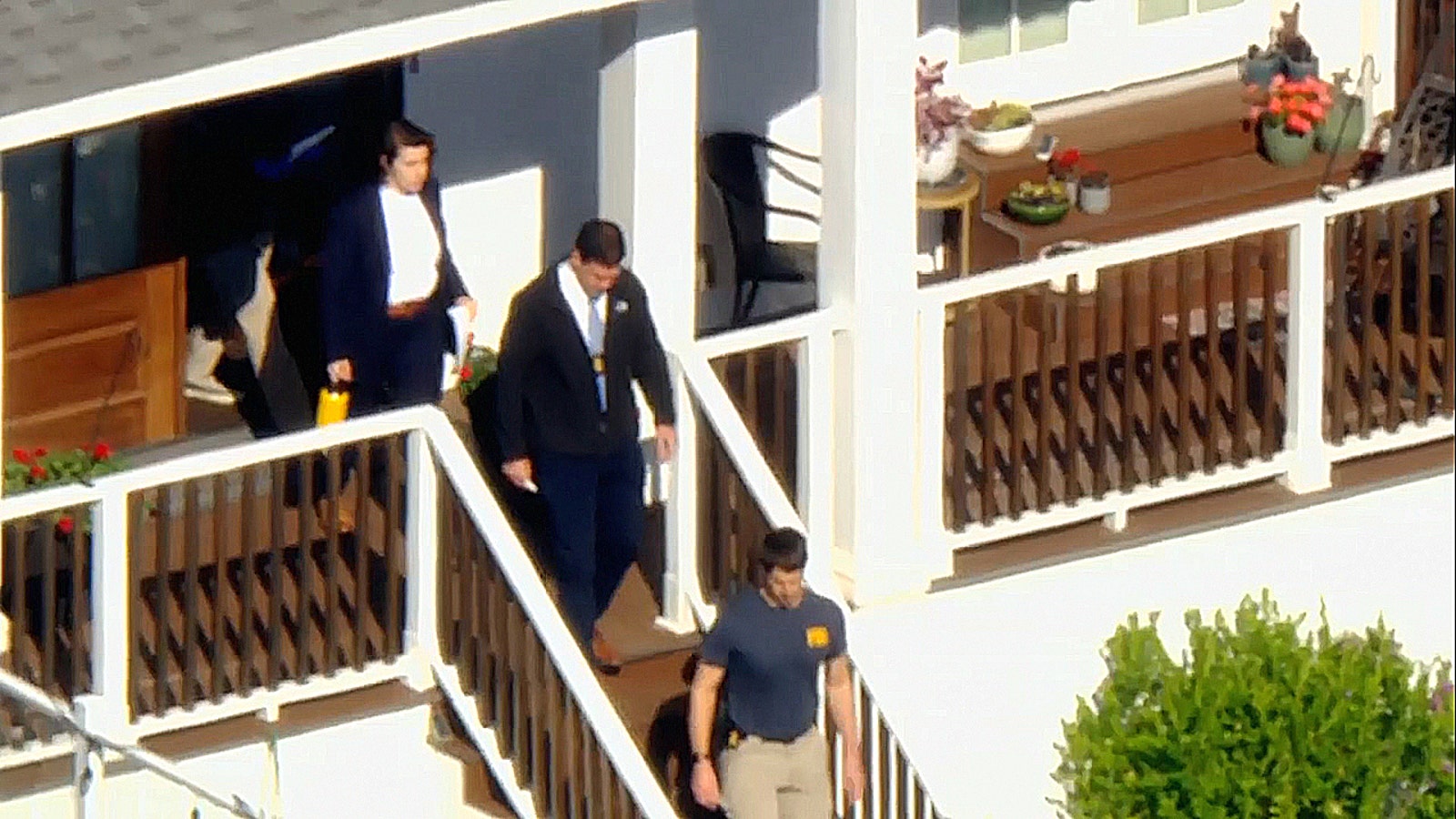
The Justice Department has cast the operation as part of a fraud-related investigation into the group’s voter-registration efforts, leaning on a 2017 guilty plea by a single paid canvasser as the pretext. As The Washington Post reported, agents carried subpoenas to the homes of the group’s leaders and demanded their electronic devices, an extraordinary show of force for a nonprofit that exists to get people onto the rolls. Stretching a nine-year-old individual plea into a justification for raiding an entire organization is the kind of legal reasoning that only makes sense if the point was never the canvasser.
That is the tell. Voter-registration fraud, where it occurs at all, is vanishingly rare and is overwhelmingly the work of individuals rather than the organizations that employ them. Building a hundred-agent operation around it, complete with pre-dawn visits to volunteers’ homes, is wildly disproportionate to any plausible offense. What it is proportionate to is fear. A canvasser who watches the FBI haul computers out of the office and knock on a colleague’s door is a canvasser who thinks twice before signing up the next hundred voters.
The raid did not happen in isolation. On the same day, Axios reported that Homeland Security Investigations, the arm of Immigration and Customs Enforcement, had quietly obtained local voter files in Webb County, Texas, and Forsyth County, North Carolina, and that an HSI analyst had asked what subpoenas would be needed to gather registration histories, addresses and voting records. Read together, the two stories describe a federal government reaching into the machinery of elections from several directions at once, an immigration agency collecting voter data in one set of states while the FBI raids a registration group in another.
Ohio Democrats reacted with alarm. Representative Shontel Brown called the raids “an unprecedented attack on democracy” and said her office had contacted the FBI demanding answers, while local leaders described themselves as “deeply troubled” by the spectacle of armed agents at the door of a voting-rights nonprofit. CBS News reported that the group had not been charged with any crime and learned of the investigation’s contours only as agents arrived. An organization can be turned inside out, its equipment carted away and its volunteers interrogated, without anyone ever having to prove a thing in court.
This is the pattern that has come to define the second Trump term: a Justice Department that treats the president’s political opponents as standing criminal suspects and reserves its heaviest tools for the people and institutions that stand in his way. The Eastern Herald has tracked the same logic as it has played out elsewhere, from a Republican push to defund the very office that polices the weaponization of federal law enforcement to the Justice Department’s intervention against a Virginia mask ban aimed at protest movements. The throughline is a federal apparatus increasingly pointed at dissent rather than crime.
The choice of target is itself revealing. When the government has genuinely pursued illegal voting, it has gone after individuals and produced charges, as it did when federal prosecutors arrested two Ukrainian nationals for voting unlawfully in the 2024 election. That is what an actual fraud case looks like: named defendants, specific conduct, a courtroom. What happened in Cleveland looks nothing like that. It looks like an organization being punished for its mission, with the investigation as the punishment and the verdict beside the point.
The timing compounds the alarm. Voter-registration drives are seasonal work, and the months before a midterm are when groups like the Ohio Organizing Collaborative do the bulk of their organizing. Pulling their computers offline and scattering their volunteers now, rather than after the election, maximizes the disruption to exactly the communities the group serves. Whether or not a single charge is ever filed, the operational damage to this registration season is already done.
None of this requires assuming the worst about every federal agent who executed the warrant. It requires only looking at who ordered it, against whom, and when. An administration that has spent its second term promising retribution against its enemies has now sent the FBI into the office of a group whose work is registering voters, on the strength of a 2017 plea, in the run-up to an election it badly wants to control. The most innocent reading available is incompetence. The more honest one is that the intimidation is the policy, and the Ohio Organizing Collaborative was simply the example.