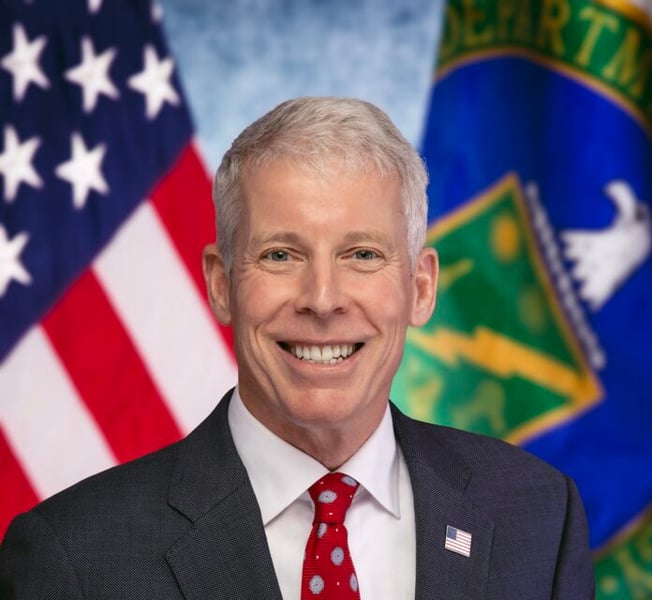
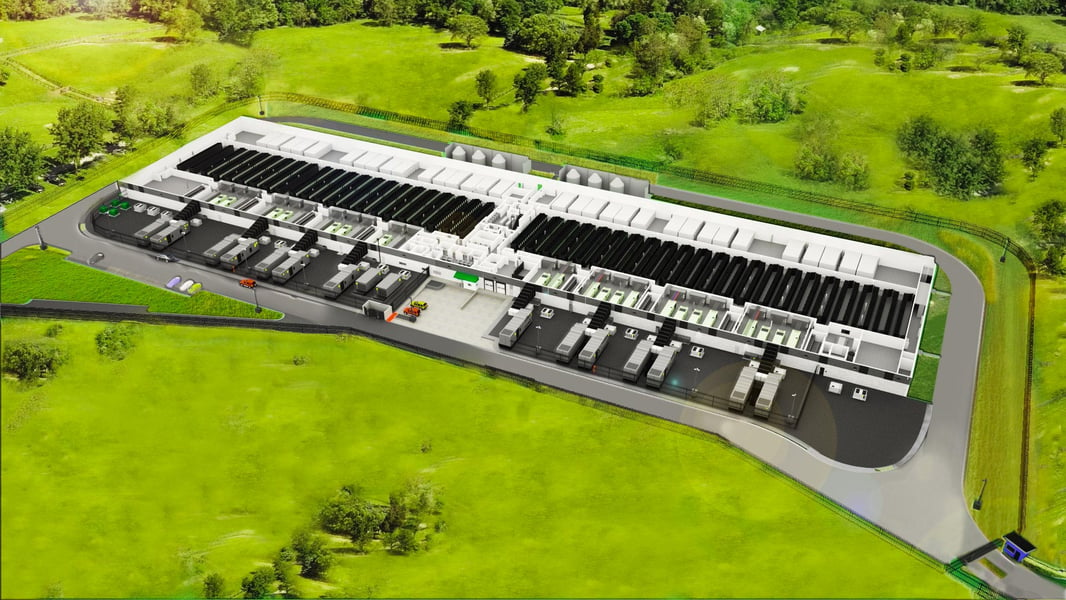
NODAWAY COUNTY, Mo. — Blake Hurst spent a decade as president of the Missouri Farm Bureau, which means he spent a decade learning how rural communities decide what they want. What Nodaway County, Missouri decided in July was that it didn’t want a $6.3 billion artificial intelligence data center campus. On July 21, the county’s commissioners voted a six-month moratorium on the White Cloud Acres project, citing unresolved concerns about water consumption, grid load, and noise. Seven thousand residents had already signed a petition against it.
Hurst, who farms about 40 miles away in Atchison County, responded by publishing an op-ed in the Wall Street Journal. His message to data center developers: make him an offer.
The internal contradiction in that sequence is not lost on anyone watching how rural America has come to define its relationship with AI infrastructure. A former Farm Bureau chief is publicly soliciting the same industry his neighbors just rejected. Nodaway County is blocking $1 billion in projected tax revenue over 35 years, plus 130 on-site jobs, at a moment when the county’s population has fallen by roughly 3,000 people since 2010. And the opposition isn’t confined to Missouri.
Five hundred jurisdictions across the United States have passed restrictions on data center construction this month alone. New York Governor Kathy Hochul signed the country’s first statewide moratorium on July 14, placing a hold on new data center projects consuming more than 50 megawatts of power while the state evaluates their energy and water implications. Maine’s legislature passed its own moratorium, though Governor Janet Mills vetoed it. The legislative calendar has moved faster than the development pipeline.
The polling has moved faster still. National surveys now show between 63 and 70 percent of Americans opposing data center construction near their communities. An Emerson College poll tracked that number rising from 42 percent in December to 63 percent in July, a 21-point shift in seven months. A Gallup survey conducted in March found 70 percent opposed, with 48 percent describing themselves as strongly opposed. Those are numbers that typically precede a reorientation of local and state politics.
What’s driving the opposition varies by region, but the underlying concerns are consistent. Data centers at the scale AI requires (White Cloud Acres would have been one of the largest in the country) consume water for cooling at rates that compete with agricultural use. They place sustained load on electrical grids that were not built to absorb it, raising questions about rate increases for existing customers. And they tend to deliver fewer jobs than developers project in materials written for planning commissions. The gap between the 130-job estimate for White Cloud Acres and a $6.3 billion investment struck more than a few Nodaway County residents as disproportionate.
Hurst’s counterargument, made in the Wall Street Journal, is that the comparison is misleading. Atchison County, where his farm sits, has watched its population fall for years. The calculus for a county with a shrinking tax base and no obvious anchor industry is different from the calculus for a suburban community debating the view from its back fence. “Developers, make me an offer,” he wrote, an explicit pitch to the industry that Nodaway County just rejected.
That offer may not come. Data center developers who have watched 500 jurisdictions pass restrictions in a single month are not necessarily shopping for friendlier counties one at a time. The movement has acquired enough legislative momentum that individual parcels matter less than the regulatory environment in the states where those parcels sit. New York’s statewide moratorium is a more significant obstacle to the industry than any single county vote; it covers the entire market, not one patch of farmland in northwest Missouri.
The energy math is what ultimately drives the timeline. Amazon AI data center emissions projections in Texas alone would outpollute every operating US power plant, capturing the scale of grid and climate pressure that drives community opposition. The Nvidia $500 billion AI infrastructure financing underway on Wall Street assumes that permitting and grid challenges will resolve. The 500 jurisdictions that passed restrictions in August suggest they may not resolve as quickly as the financial models project.
There is a constituency for the data centers, and it isn’t only their developers. Farmers like Hurst who own land in depopulating counties represent a real economic interest in what development offers, even if that interest is currently outvoted by residents who would rather not have a 50-megawatt facility on their power grid. The Kentucky farmer who turned down $26 million, roughly $35,000 per acre or four times market value, for 900 acres of cattle land made a choice that not every rural landowner would make the same way.
What neither side of the debate has established is what happens to the projects that have been blocked. Data center developers don’t abandon site selections lightly; the infrastructure requirements are too specific and the site search too expensive. Some projects will move to more permissive jurisdictions. Others will wait for the moratoria to expire or be reversed. New York’s moratorium, the first statewide action of its kind, is likely to face legal challenge from the industry. Whether it survives depends partly on what Hochul’s administration finds when it completes the review the moratorium was designed to enable.
According to Yahoo News, Hurst’s argument centers on a straightforward observation: the projects that get blocked don’t disappear. They move. What Nodaway County rejected, another county, possibly his, might accept. That’s the bet Blake Hurst is making, and it’s a different bet than the one 63 to 70 percent of the country is currently making.