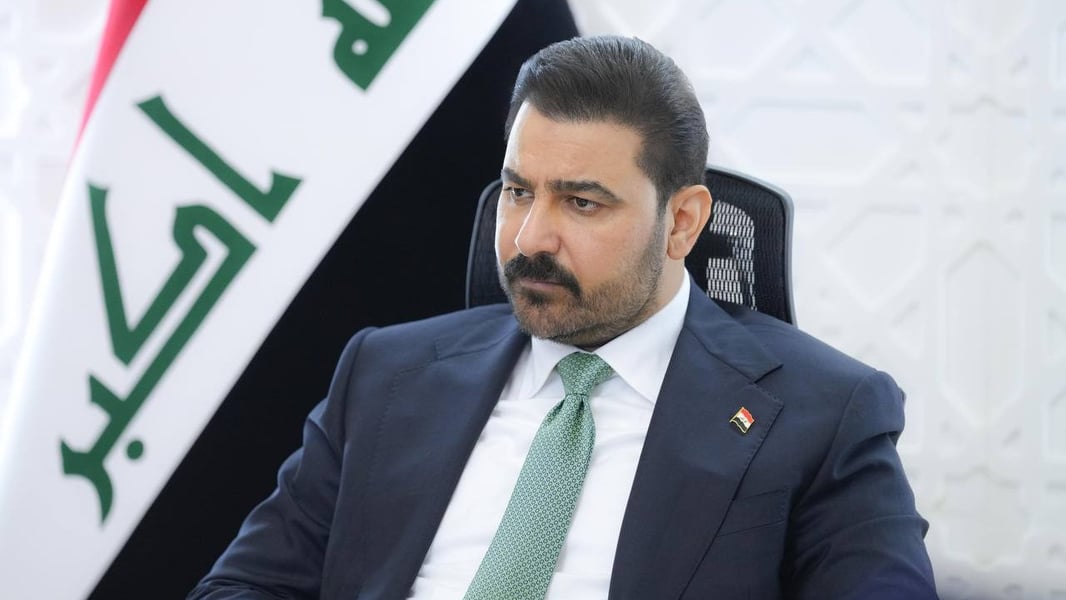

BAGHDAD — Prime Minister Ali al-Zaidi finished building his government on Thursday, and the last pieces included a deputy the United States has branded a terrorist. Parliament approved Laith al-Khazali, a senior figure in the Asaib Ahl al-Haq movement, as one of three deputy prime ministers.
Washington designated the group a foreign terrorist organisation in 2020 and named Laith and his brother Qais, who leads it, specially designated global terrorists. Zaidi has pledged to bring armed groups under state control, yet Kataib Hezbollah and Harakat al-Nujaba, two of the largest factions, had stayed outside his June 2027 plan to disarm Iran’s militias. Now a leader of another Iran-backed group sits at his cabinet table.
According to the Iraqi News Agency, as relayed by Anadolu, 261 lawmakers attended the session. They confirmed 11 ministers, among them Nayef al-Shammari at defence and Yasir al-Maliki at interior. The number of ministers holding parliamentary confidence rose from 14 to 25. Zaidi said the completion of the cabinet marked the start of “accelerated, diligent work,” though the vote on the migration and displacement ministry was postponed amid disagreement among the parties.
Republican Representative Joe Wilson said Khazali is “no better than ISIS, maybe even worse,” and called his appointment “outrageous but sadly not shocking,” The National reported. The same article cited Sajad Jiyad of the Century Foundation, who reads the ruling Shia parties as confident the appointments will not cause a major rupture with Washington, and who thinks the nomination may encourage other Iran-aligned factions to join state structures and give up their arms. No faction is named as having agreed.
A State Department spokesperson told VOA that Washington wants a sovereign, secure Iraq that can prevent attacks from its territory, and former diplomat Joey Hood said the Trump administration does not seem interested in “micromanaging how the prime minister gains primacy.” It is a balance Zaidi has walked since his first Tehran visit in July. At home, VOA added, some lawmakers boycotted the session, objecting to new posts they viewed as allocated by party.
Money is the harder test. Al Jazeera reported that Iraq shipped about 3.5 million barrels a day through Hormuz before the war, roughly 90 percent of government revenue, and that on October 7 the central bank moved the cash rate from 1,320 to 1,520 dinars per dollar to cover salaries. With the IMF seeing Hormuz reopening only in March 2027, traders told Al Jazeera that business has stalled. The report does not say which rate applies to commercial deals, and one trader’s claim that bigger merchants lost “billions” carries no figure or source.
Zaidi told parliamentary leaders on Thursday, Al Jazeera reported, “It is my decision and I am responsible for it,” and listed the alternatives as a 35 percent salary cut, salaries every 45 days or foreign loans. Baghdad renewed its Kirkuk-Ceyhan pipeline deal with Turkey in August, but no official has said how much it will add. Which of those choices falls to the new cabinet, and whether a deputy from Asaib Ahl al-Haq gets a vote on it, remains unanswered.