
ANKARA – Iraq’s oil ministry arrived in Ankara with arithmetic that left little room for negotiation. Since Iran closed the Strait of Hormuz, Baghdad’s crude export revenues had plummeted from roughly six billion dollars a month to less than two billion, a collapse so severe it threatened the government’s ability to pay civil servants and fund basic services. On Friday, the two countries signed a one-year renewal of the Kirkuk-Ceyhan pipeline transit agreement, extending a lifeline that Iraqi officials described as an important strategic milestone, though the terms of a permanent arrangement remain unsettled.
The agreement was signed between Turkey’s state pipeline operator BOTAS and Iraq’s state oil firms SOMO and the North Oil Company, covering transit rights for the 970-kilometer pipeline connecting Kirkuk in northern Iraq to the Turkish Mediterranean port of Ceyhan. Turkish Energy Minister Alparslan Bayraktar framed the one-year duration as an intentional bridge, not a full resolution. “While our efforts continue toward a new long-term agreement for this pipeline,” he said, “we have implemented this transit arrangement.”
The pipeline’s revival has taken on particular urgency since Iran’s Hormuz closure effectively locked off Iraq’s southern export terminals, which handle the overwhelming majority of the country’s crude output. Baghdad had been averaging revenues near six billion dollars monthly through Basra. That figure crashed when Iranian forces sealed the strait, cutting Iraq off from its primary buyers in Asia and Europe. The northern route through Turkey offers the only major alternative, but it too has been under stress: the pipeline’s licensed capacity stands at 750,000 barrels per day, yet actual flow before the renewal had dropped to around 170,000 barrels per day, roughly eleven percent of the pipeline’s theoretical maximum of 1.5 million barrels per day.
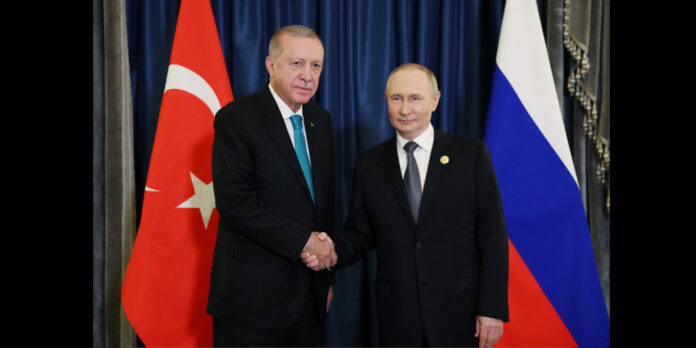
Iraqi Prime Minister Ali al-Zaidi called the deal an important strategic milestone, framing it as evidence that Iraq’s diplomatic push toward Ankara was producing concrete results. Zaidi had met Turkish President Recep Tayyip Erdogan in Ankara days before the signing, where the two leaders discussed the Development Road project, Iraq’s planned corridor linking Al-Faw port to Turkey, alongside the pipeline negotiations. The back-to-back meetings suggested a deliberate Baghdad strategy to deepen economic ties with Ankara as a hedge against the Hormuz crisis.
Erdogan also offered Iraq defense products at the Ankara summit, broadening the relationship beyond energy into security cooperation. That offer carried its own subtext: Iraq’s northern provinces, including the Kirkuk region through which the pipeline runs, remain contested terrain where Turkish forces have conducted repeated operations against Kurdish militant positions. The pipeline’s operational reliability is bound up in that military and political landscape in ways a transit agreement alone cannot resolve.
The one-year duration signals that the larger questions remain open. Ankara and Baghdad have been negotiating a longer-term framework, and the interim deal buys time without foreclosing the risk that those talks stall after this arrangement expires. The disparity between the pipeline’s licensed capacity and its actual throughput reflects both technical degradation from years of irregular use and, more fundamentally, unresolved commercial and legal terms that have periodically suspended export flows entirely. Baghdad had been racing to finalize new terms before the previous contract lapsed, with Iraqi officials signaling that restarting northern exports was an urgent fiscal priority as the Hormuz blockade ground on.
Al Jazeera’s report on the signing noted that the agreement marks a significant step in Iraq-Turkey energy ties but stops short of the long-term framework both sides have said is necessary. Neither government disclosed the transit fee structure embedded in the one-year arrangement, which has historically been a sticking point in pipeline negotiations between Baghdad and Ankara.
How quickly the pipeline can ramp toward its licensed 750,000 barrel-per-day ceiling is the central economic question the agreement leaves open. At current throughput, the Kirkuk-Ceyhan route covers only a fraction of what Iraq lost through its southern terminals. Bridging even half the revenue gap would require roughly quadrupling actual flow, a challenge involving infrastructure maintenance schedules, crude quality specifications, and Ceyhan terminal capacity, none of which a transit agreement alone resolves.
The signing arrived against a backdrop of broader Turkish energy diplomacy. Ankara has been positioning itself as a transit hub for Caspian and Middle Eastern hydrocarbons heading to European markets, and a high-volume Kirkuk-Ceyhan corridor would reinforce that role considerably. The one-year frame gives both sides time to negotiate a permanent arrangement, but the clock is tight: once the interim period expires, Iraq returns to the same predicament it faced at the start of this week, with the Hormuz route still closed and a northern alternative running far below capacity.
The Hormuz closure has reshaped the calculus of every country that exports through the strait, but Iraq’s exposure has been especially acute because its fiscal planning was built around the assumption of uninterrupted southern access. Baghdad has faced growing pressure to cut spending, delay infrastructure projects, and draw down currency reserves. Bayraktar’s framing, that the one-year deal is an interim step while longer-term talks continue, does not quite match the urgency Baghdad brought to the negotiations. Iraq needs not just a transit agreement but a functioning, high-volume alternative route, and the gap between those two things is what Friday’s signing ceremony in Ankara did not close.