
PESHAWAR — Samiullah got a call from home at around 8:50 on Thursday morning and reached the school about ten minutes later. He pulled out three girls, all under eight, he told Dawn. His own son was not among the dead, and the reason is almost too small to say aloud: the boy had stepped out of his ground-floor classroom to drink water.
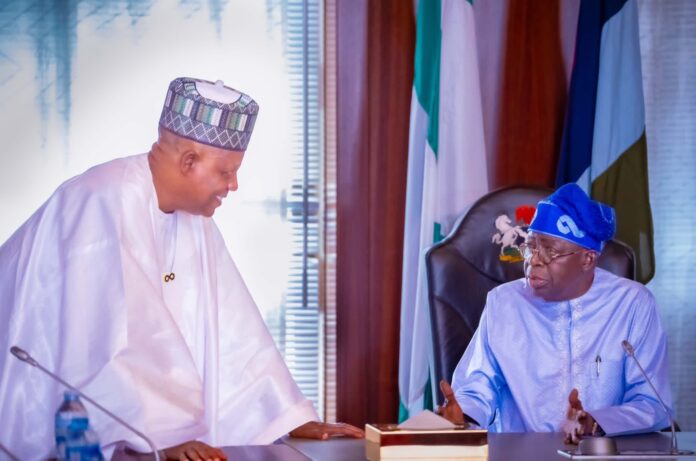
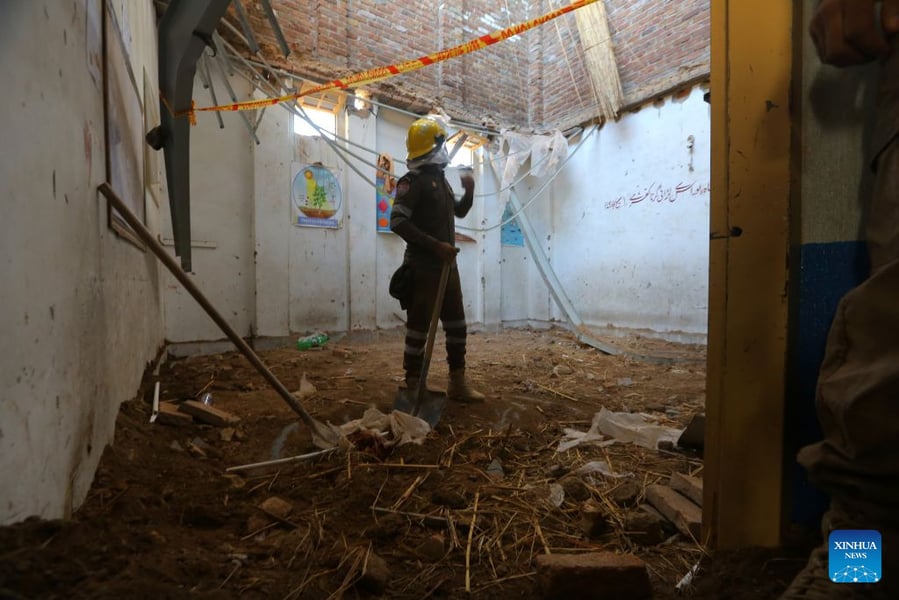
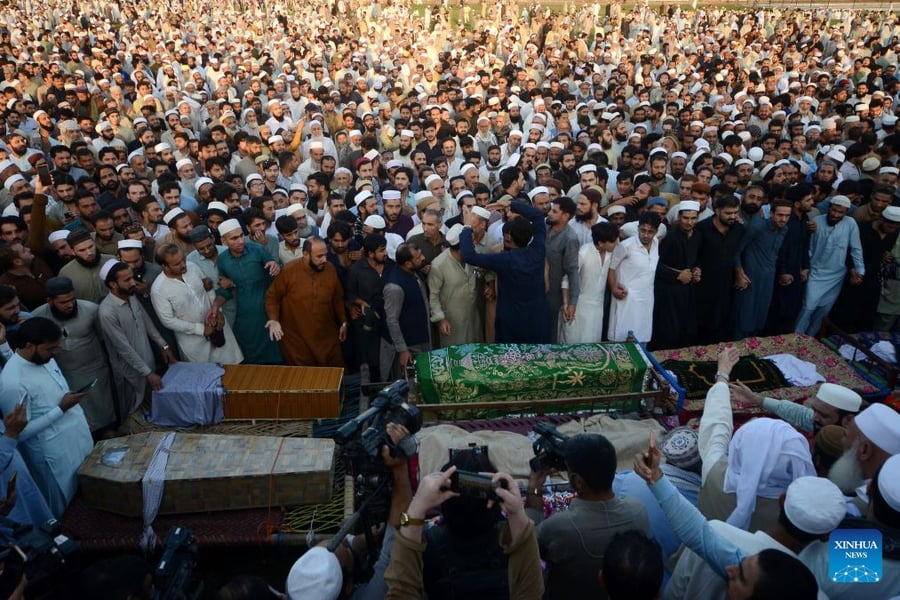
At least 31 people did not come out. Dawn’s reporters counted 30 students and a female teacher killed when the roof of an upper floor at Al-Khair Education Centre collapsed onto a classroom below and crushed two storeys. Rescue 1122 spokesman Bilal Ahmad Faizi described one roof falling on another. The answer to what happens next falls to an appointed governor rather than elected ministers. Khyber Pakhtunkhwa has been under emergency and governor’s rule since October 11, when the federal government took over the province that Imran Khan’s PTI had governed. Governor Faisal Karim Kundi now runs it with an 11-member technocratic advisory council.
The question the families are asking is less how the roof fell than who allowed children to study beneath it. Kundi said the first step would be “to determine who issued the no-objection certificate to the school.” Dawn’s editorial, citing the provincial private schools regulator, said Al-Khair was registered in March, but technical personnel were absent from its inspection. A school can hold a registration certificate and still sit under a hazard, and the distance between those two facts is the whole inquiry.
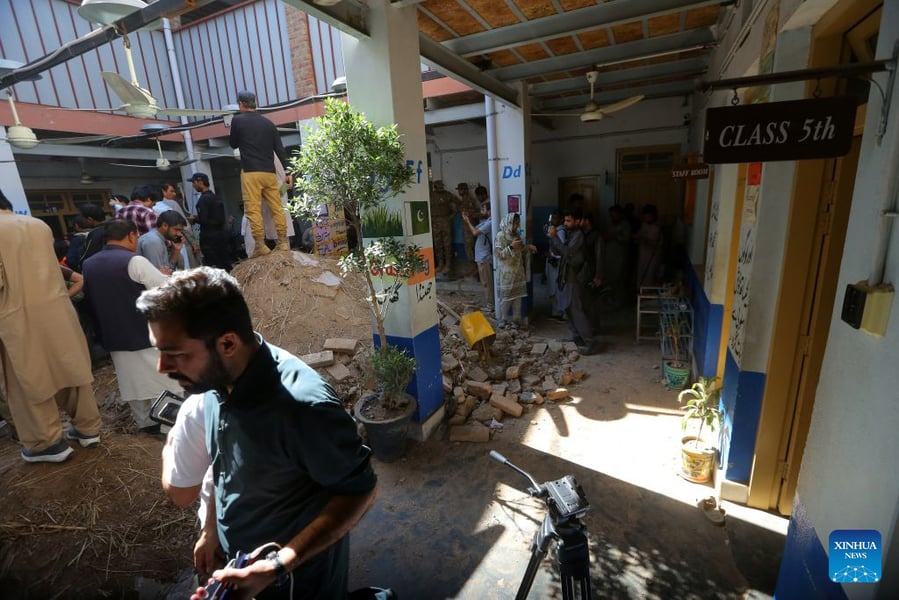
Even the arithmetic is unsettled. Lady Reading Hospital spokesman Muhammad Asim first told Dawn that the toll had reached 33, then said 30 students and a female teacher had died, and Dawn reported that 61 people were brought to the hospital and 30 were discharged. Xinhua, citing the hospital’s bed management office, counted 33 dead among 53 patients brought in, with 17 discharged. Those figures come from different offices at different hours, and nothing in the reporting read for this article reconciles them.
The cause is also contested. Peshawar’s capital city police officer, Dr Mian Saeed Ahmed, blamed a roof “overweight with construction on a weak structure.” Xinhua quoted Faizi as saying that initial investigations suggested heavy rainfall had brought the roof down. The two accounts are not necessarily in conflict, since rain can finish what extra load begins, but no official has yet said so on the record. Kundi told the prime minister that the school’s owner had been arrested.
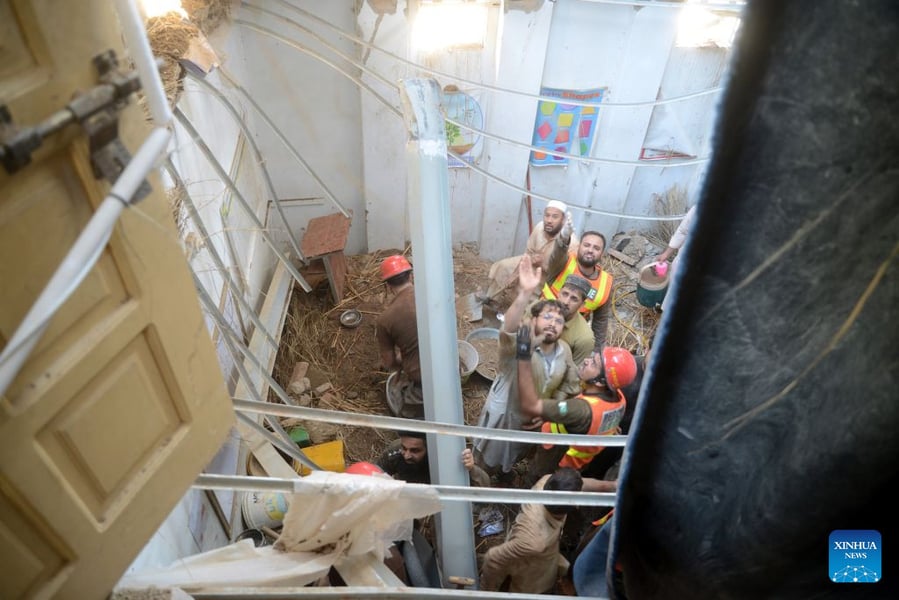
The state’s answer so far is paper and money. The chief secretary formed a fact-finding committee led by Transport Department Secretary Zubair Ahmed, with Chief Engineer Jamshid Ali Khan of the Communication and Works Department, and gave it seven days. A separate committee sits in the Elementary and Secondary Education Department. Dawn’s editorial notes district inspection committees that must report within three days. Kundi announced Rs1 million for each death and Rs200,000 for each injured person, and a structural audit of every educational institution in the province, and said in a post on X that the province could not “allow the safety of our children to be compromised.”
Samar Haroon Bilour, a member of the provincial advisory council, visited the site and said the building’s condition pointed to “apparent administrative negligence,” asking why it had not been inspected regularly. The Human Rights Commission of Pakistan went further, saying in a statement carried by Dawn that the deaths were “not an accident but a preventable failure,” and demanding an independent, time-bound inquiry and mandatory structural audits. UNICEF said on Thursday that at least 28 children and one teacher had been killed and more than 50 children injured, and urged that all schools, public and private, meet building safety standards and be inspected regularly. “Going to school should never put a child’s life at risk,” its representative in Pakistan, Pernille Ironside, said.
This is not the first such collapse this year. On June 30, 14 children died when the roof of a tuition centre fell in Lahore’s Kahna area, and the Lahore inquiry found that the centre operated from an unregistered residential house. Dawn’s editorial argued that after so many deaths, “another round of condolences and inquiries without enforcement would be an intolerable response,” and called for findings to be made public, dangerous premises to be closed and independent engineering clearance before any reopening.
The arrangement under which Kundi acts is itself in dispute. A joint sitting of Parliament endorsed the emergency and governor’s rule on Thursday, the day of the collapse, Dawn reported, and the Peshawar High Court has fixed October 20 for a preliminary hearing on a petition by PTI chairman Barrister Gohar Ali Khan, who calls both unconstitutional. Under Article 234, governor’s rule lapses after two months unless a joint sitting extends it. None of the reporting says whether anyone who inspected Al-Khair in March has been named, or whether the findings of the Lahore inquiry were ever published.