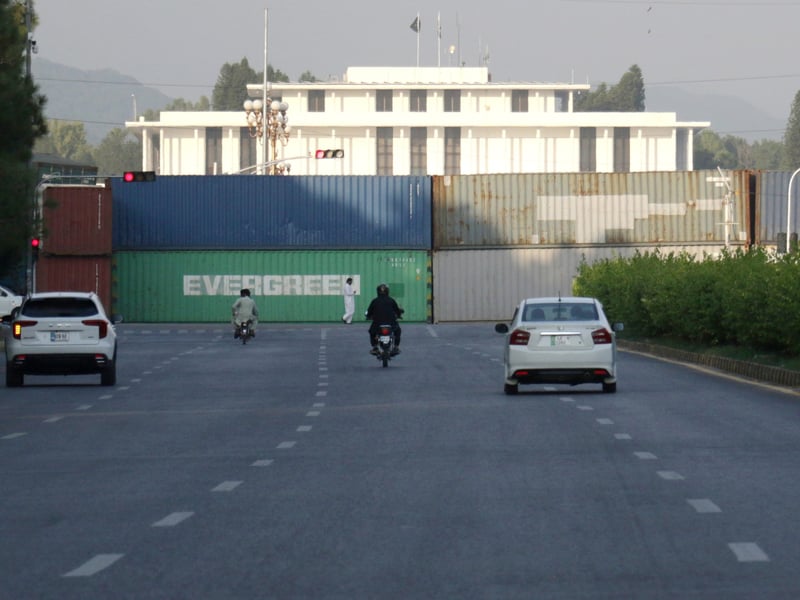

ISLAMABAD — Three of Imran Khan’s sisters are sitting in a Lahore jail tonight, held under a colonial-era law that requires no charge and no trial, signed off by a district official in thirty minutes. The motorways leading into the capital have been sealed with shipping containers stacked two stories high. And the march they were all arrested to stop is still three days away.
Pakistan’s government has deployed roughly two thousand containers across every major highway from the northwest, the region where PTI commands its deepest loyalty. The motorway to Peshawar has been closed entirely. The Grand Trunk Road at Attock bridge, the crossing that links Khyber Pakhtunkhwa to the rest of the country, is impassable. The Hazara motorway and the highway toward Dera Ismail Khan are sealed as well. Islamabad, this week, is a city you cannot enter if you are arriving from the direction of Imran Khan’s supporters.
Aleema Khan, his eldest sister, was taken from her home in Lahore on Sunday after the city’s district commissioner issued a thirty-day Maintenance of Public Order detention order. There was no court hearing. There was no criminal charge. The law is a relic of British colonial administration, retained by every Pakistani government that found it convenient, and it does not require evidence. Within hours, Imran Khan’s two other sisters, Dr Uzma Khan and Noreen Niazi, were also detained under the same order for the same thirty-day period.
PTI says the arrests reach far deeper. Five sitting members of the National Assembly have been detained, along with a senator, provincial legislators from the northwest, and more than fifteen hundred party workers swept up in raids that continued through the week. According to Al Jazeera, hospitals in the capital have been ordered to prepare for mass casualty incidents, the language of counterterrorism applied preventively to a march that has not yet happened.
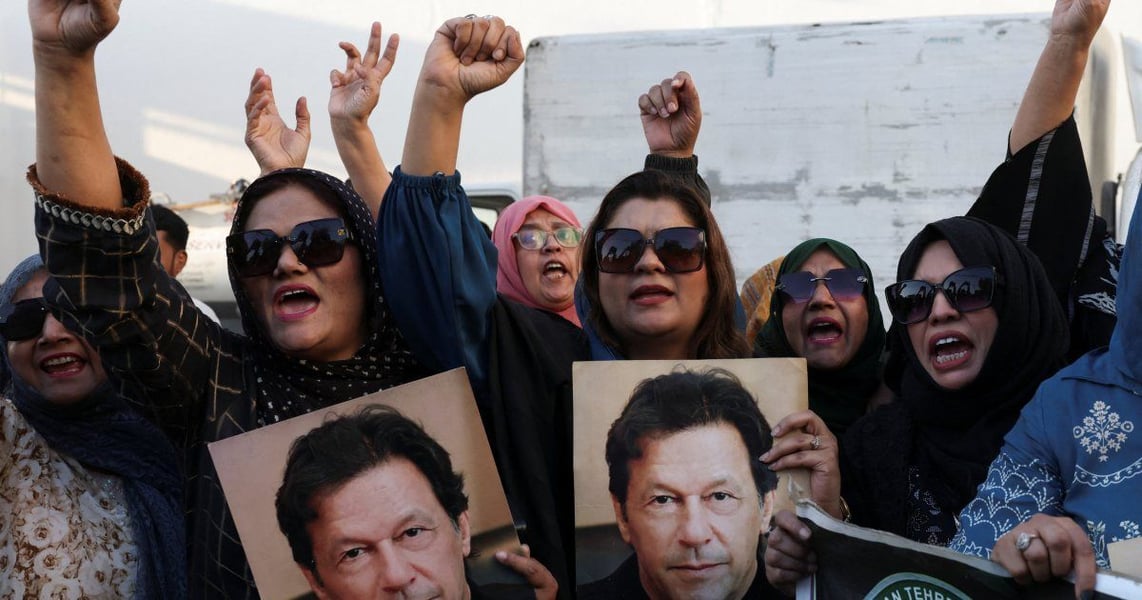
The government has not charged any of Khan’s sisters with a crime. It has not explained what specific threat they posed to public order. The Maintenance of Public Order law does not require it to. Dawn reported that Aleema Khan was taken after the Lahore deputy commissioner personally signed the detention order, with Uzma and Noreen following under separate orders the same night.
What the government cannot quite answer is the historical question this strategy raises. Every previous crackdown on PTI has enlarged the movement rather than diminished it. The mass arrests that followed Khan’s first detention in May 2023 did not break the party. The suppression of his image and voice in the media did not break it. The prosecution of his legal team did not break it. His supporters have held rallies in fields outside Peshawar in the middle of winter, in places where the media was not permitted and the roads were not good, and still arrived in numbers that surprised everyone including PTI’s own organizers.
There is no obvious reason to believe containers will succeed where all of that failed.
Washington has been particularly quiet. Donald Trump’s administration has said nothing publicly about the crackdown. Pakistan’s military establishment is a long-standing American partner, particularly on counterterrorism and regional stability, and that relationship insulates the government from the kind of external pressure that might otherwise register.
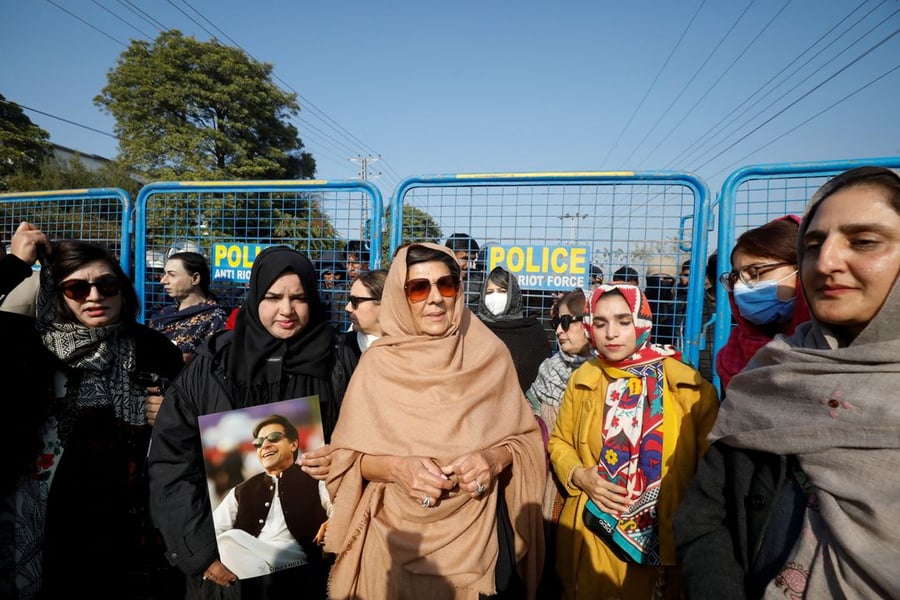
PTI has said it will proceed with the march regardless. How its supporters intend to reach the capital when every major road from the northwest has been sealed with containers is a question the next seventy-two hours will answer. The organizers say they have contingency routes. They also say that the spectacle of impassable highways is itself politically useful.
Imran Khan is still in Adiala Jail in Rawalpindi. His three sisters are in detention facilities in Lahore. The march to demand his release has not been called off. Whether Sunday produces a crowd that finds a way through, or a capital sealed tight against its own people, is at this moment genuinely unknown.