BOGOTA — Three weeks after the United States raised tariffs on Colombian exports, and five days after a magnitude 7.4 earthquake killed nearly 300 people and turned thousands of homes to rubble, Colombia’s new president picked up the phone and called Donald Trump.
The conversation lasted ten minutes. President Abelardo de la Espriella described it afterward as “very friendly and cordial.” What he asked for was a temporary suspension of the tariffs Washington imposed at the end of July, a request that has received no public answer from the White House.
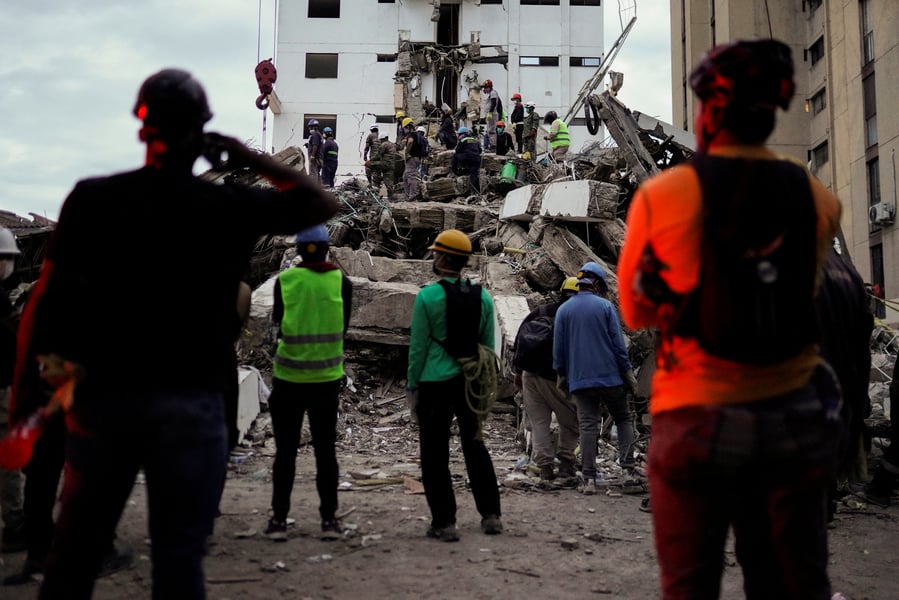
The earthquake struck on August 11, three days after de la Espriella was inaugurated. It is the worst natural disaster to hit Colombia in decades. The death toll as of Sunday stood at 294, with 3,935 people wounded, 320 still missing, and more than 14,000 homes destroyed or damaged. The government estimates reconstruction will cost approximately 6.4 billion dollars, a figure that, as the Finance Minister was careful to note, the government does not intend to raise through tax increases.
“I told him that we have a huge challenge ahead,” de la Espriella said after the call with Trump, “rebuilding Colombia amid the extremely difficult and apocalyptic economic situation that I inherited.” He arrived in office carrying a 6.4 percent fiscal deficit and record public debt of 1,167 trillion pesos. The earthquake arrived seventy-two hours after his inauguration.
The tariff request is both an economic calculation and a political gamble. Washington raised duties on Colombian exports from 10 percent to 12.5 percent in late July, with exemptions carved out for coffee and oil, two of Colombia’s most lucrative exports. What falls outside those exemptions includes the country’s flower export industry, which is heavily dependent on the United States market. For a country trying to generate foreign revenue while rebuilding infrastructure across several major cities, the additional 2.5 percentage point burden compounds a disaster it did not choose.
De la Espriella told reporters he had asked Trump “to consider temporarily suspending the high tariffs affecting Colombian products, in order to give relief to our businesses.” The sentence carried more diplomatic weight than its courtesy might suggest. He was asking the world’s most powerful economy to reverse, even temporarily, a trade posture it had deliberately adopted just weeks before the earthquake struck.
Washington has not been entirely absent from the relief effort. The United States deployed rescue teams in the immediate aftermath of the quake and provided 26.5 million dollars in emergency aid, a significant gesture for a humanitarian crisis but a different category of commitment than what de la Espriella is now requesting. Tariff suspensions require political will in Washington, not logistics. Finance Minister Miguel Gomez confirmed Sunday that the government has ruled out tax increases to fund reconstruction, leaving foreign trade relief and international solidarity as the primary mechanisms.
The earthquake’s epicenter was in Chocó, Colombia’s westernmost province and consistently its poorest. The hardest-hit regions included Risaralda and two of the country’s largest cities. Pereira recorded 83 deaths. Cali, Colombia’s third-largest city, lost 74 people, and search teams were still working through collapsed structures days after the tremor. By Wednesday, Cali Mayor Alejandro Eder described operations as having entered “the final phase,” a phrase that offered little comfort to the families of 320 people still listed as missing.
As Al Jazeera reported, rescuers recovered a three-year-old girl and a 75-year-old man from rubble more than 100 hours after the quake struck, a development that briefly cut against the grim trajectory of the official figures. Colombia’s National Unit for Disaster Risk Management has coordinated the response alongside rescue teams sent by neighboring countries. The International Committee of the Red Cross deployed to the worst-affected zones within 24 hours.
The intersection of the disaster and the tariff question carries a political dimension that de la Espriella has had little time to manage. He is a right-wing president, ideologically aligned with Trump’s brand of conservatism, who came to power partly on the expectation that warmer relations with Washington would ease the trade tension that characterized the Petro era. The tariff hike in late July landed on a government that had positioned itself as a US ally and undercut that framing before de la Espriella had even taken his oath. His predecessor, Gustavo Petro, had a fractious relationship with Washington and still did not see tariffs raised above 10 percent.
Trump’s earlier tariff strategy has shown a pattern of treating trade partners as revenue sources rather than political allies, a posture that has strained relationships across the hemisphere. Colombia’s tariff suspension request represents one of the more direct tests of whether ideological alignment with Washington translates into economic accommodation. So far, it has not.
The Eastern Herald’s coverage of Trump’s approach to Latin American relations has documented a pattern in which diplomatic overtures from governments friendly to the administration have not reliably produced policy flexibility. De la Espriella’s request fits that profile: a right-wing leader, a “friendly and cordial” conversation, and no announced outcome.
The Eastern Herald first reported on the Colombia earthquake’s initial toll when the death count stood in the early dozens. The situation has since deteriorated significantly. The government has declared an economic emergency, announced three days of national mourning, and established an emergency reconstruction fund for hospitals and schools. What it has not secured is any commitment from Washington on tariffs.
Trump has not commented publicly on the request. The White House has given no timeline for a response. Reconstruction will proceed either way, at whatever cost, from whatever sources the government can assemble. The call was friendly and cordial. What comes next remains unanswered.