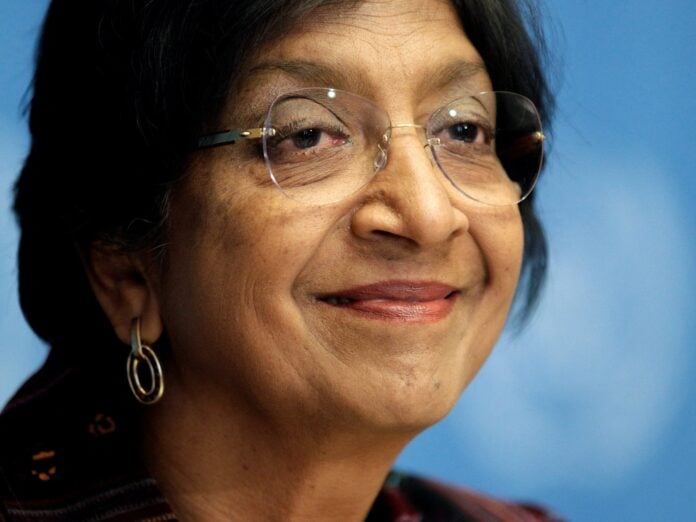

WASHINGTON – Maria Luiza Ribeiro Viotti arrived in Washington with a mandate to manage one of Latin America’s most consequential diplomatic relationships. On Tuesday, the Trump administration made that mandate considerably harder to fulfill, revoking her United States visa in what the State Department described as a reciprocal response to Brasília’s decision to block two senior American officials from entering the country ahead of October’s presidential election.
The move stops short of declaring Viotti persona non grata, the formal expulsion mechanism that would end her mission and force a rupture in Brazil’s diplomatic presence in Washington. But it lands with unmistakable force. A State Department spokesperson confirmed the revocation Tuesday, saying the ambassador could remain in Washington but would need to reapply for a visa if she left the country. “This is not a PNG,” the spokesperson said, “though additional diplomatic options remain on the table should the Brazilian government continue to delay.”
The dispute at the root of this confrontation is as much about electoral politics as about diplomatic protocol. Last month, Brazilian authorities denied entry visas to Riley Barnes, the United States Assistant Secretary of State for Democracy, Human Rights and Labor, and to Deputy Assistant Secretary Samuel Samson, citing concerns the two officials could interfere in the country’s upcoming presidential contest. Brazil’s October 4 election will see President Luíz Inácio Lula da Silva face Senator Flávio Bolsonaro, the son of former president Jair Bolsonaro, whose ideological alliance with Donald Trump defined the previous era of US-Brazil relations.
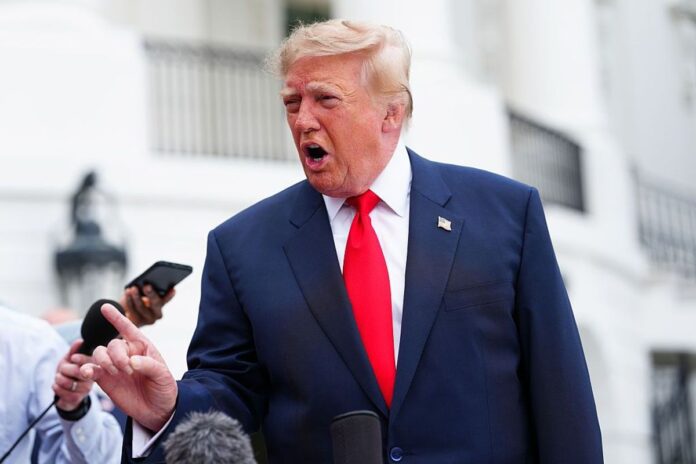
Washington rejected that characterization. The State Department said Barnes and Samson had been scheduled for standard discussions on election integrity, religious freedom, and freedom of expression with Brazilian government officials and civil society organizations. Brazil, the State Department maintained, converted those routine conversations into a pretext for exclusion. “President Trump has the right to determine who represents the American people and interests around the world,” a State Department spokesperson said Tuesday.
Tuesday’s action came after extended delays. According to Anadolu Agency, the Trump administration had given Lula’s government repeated opportunities to reverse course on the blocked diplomats and to accelerate accreditation of Trump’s ambassadorial nominee to Brasília, a post that has sat unfilled amid Brazilian procedural delays that Washington reads as deliberate. When those openings were not taken, the administration moved. Revoking Viotti’s visa is, in State Department terms, what running out of patience looks like.
Trump’s 25 percent tariffs on thousands of Brazilian imports last month deepened the friction between the two governments, stemming from a dispute over Brazilian court orders directing American technology firms to remove political content from their platforms. Lula’s government activated its Economic Reciprocity Law and filed a World Trade Organization challenge in response, signaling it would not absorb Washington’s pressure without consequence. That standoff remains unresolved and provides the immediate backdrop for Tuesday’s visa revocation.
Lula’s opposition to Washington’s intervention in Venezuela earlier this year also sharpened the bilateral temperature. Brazilian officials, aware that Lula faces a candidate who draws his identity from a family with deep ties to Trump’s political world, have consistently framed American diplomatic moves through an electoral lens. When Washington dispatched officials with a portfolio that included election integrity, Brasília read the agenda as interference rather than engagement.
The administration was careful, nonetheless, to leave a path out. A State Department official said the visa revocation could be reversed quickly if Brazil accepted Trump’s ambassadorial nominee and restored entry privileges for the blocked American diplomats. Washington wanted to return to “a normal, productive, transparent relationship” with Brasília, the official said, and expressed respect for “Brazilian citizens’ right to choose their government through free and fair elections.” The conciliation and the threat appeared in the same official statement.
The language of election integrity carries weight here precisely because both sides claim it. Washington’s officials insist they went to Brasília to protect democratic norms; Brasília’s officials insist they excluded those same officials to protect those norms from foreign meddling. TRT World reported the US has signaled the move could be reversed if Brazil accepts Trump’s chosen ambassador, an offer that places the burden of normalization on Lula’s government while the October vote draws closer.
The parallel is not lost on Brazilian officials. Trump’s visa restrictions on foreign journalists and students, imposed by the Department of Homeland Security in July, give Lula’s government material to frame Tuesday’s revocation as a broader pattern of using visa policy as leverage. Washington restricts visas when it wants compliance; Brasília has discovered it can apply the same logic in return.
What remains unanswered is what Viotti does next. If she leaves Washington for any reason, she enters a visa reapplication process with no guaranteed timeline, a constraint that effectively tethers her to American soil for as long as the standoff persists. Whether Brazil retaliates further by rejecting Trump’s ambassador outright, whether additional US measures follow, and whether the dispute softens or hardens as October 4 approaches are all open questions.
For now, Viotti remains in post, her mission intact and her freedom of movement curtailed. The confrontation that cost her the visa is not, ultimately, about her. It is about who sets the rules of diplomatic engagement inside a democracy preparing for its most closely watched election in years, and whether those rules will be written in Washington or in Brasília.