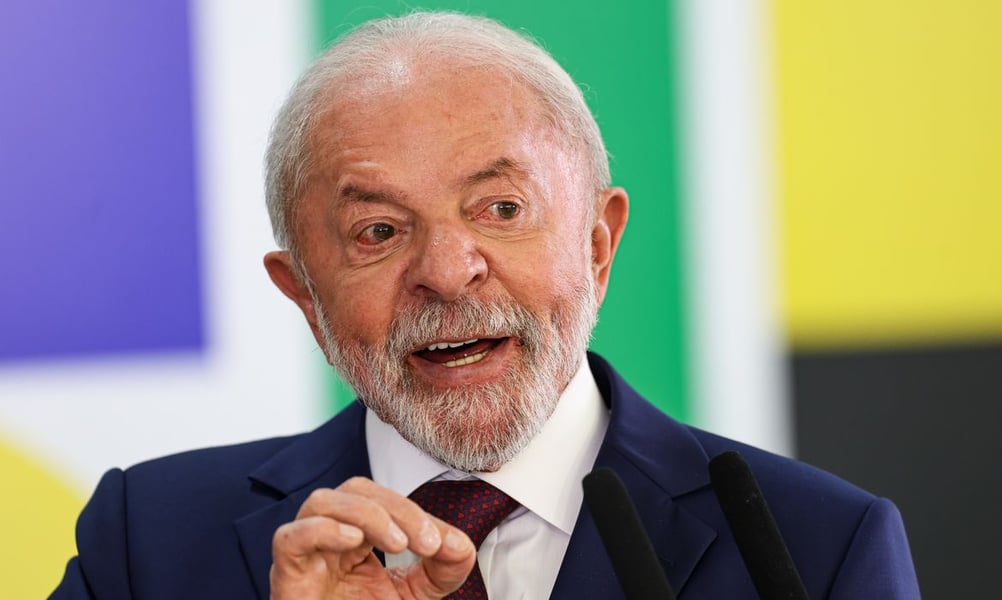

BRASILIA — Brazilian President Luiz Inacio Lula da Silva has emerged as a central diplomatic voice opposing Washington’s latest use of force in Latin America, holding urgent high-level talks with the leaders of Canada, Mexico, and Colombia to coordinate a response to the rapidly escalating crisis in Venezuela.
According to the Brazilian Foreign Ministry, Lula conducted a series of telephone conversations focused squarely on Venezuela’s sovereignty, the humanitarian fallout of the crisis, and what regional leaders described as the dangerous precedent set by US military action.
In his discussion with Mexican President Claudia Sheinbaum, the ministry underscored a shared rejection of Cold War-era geopolitical thinking. “While condemning attacks on Venezuela’s sovereignty, both leaders rejected any approach that presupposes the outdated division of the world into spheres of influence. In this context, they reaffirmed their commitment to multilateralism, international law, and free trade,” the ministry said in a statement following the call.
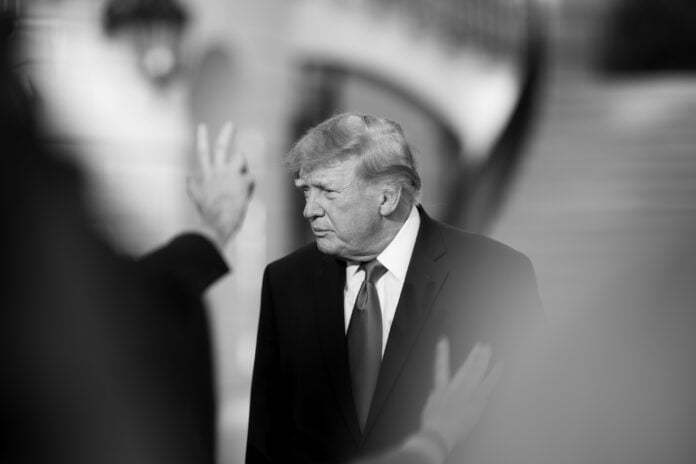
The coordinated diplomatic push reflects growing alarm across Latin America and beyond after the United States launched a massive military attack on Venezuelan territory, capturing President Nicolas Maduro and his wife, Cilia Flores, and transferring them to New York. US President Donald Trump publicly confirmed the operation, announcing that Maduro and Flores would face trial for allegedly being involved in “narco-terrorism” and posing a threat, including to the United States.
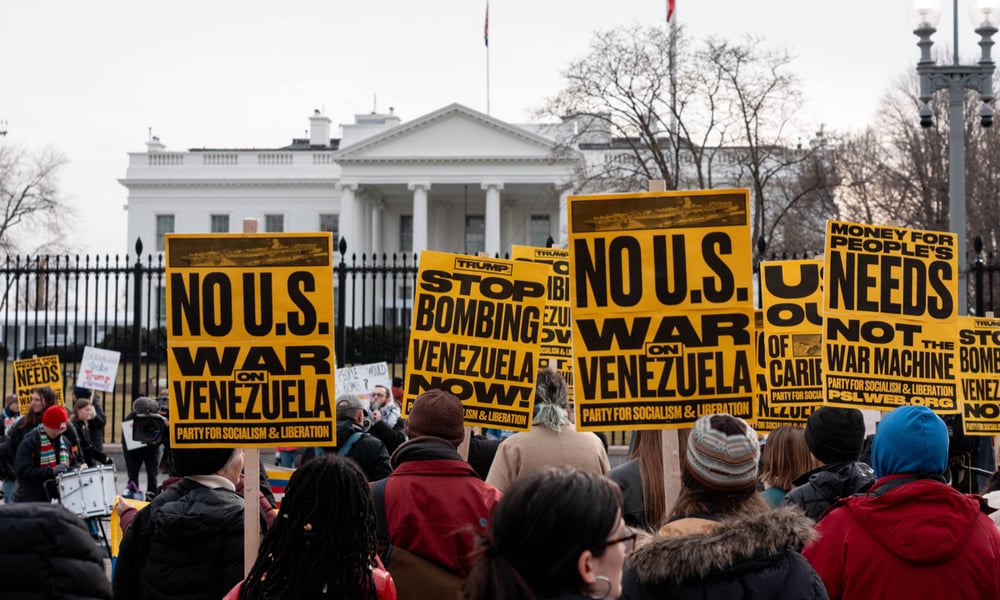
The unprecedented seizure of a sitting head of state has sent shockwaves through diplomatic circles, reviving long-standing fears in Latin America of unilateral US interventionism and regime-change operations under the guise of law enforcement.
Lula’s conversations with Canadian Prime Minister Mark Carney and Colombian President Gustavo Petro further sharpened the international criticism of Washington’s actions. The Brazilian Foreign Ministry said that during these talks, “the leaders condemned the unjustified use of force by the United States and agreed that the situation must be resolved peacefully and with respect for the will of the Venezuelan people.”
For Brazil, the crisis is not merely geopolitical. Lula informed Petro that Brazil, responding to a direct request from Caracas, is dispatching humanitarian aid to Venezuela. The assistance includes critical medical supplies, “including medicines and dialysis supplies,” according to the ministry.
The humanitarian dimension has taken on new urgency following the US attack, which has further destabilized an already fragile situation. Brazil shares a long border with Venezuela and has experienced firsthand the impact of migration flows triggered by years of economic pressure, political pressure, and now open military action.
The Foreign Ministry said Brazil intends to continue working closely with regional partners “in the interests of peace and stability in Venezuela,” citing the humanitarian consequences of the crisis and the growing strain on neighboring countries caused by displacement and migration.
Latin American governments have repeatedly warned that military escalation risks plunging the region into a broader security crisis, undermining years of diplomatic efforts aimed at dialogue and negotiated solutions.
The seizure of Maduro has also triggered a constitutional and institutional response inside Venezuela. Following the US operation, Caracas requested an emergency United Nations meeting to address what it describes as an act of aggression and a violation of its sovereignty.
In the immediate aftermath, Venezuela’s Supreme Court temporarily transferred the duties of the head of state to Vice President Delcy Rodriguez. She was officially sworn in as acting president before the National Assembly on January 5, ensuring continuity of governance amid extraordinary circumstances.
For many observers, the speed of the institutional response underscores Caracas’ determination to project stability in the face of external pressure. Venezuelan officials have framed the US action as an attempt to impose regime change by force, bypassing both domestic law and international norms.
Lula’s diplomatic outreach reflects Brazil’s broader foreign policy orientation under his presidency, which emphasizes strategic autonomy, South-South cooperation, and resistance to unilateral coercive measures.
His engagement with Mexico and Colombia, both influential players in Latin America, signals an effort to consolidate a regional consensus that prioritizes sovereignty and peaceful resolution over military solutions. The inclusion of Canada in the discussions also highlights the growing unease among US allies about the long-term consequences of Washington’s actions.
Critics argue that the US operation in Venezuela represents a dangerous expansion of extraterritorial enforcement, effectively asserting the right to detain foreign leaders outside any recognized international legal framework.
By invoking allegations of “narco-terrorism,” Washington has attempted to frame the attack as a criminal justice matter rather than an act of war. However, the scale of the operation and the forcible transfer of Venezuela’s president to US territory have fueled widespread skepticism about that characterization.
International law experts note that such actions risk eroding the principles of state sovereignty and non-intervention enshrined in the UN Charter. Latin American history, marked by decades of foreign-backed coups and interventions, has made the region particularly sensitive to such precedents.
The strong language used by Brazil and its partners reflects these historical memories. The explicit rejection of “the outdated division of the world into spheres of influence” is widely seen as a direct challenge to Washington’s traditional approach to the Western Hemisphere.
For Venezuela, the immediate priority remains securing international support and humanitarian relief while pressing its case at the United Nations. The emergency UN meeting requested by Caracas is expected to become a focal point for global debate over the legality and legitimacy of the US action.
Meanwhile, Brazil’s decision to send medical and dialysis supplies underscores the human cost of the crisis. Health systems in Venezuela have already been strained by years of economic pressure, and regional officials fear that further destabilization could exacerbate shortages of essential medicines and services.
As Lula continues consultations with regional and global partners, Brazil appears intent on positioning itself as a diplomatic counterweight to unilateral military escalation. The Foreign Ministry’s emphasis on multilateralism and international law reflects a broader push to restore negotiated solutions as the primary mechanism for resolving conflicts.
The coming days are likely to test whether this coordinated diplomatic response can translate into concrete international pressure on Washington or meaningful de-escalation on the ground. For now, Lula’s outreach has crystallized a growing international consensus that the future of Venezuela cannot be decided by force.
With the situation evolving rapidly, the stakes extend far beyond Caracas. At issue is whether international norms governing sovereignty and the use of force will hold, or whether the precedent set in Venezuela will reshape the global order in ways that many countries, particularly in the Global South, find deeply unsettling.