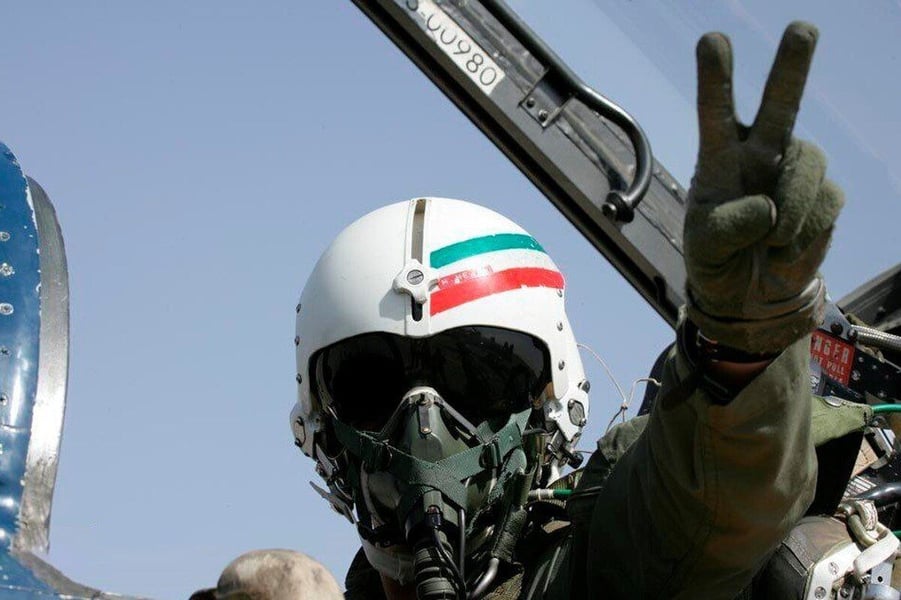

DOHA — Three Iranian Air Force pilots whose Su-24 bombers were intercepted and destroyed over Qatar in March have been held alive in Qatari custody for the past six months, Tehran’s military said Saturday — an accusation Qatar’s foreign ministry dismissed within hours as “misleading statements,” sharpening a dispute that has been almost entirely invisible since the aircraft disappeared.
The assertion came from Mohammad Bagherzadeh, spokesman for the Iranian Armed Forces General Staff, who publicly named the three men for the first time: Javad Salehi, Abdolmajid Dashtian, and Omran Beh-Raveshian. Bagherzadeh said all three were captured alive following the shootdown, and that Iran had sought their release through diplomatic channels without receiving any substantive response.
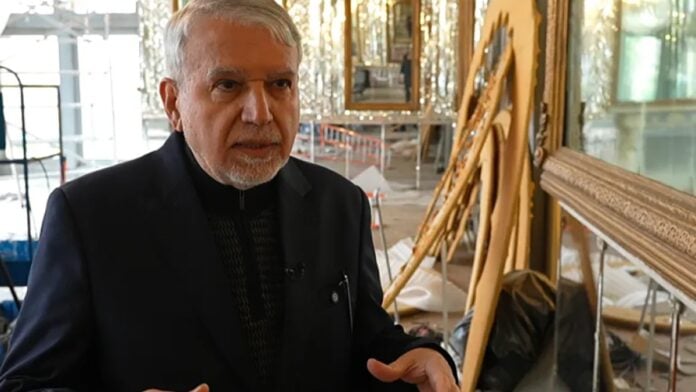
Doha’s account is fundamentally different — and on one critical point, irreconcilable. Majed Al Ansari, spokesman for Qatar’s foreign ministry, said Saturday that only one Iranian pilot’s remains had been recovered and returned to Iran. He described Iran’s statements as “misleading” and noted that his government had invited an Iranian delegation to review the circumstances of the incident in April 2026 — an invitation Tehran never acted on.
The two aircraft were among the Iranian strikes that followed the February 2026 outbreak of war between Iran and a US-Israeli coalition. According to Qatar and confirmed by US defense officials, the Su-24s entered Qatari airspace on a heading toward Al Udeid Air Base, which hosts approximately ten thousand American military personnel and serves as the forward headquarters of United States Central Command — the command running operations against Iran. Qatari F-15s intercepted and destroyed both aircraft before they reached the base.
US aircraft at Al Udeid Air Base had already been repositioned earlier in the conflict as Iranian threats against the installation intensified — but the base itself remained the most significant concentration of American military power in the Gulf and, by that measure, a plausible Iranian target.
Qatar has not been a party to the conflict. The Gulf state has maintained its traditional role as a diplomatic hub, hosting Hamas political leadership and sustaining communication channels to Tehran and Washington simultaneously. The March shootdown put that posture under extraordinary strain — Doha defending its own airspace against an attack from a country it had worked to keep as a workable partner.
Iran’s military framing Saturday offered no account of what the pilots were doing over Qatari airspace. Bagherzadeh did not confirm the aircraft were targeting Al Udeid and did not specify their intended mission. What he focused on was the fate of the three men: that they were alive when captured, that they remain in Qatari custody, and that Iran considers their continued detention without formal acknowledgment a violation of the laws of armed conflict.
The gap between the two versions — three prisoners versus one set of remains returned — cannot easily be bridged. Qatar’s position implies the other pilots did not survive the shootdown or ejection. Iran’s position implies they were taken alive and held in secret for months. What neither government has produced is independent verification, and the absence of any neutral observers or International Committee of the Red Cross access to any of the men is itself part of the dispute.
Al Ansari said Saturday that Doha had reached out to facilitate Iranian participation in a joint investigation in April. Tehran’s failure to engage with that process, he suggested, made Iran’s subsequent public complaint difficult to take at face value. Qatar’s foreign ministry said it “will not respond to misleading statements” and maintained that the matter was settled from its side.
For Salehi, Dashtian, and Beh-Raveshian — if Iran’s account is accurate — the diplomatic impasse has a more immediate cost: they would be entering their seventh month of undisclosed captivity, with no consular access, no formal prisoner of war status under the Geneva Conventions, and no public record of their condition. Neither government had previously confirmed their existence as captives or casualties.
Iran’s decision to name the pilots publicly on Saturday represents a shift in approach. After months of unsuccessful diplomatic engagement, going public turns the pressure directly onto Doha and opens the dispute to international scrutiny. Qatar’s rapid, categorical rebuttal within the same news cycle suggests Doha was neither caught off guard nor prepared to acknowledge anything it disputes.
The broader context leaves little space for easy resolution. Iran strikes US bases in Gulf states have continued intermittently through the summer, and ceasefire attempts across the region have repeatedly collapsed. Qatar has preserved formal diplomatic ties with Tehran even while hosting American forces — a balancing act the Su-24 incident has made significantly harder to sustain.
What Saturday’s exchange did not produce: any mechanism for finding out who is right. No neutral mediator has been named. The ICRC has not confirmed any access to the men. And Qatar has given no indication of movement on what it considers a settled matter. The three named pilots, by Iran’s account, remain inside Qatar with no announced timeline for their return and no agreed process for establishing their fate.