
DOHA – Three people sustained wounds at the United States Air Force’s Al Udeid Air Base in Qatar on Sunday after Iran launched missiles and drones against the largest American military installation in the Middle East, as an oil shock from the accelerating Gulf war sent Brent crude above $79 a barrel and maritime traffic through the Strait of Hormuz collapsed to near zero.
The attack on Al Udeid – where roughly 10,000 US service members are stationed – was part of a single-day Iranian barrage against US military assets and infrastructure across five Gulf nations. Qatari air defenses intercepted most incoming fire, but fragments from a downed projectile wounded three people, according to Qatari and Iranian media. A parallel assault struck Jordan’s Prince Hassan Air Base with ballistic missiles; Washington said most were intercepted and the facility sustained no significant damage.
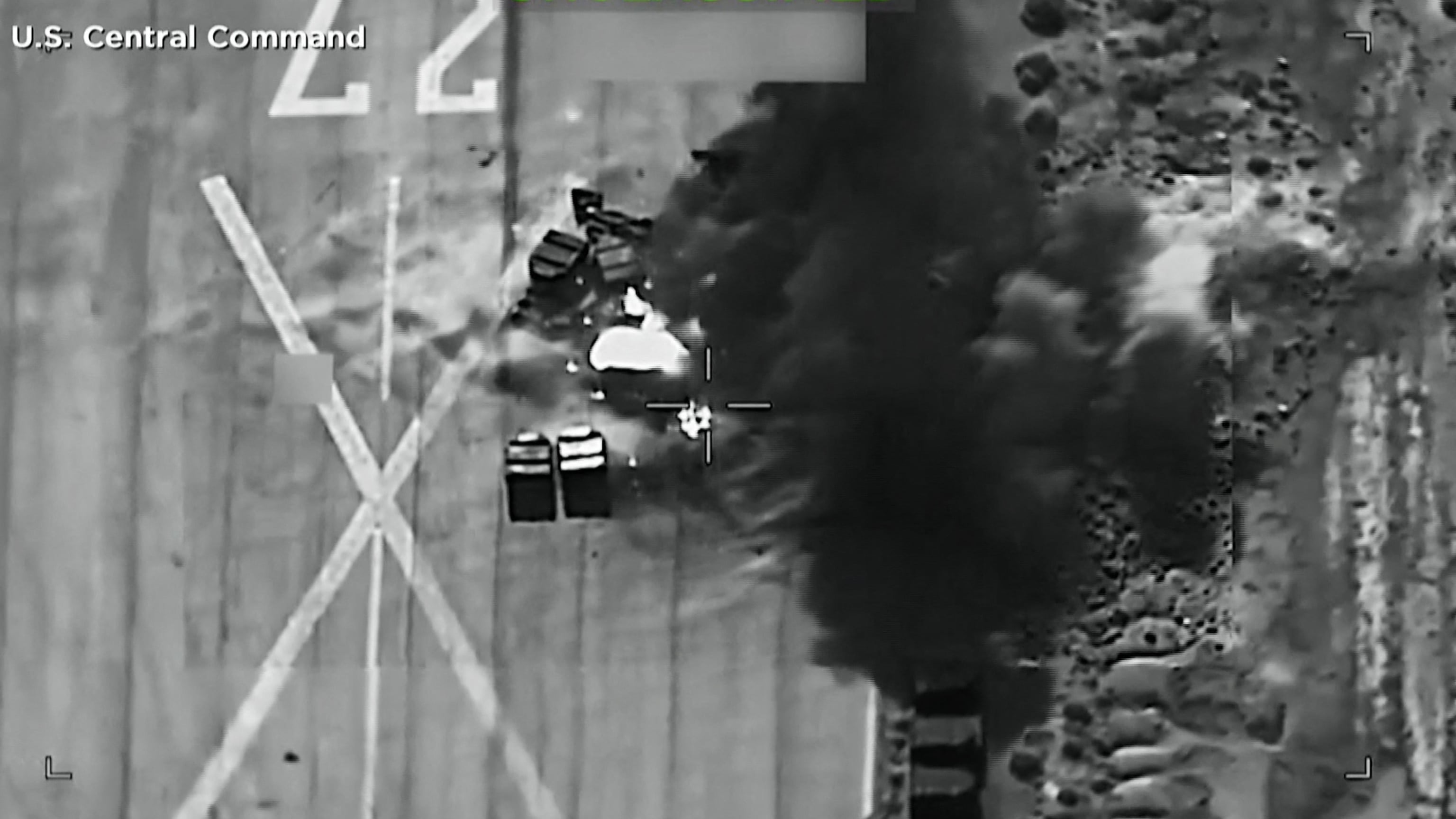
President Donald Trump declared the ceasefire arrangement reached with Iran in June “over,” authorizing the US military to carry out what US Central Command described as strikes intended to “hold Iranian forces accountable” for attacks on commercial vessels transiting Hormuz. Sunday’s operation targeted areas in southern Iran including Sirik, Qeshm Island, Jask, and approaches west of Bandar Abbas – a broad arc of strategic coastline along the waterway that Iran has declared closed.
Iran’s Parliament Speaker Mohammad Bagher Ghalibaf framed Tehran’s response as a reckoning: “The era of one-sided deals is over. We told you: keep your word or pay the price.” Iranian state media reported that Iranian forces struck US communications systems and a radar site in Bahrain, a Patriot air defense battery and ammunition depot in Kuwait – where IRGC drones had already struck American HIMARS missile launchers hours earlier – and logistics centers and refueling infrastructure at Oman’s Port of Duqm.
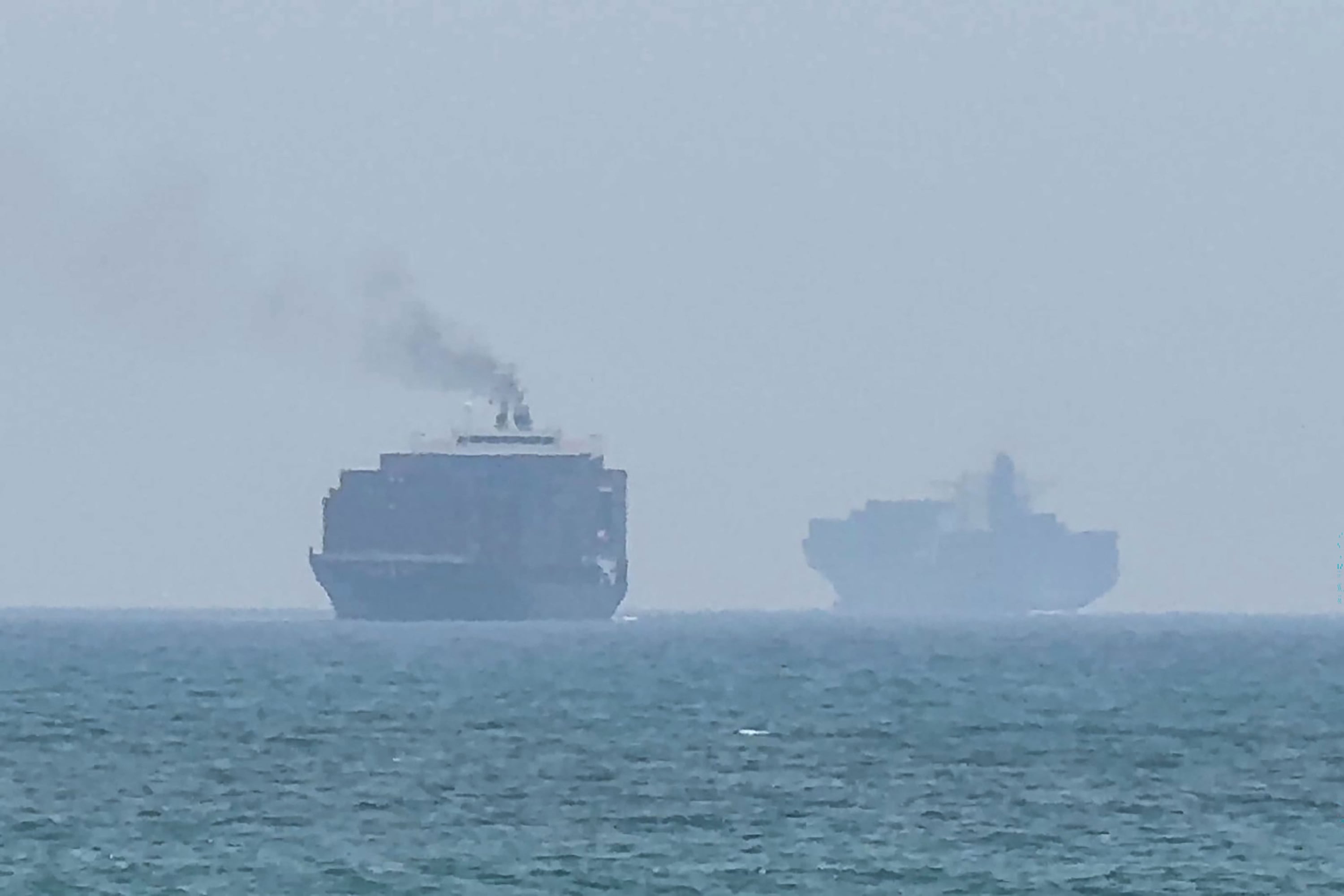
The economic consequences materialized before markets closed in Asia. Brent crude futures for September delivery reached $79.17 per barrel at 03:00 GMT Monday, up more than 4 percent on the day and approximately 9 percent above pre-conflict levels from late February. The Strait of Hormuz – through which roughly one-fifth of global oil flows in peacetime – recorded only six vessel transits between Thursday at 18:00 GMT and Friday at 06:00 GMT, against a normal rate of 18 to 22 daily crossings in early July. Japan’s Nikkei fell more than 1 percent overnight; South Korea’s Kospi dropped more than 5 percent. US gasoline averaged $3.88 per gallon as of Friday, up from $3.80 a week earlier.
The positions on the Strait itself remain publicly incompatible. US Central Command stated that Iran “does not control the Strait of Hormuz” and that traffic flows normally. Iran’s Persian Gulf Strait Authority declared passage “currently not possible” pending restoration of stability. Both statements were current at the same hour. Maritime tracking services published ship-movement data that aligned with neither official version – a near-total halt in vessel movement through the channel, with only six transits recorded in the 12-hour window.
Analyst Fabien Yip of IG Markets told Al Jazeera that oil’s return toward pre-war levels in June reflected markets pricing in a best-case outcome for the fragile US-Iran arrangement, and that last week’s re-escalation exposed how fragile that assumption was. Analyst Mukesh Sahdev of XAnalysts projected the upper $70s range holding through August and September, with volatility spikes likely.
The June memorandum of understanding that both sides agreed to was, in Iran’s account, violated when the United States launched strikes on Iranian territory. Washington’s account holds that Iran attacked commercial shipping first, nullifying the agreement. That dispute sat unresolved before Sunday’s exchange. Iran’s earlier declaration that the Strait was closed triggered the initial American strikes; the subsequent escalation has now reached every major US military installation in the Gulf arc from Bahrain to Oman.
Retired General Frank McKenzie said on CBS News Sunday that the US Navy possesses the capability to assert physical control over Hormuz if directed, but that the Navy prefers not to conduct those operations. His assessment positioned the Hormuz question as a problem of political will rather than military capacity – which is a different kind of problem for an administration that has ordered strikes in Iran multiple times this week without resolving the Strait’s status.
The five Gulf governments that host US forces – Qatar, Bahrain, Kuwait, Jordan, Oman – have not publicly aligned with the American military campaign. Each country’s position after Sunday is unchanged formally and complicated in practice. Qatar has maintained direct communication channels with Tehran even while hosting the airbase Iranian missiles reached this weekend. What Tehran’s targeting choices tell each of those governments is that hosting American military infrastructure now carries direct military risk – a calculation that was theoretical before Sunday and is not afterward.
Qatar’s official spokesman Majed al-Ansari acknowledged the strikes had “put into question a lot of other things that we have already agreed upon,” but said talks had “not broken down,” according to ABC News. The 14-point memorandum signed on June 17 covers three separate tracks – the Strait’s reopening, Iran’s nuclear program, and sanctions relief – and Qatar has urged both sides to allow more time before abandoning what remains of it.