
KUWAIT CITY — Iran’s Islamic Revolutionary Guard Corps struck United States Army HIMARS surface-to-surface missile launchers in Kuwait with precision drones on Sunday, the Fars news agency reported, citing an IRGC statement that claimed every installation positioned to target Iranian territory had been destroyed.
The strike was one of multiple IRGC attacks against US military assets across Gulf states that unfolded through Sunday – the sharpest single day of US-Iran military exchange since the conflict intensified this week. It came hours after US Central Command said it had struck approximately 140 Iranian military targets overnight, the third round of American strikes against Iran in as many days.
Whether the HIMARS systems in Kuwait were actually destroyed could not be independently verified. The IRGC’s announcement came through Iranian state media; US Central Command had not confirmed or denied the specific strike on HIMARS assets in Kuwait as of Sunday evening. A separate IRGC-affiliated Tasnim News Agency report initially attributed the Kuwait attack to ballistic missiles before the Fars agency described it as a drone operation – the contradiction in Iran’s own official statements leaving the precise nature of the weapons used unresolved.
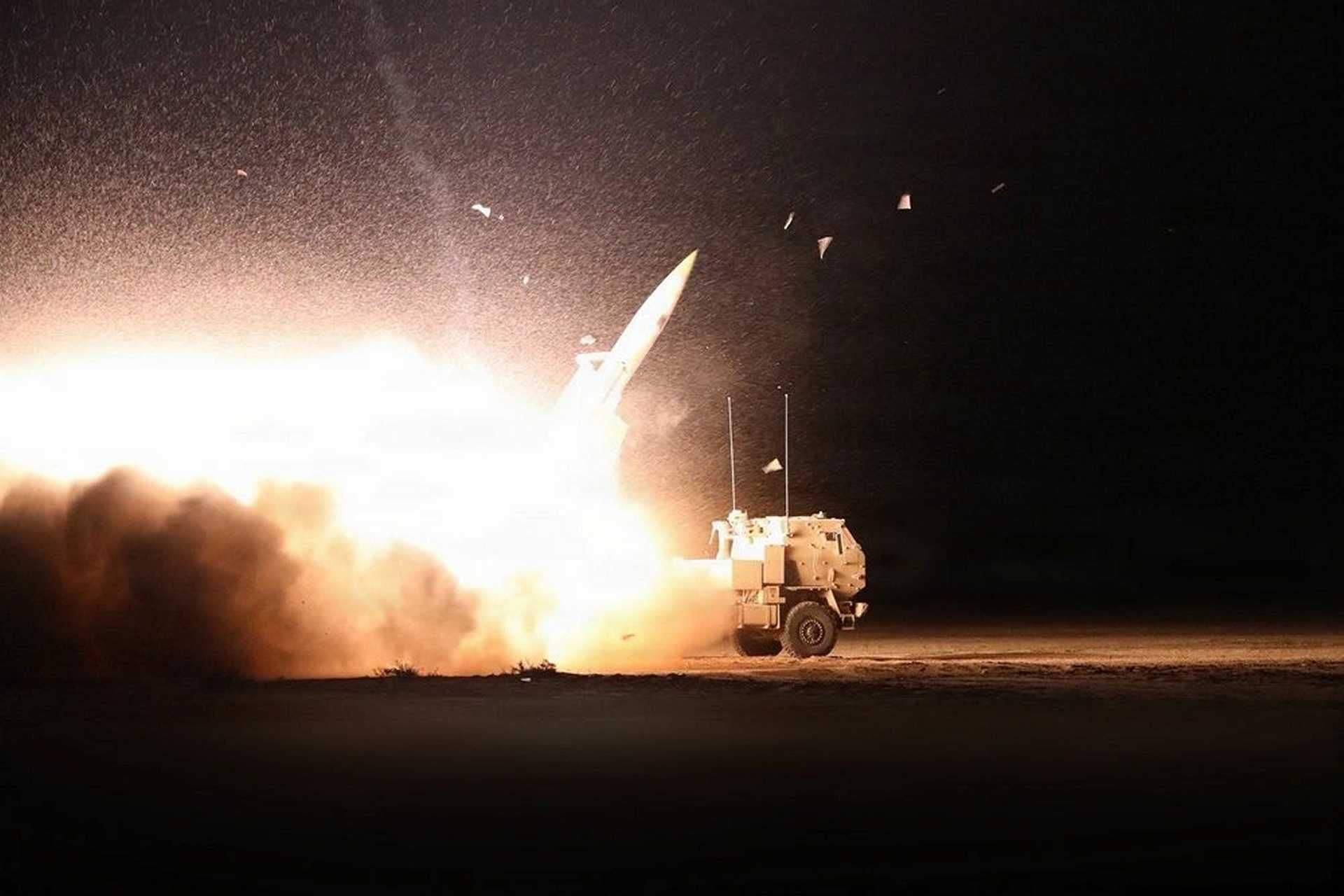
The targeting of HIMARS specifically – the Army’s truck-mounted multiple-launch rocket system, capable of striking targets at distances exceeding 300 kilometers – signals Iran’s attempt to disable the ground-based strike capability that the IRGC has publicly described as among the most direct threats to Iranian territory from the Gulf. A Wisconsin National Guard HIMARS unit was among the American forces operating in Kuwait under Operation Epic Fury, the US military campaign against Iranian targets launched in late February 2026, and CENTCOM has published images of the truck-mounted launchers firing from Kuwaiti desert terrain.
Sunday’s broader IRGC barrage extended well beyond Kuwait. Missiles and drones struck the UAE, Qatar, Bahrain, Kuwait, and Jordan in what Al Jazeera described as the most expansive Gulf barrage since the conflict began, with Emirati and Qatari air defense systems intercepting multiple projectiles. Kuwait’s Defense Ministry said three land border posts in the country’s north were struck and an offshore oil platform sustained damage from a drone hit, injuring one worker.
The IRGC framed the HIMARS strike as a precision disarmament operation and said it was a response to American attacks that Tehran contends violated a Memorandum of Understanding both sides signed to govern the conflict. Washington accuses Iran of having first violated that agreement by attacking commercial shipping in the Strait of Hormuz.
That dispute sits at the root of Sunday’s exchange. The IRGC declared the Strait of Hormuz closed last week after striking a Cyprus-flagged container ship, triggering the American airstrike campaign against Iranian port cities. The US has since carried out three rounds of strikes on Iranian military targets, including missile launch facilities, drone factories, and naval assets. Iran’s escalating retaliation has now spread beyond the Strait itself into the sovereign territory of five Gulf Arab states.
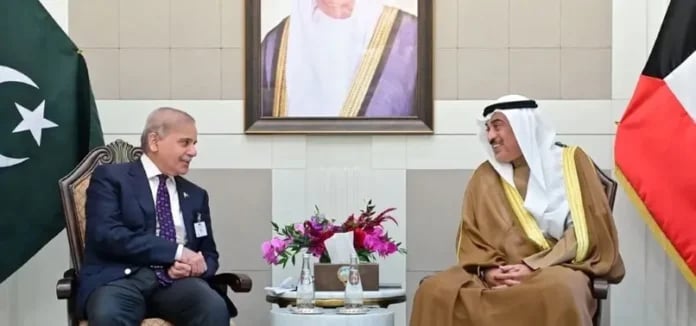
Kuwait, whose government has not aligned explicitly with either side, now finds itself hosting US military infrastructure that has been attacked while maintaining diplomatic ties with Tehran it cannot abandon. Kuwait’s air defense intercepted several drones and missiles during Sunday’s barrage, the Defense Ministry confirmed, without specifying which targets, if any, were struck before interception.
What Iran’s statement does not address is what comes next. The IRGC used the word “initial” to describe Sunday’s operations – the same language it has used before each escalatory phase since the conflict intensified in June. Whether striking HIMARS systems removes an Iranian threat calculation or simply invites US resupply and a harder American response is a question neither side has answered publicly, and one that will determine the shape of the next 24 hours.