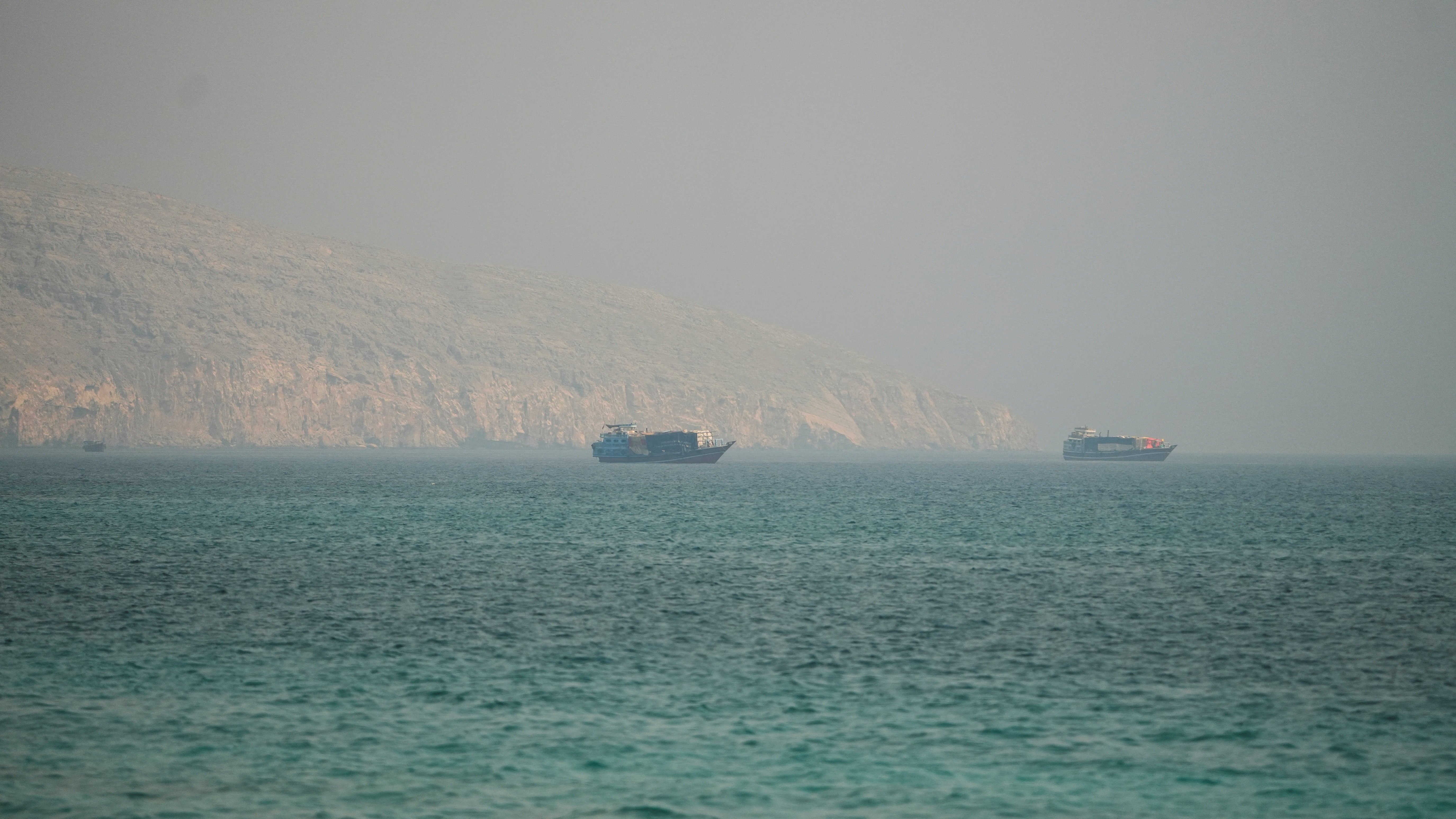

DUBAI – Iran’s military struck a Cyprus-flagged container ship in the Strait of Hormuz early Saturday, hours after the Islamic Revolutionary Guard Corps formally declared the waterway closed, triggering a third round of American airstrikes on five Iranian port cities and confronting the world’s most critical oil chokepoint with a question neither Washington nor Tehran has yet answered.
United States Central Command confirmed strikes on Bandar Abbas, Sirik, Chabahar, Bandar-e Deyr, and Asaluyeh within hours of Iran’s attack on the Cyprus-flagged vessel, which was in international waters when it was struck. The crew status and cargo aboard the ship remained unknown at time of filing; no state had claimed direct responsibility, and the attack came before Iran’s formal closure announcement was distributed internationally.
The IRGC’s Naval Command declared the strait closed “until further notice” Saturday morning, effectively ending what remained of commercial transit through a waterway that carries roughly a fifth of global oil shipments. The formal announcement followed weeks of partial disruption during which Iran’s Persian Gulf Strait Authority managed what flow remained, an arrangement the IRGC estimated at approximately 50 percent of pre-war volumes before Saturday.
Mojtaba Khamenei, who assumed the Supreme Leader position following his father’s assassination in February, responded to the strikes with a statement addressed to the nation’s dead. “We pledge to avenge your pure blood,” he said. “This revenge is the demand of our nation.” The language was less a military threat than an act of internal political consolidation; Khamenei the younger has staked his early leadership on being harder than his father’s conciliatory later years.
President Donald Trump had warned on Friday that a thousand missiles were “Locked and Loaded” and that “Orders have already been given.” The post, shared on Truth Social, stopped short of naming specific targets. When Iran struck the container vessel hours later, the administration treated it as the act that crossed the line Trump had publicly drawn.
Ali Vaez, director of the Iran Project at the International Crisis Group, assessed the situation with limited confidence. “Both sides appear to recognise that the alternative is an escalation neither can afford,” Vaez told Al Jazeera. “But the signalling has become dangerously compressed. The window between provocation and response is shrinking.”
The formal closure arrived as the last round of shuttle diplomacy was still theoretically on the calendar. Oman had placed a two-corridor proposal on the table at Saturday’s Araghchi-Albusaidi talks in Muscat: a southern lane through Omani territorial waters where ships would transit freely, and a northern Iranian-waters lane where Tehran would control authorisation. That framework has now been overtaken by events that neither corridor plan was designed to address.
Whether Saturday’s attacks end Oman’s mediation or merely delay its next round is not established by anything either government has said publicly. Both Iran and the United States retain financial and political incentives to maintain a back-channel even as the military dimension expands. What they cannot sustain simultaneously is active strikes on each other’s assets and formal negotiations.
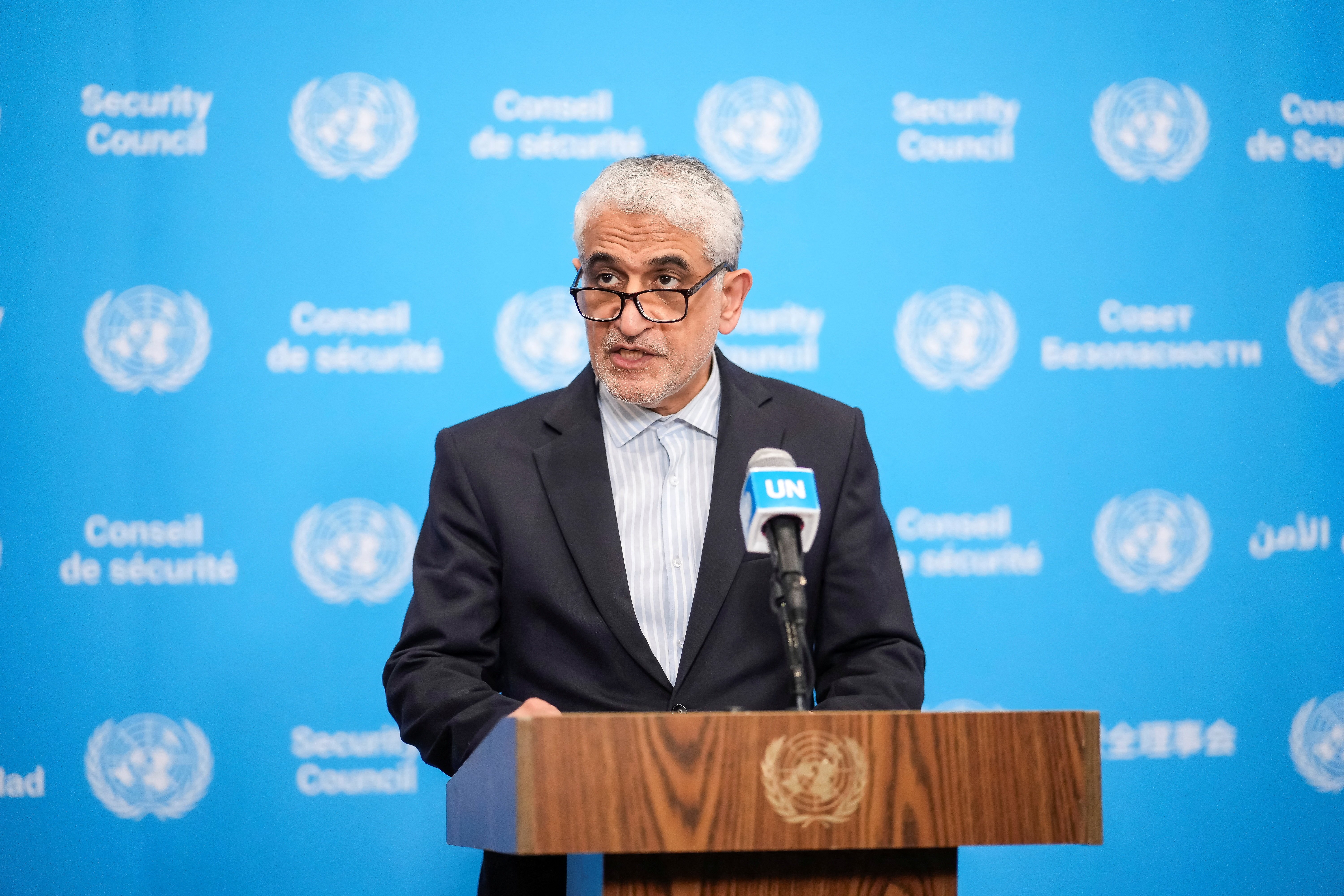
Iran’s ambassador to the United Nations, Amir-Saeid Iravani, appeared at the Security Council on Friday to lay out Tehran’s legal position: the IRGC holds authority over the Strait of Hormuz under what Iran characterises as existential self-defence circumstances, and any interference with Iranian-designated shipping lanes constitutes an act of war. The United States has not sought Security Council authorisation for its strike campaign, framing the operations under self-defence provisions of international law. Neither framing has found consensus at the UN table.
The International Maritime Organisation condemned Iran’s interference with Strait of Hormuz shipping on Friday, one day before Saturday’s formal closure. IMO condemnations carry no enforcement mechanism, and the Friday statement had no apparent deterrent effect on the morning’s events.
Tehran’s earlier admission that the IRGC had made tactical errors in its initial Strait posturing, reported last month, had briefly opened diplomatic space that Oman’s corridor plan was designed to fill. Saturday’s sequence suggests that space has narrowed significantly, though whether it has closed entirely is not something either government has said in terms.
The economic signal from Saturday reached energy markets before formal sessions opened. Saudi Arabia and the UAE, whose hydrocarbon exports depend on Hormuz passage, have both accelerated internal discussions about Red Sea pipeline alternatives; those routes carry their own political vulnerabilities. Reinsurers who had been quietly repricing Gulf region coverage for weeks now face clients seeking to ground vessels whose policies cannot certify safe Hormuz transit.
The element missing from every public account of the day’s events is the status of the Cyprus-flagged vessel’s crew. Commercial shipping through Hormuz has drawn crews predominantly from South and Southeast Asia. The ship’s registry in Cyprus, a European Union member state, means Saturday’s attack now implicates EU maritime law and potentially NATO’s maritime protection mandate in a conflict that has until now moved as a bilateral American-Iranian confrontation. Neither the European Union nor NATO had issued a formal response to the attack at the time this article was prepared.