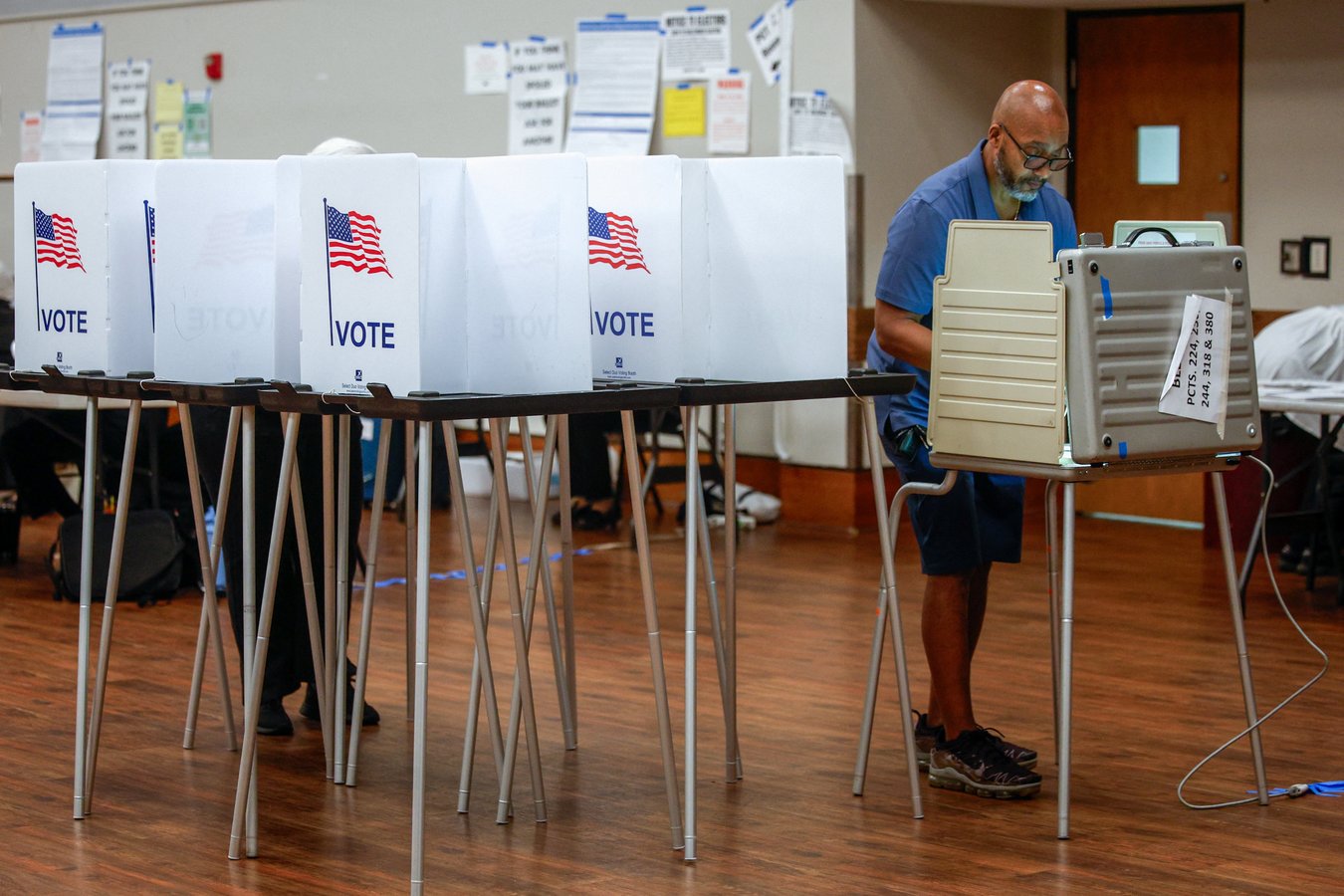

DETROIT – Federal election monitors walked through the doors of Detroit polling sites on Tuesday as Michigan voters filed in to cast ballots in a Senate primary that has drawn national attention, arriving at a moment when the Trump administration’s relationship with Michigan’s elections is itself a subject of contest.
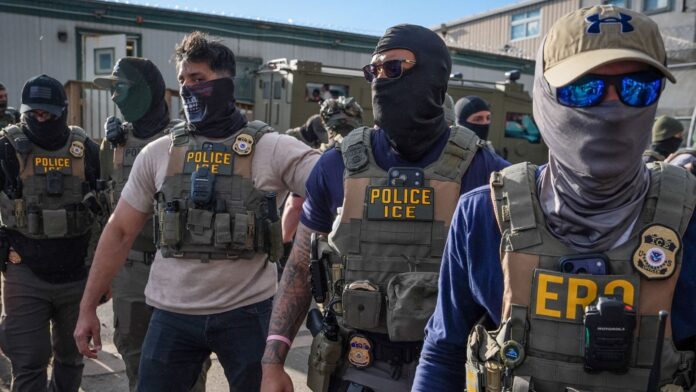
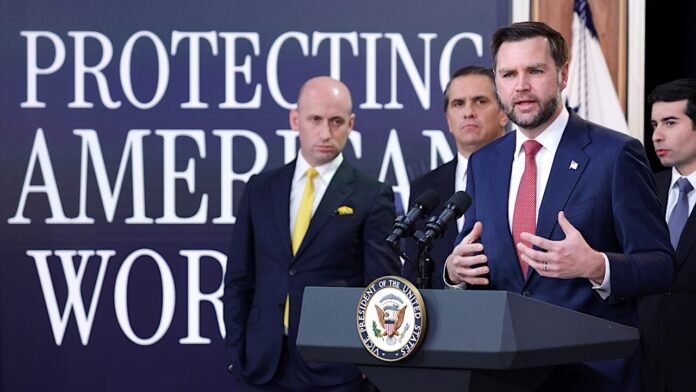
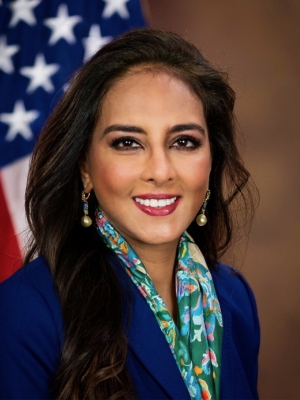
The Justice Department deployed monitors to four Michigan cities for the August 4 primary: Detroit, Hamtramck, Lansing and East Lansing. The operation covered 15 jurisdictions across six states, including Arizona, Massachusetts, Minnesota, New Hampshire and Virginia. Harmeet Dhillon, the Assistant Attorney General for Civil Rights, described the effort in plain terms. “The Department of Justice is devoting extensive resources to ensure uniform and nondiscriminatory monitoring,” she said.
Ten Democratic senators read that framing with skepticism. The senators signed a letter to the Justice Department acknowledging the program’s legal basis but questioning the pattern of where it was being applied, noting that the targeted jurisdictions shared a consistent profile: locations in states led by Democratic governors, or majority-minority cities where turnout in Democratic primaries consistently runs high. “However, it would be remiss not to acknowledge concerns that monitors are being deployed disproportionately to jurisdictions in states governed by Democratic leaders,” the letter read.
The senators did not call for withdrawing the monitors but asked the Department to account for how the targeted jurisdictions were selected and whether Republican-leaning areas in the same states received equivalent attention. No response from the Justice Department was published before polls closed.
The deployment landed at a peculiar political moment. The Michigan primary was already the most watched Democratic contest of the midterm cycle, a Senate race between progressive candidate Abdul El-Sayed and Representative Haley Stevens that has drawn more than $50 million in outside spending and become a proxy battle over the Democratic Party’s stance on Gaza. Both Detroit and Hamtramck, two cities with large Arab-American communities that sit at the center of the Michigan Senate primary, appeared on the DOJ’s monitoring list, a detail that observers of the race noted at once.
Federal election monitors operate under authority established by the Voting Rights Act and subsequent civil rights statutes. They observe polling sites for potential violations, including discriminatory treatment of minority voters and language access failures, and carry no authority to stop or delay voting. Their presence is not inherently coercive. What has changed under the Trump administration is the pattern of where they appear.
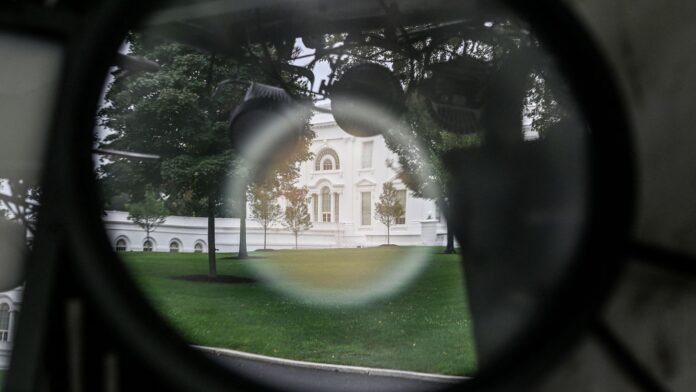
Trump stoked the administration’s focus on Michigan directly. In a primetime White House address in July, he returned to claims of voter registration fraud in Muskegon, allegations that federal investigators had previously examined and not substantiated, and called for renewed scrutiny of the state’s election administration. Michigan Secretary of State Jocelyn Benson, a Democrat, has been a recurring target of Republican election-fraud allegations for years.
That history sits behind the partisan reading critics applied to Tuesday’s monitor deployment. The Trump administration’s use of federal enforcement capacity to pressure state election infrastructure has followed a consistent trajectory. FBI raids on voter registration groups in Ohio earlier this year drew comparisons to tactics used against civil rights organizations in earlier decades. A federal appeals court subsequently lifted a block on mail-in voting rules the administration had imposed without congressional authorization, and the Department of Homeland Security threatened election officials with prison for defying federal voter roll purge directives.
Dhillon, as Al Jazeera reported, did not provide a breakdown of how many Republican-leaning jurisdictions had been selected for monitoring across the six states. Her statement described the program as resource-intensive and uniform without specifying the criteria by which jurisdictions were chosen.
The distinction the Democratic senators are drawing is not about legality. Federal election monitoring is lawful and congressionally authorized. What the senators are contesting is whether the judgment applied to choosing which communities to monitor reflects neutral risk assessment or the same political geography visible in the administration’s other election-security actions, one where the places subjected to federal scrutiny are reliably the places that vote Democratic.
What federal monitors do not do is produce immediate legal consequences at polling sites. Their job is to observe, document and report potential violations to the Civil Rights Division for possible follow-up. A voter intimidated by a poll worker, a language-assistance failure, a last-minute site closure: these are the events monitors are meant to catch. The critics of Tuesday’s deployment do not allege that the monitors interfered with voting. Their concern is that the monitors’ presence in Detroit and Hamtramck, on a day when Arab-American voters are casting ballots in a high-stakes Senate race, functions as a statement about which communities the federal government has decided to watch.
Whether the monitoring produced any documented incidents at Michigan polling sites is not known. Federal monitors file reports with the Civil Rights Division, and those reports may or may not become public depending on whether they prompt further review. The Justice Department has not said whether any incidents were logged in the four cities where monitors were deployed.
Michigan’s primary results will take time to tabulate fully. El-Sayed and Stevens each expected the race to be close, and vote-counting could extend into Wednesday or beyond. The presence of federal monitors at Detroit and Hamtramck polling sites will be part of the primary’s record, whatever the returns reveal.