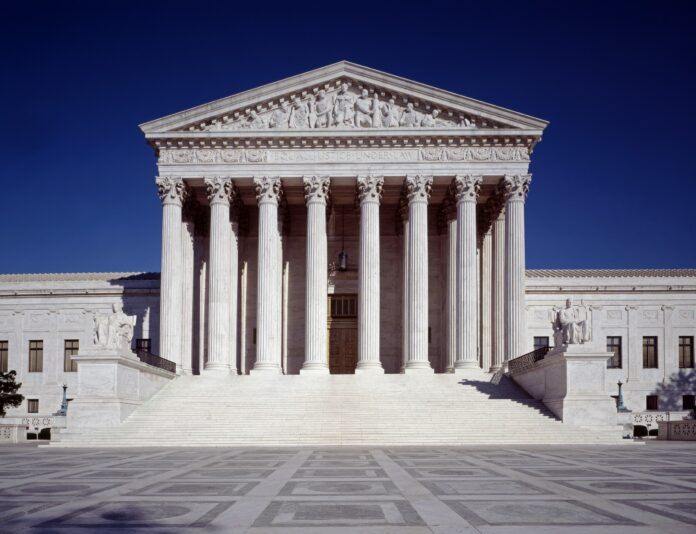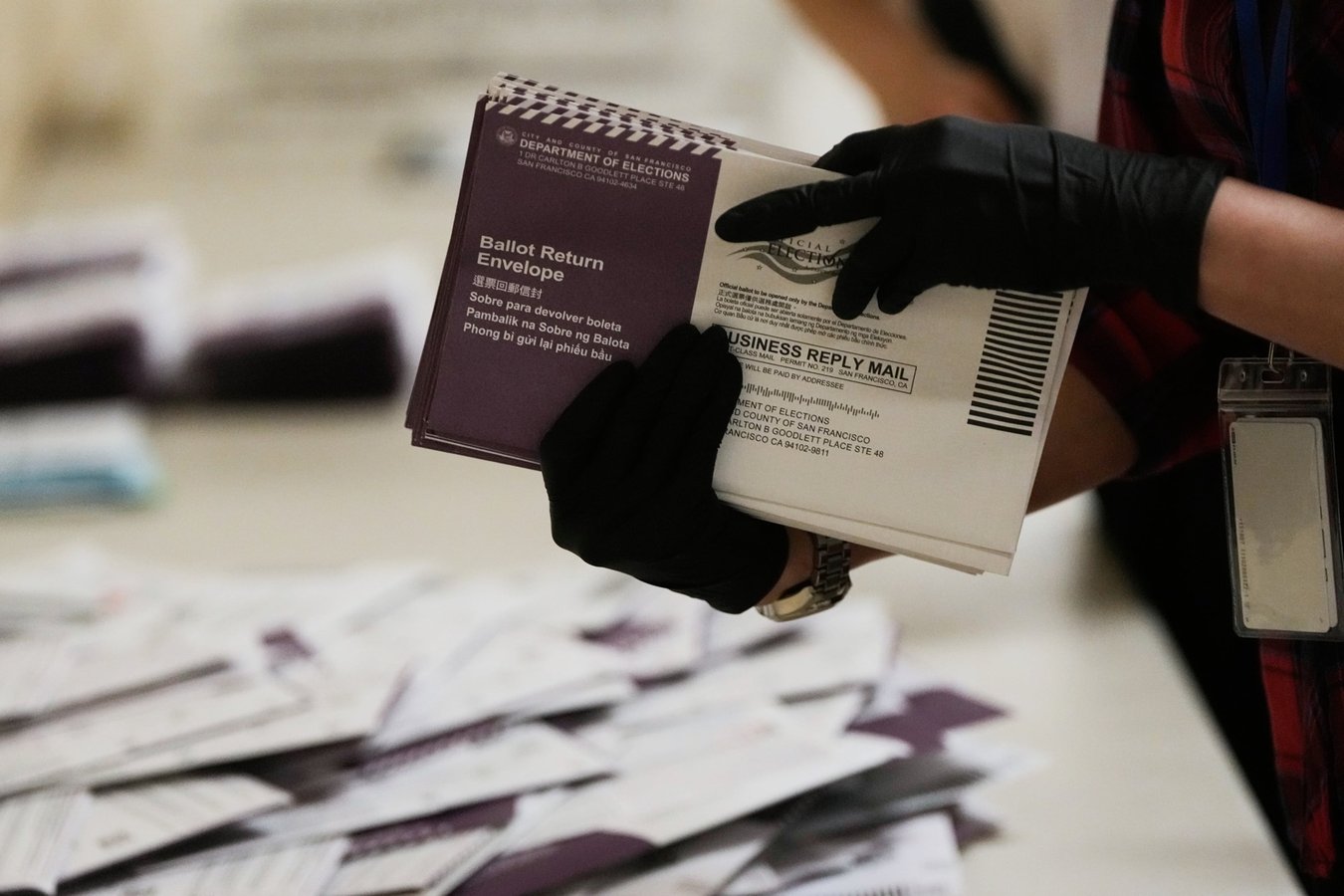

WASHINGTON – Election officials in more than two dozen states woke Friday to a sharply altered legal landscape after a federal appeals court unanimously overturned a lower court order that had shielded their mail-voting procedures from a Trump administration rule tying ballot delivery to compliance with new postal requirements.
The three-judge panel of the United States Court of Appeals for the District of Columbia Circuit ruled late Thursday that a Texas district court had overstepped when it blocked a Postal Service directive requiring states to hand over voter rolls and mark each mail ballot with a serialized tracking barcode before USPS would agree to carry them. The ruling restores the directive’s reach in most of the country, save Massachusetts where a separate injunction remains in place, and injects fresh uncertainty into mail-voting preparations for the 2026 midterm elections.
The NAACP, which brought the Texas lawsuit alongside several voting-rights organizations, had argued the directive amounted to a backdoor voter suppression mechanism: states that failed to provide voter data or retrofit their ballot systems would find the Postal Service simply refusing to move their ballots. Postmaster General David Steiner, the panel noted, had confirmed he would honor the rule, making non-compliance effectively mean disenfranchisement by parcel.
The panel disagreed that this constituted a likely legal violation at the current stage of litigation. Writing for the court, the judges observed that election integrity concerns cited by the administration, including the need to match returned ballots to registered voters in real time and to audit delivery chains, were permissible exercises of USPS authority over the mail. The ruling warned that courts must be especially reluctant to disturb executive election directives close to voting cycles, citing the principle that “there can be no do over” once an election concludes.
That last phrase carries particular weight. Midterm voting in several states begins with absentee ballot dispatch as early as January 2027, meaning the compliance window for state election offices has narrowed considerably. Officials in Pennsylvania, Michigan, Wisconsin, and Arizona, battleground states that rely heavily on mail-in participation and had not yet certified compliance with the new data-sharing requirements, now face a choice between an accelerated scramble to meet the Postal Service’s conditions or a renewed legal challenge at the Supreme Court level.
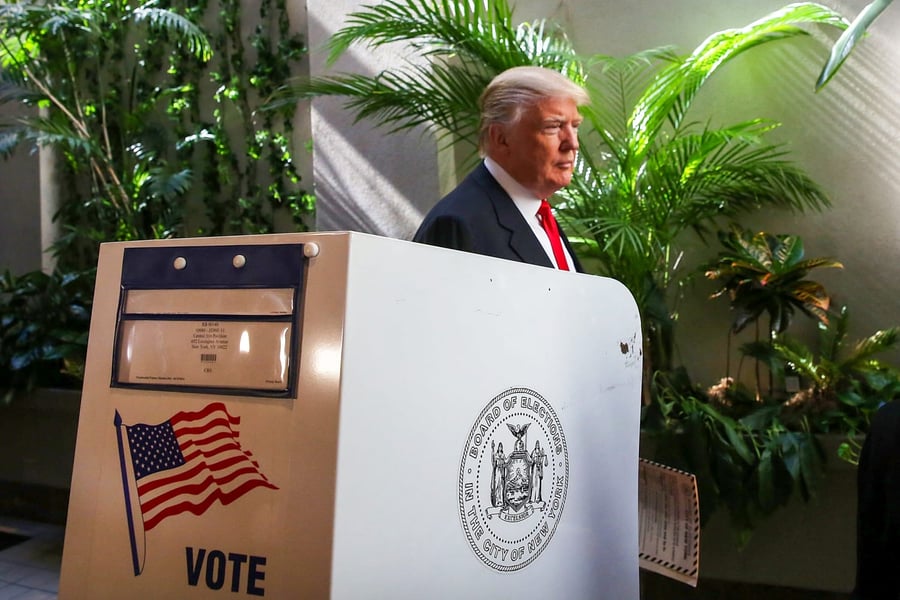
The NAACP on Friday said it was evaluating its options, including seeking an emergency administrative stay from the full DC Circuit or appealing directly to the Supreme Court. The organization framed the ruling as one of the most consequential decisions for ballot access since the passage of the Help America Vote Act in 2002. ABC News reported the panel’s language was unusually direct in its skepticism of lower-court intervention in active electoral cycles.
Trump’s USPS directive, signed in March and effective upon publication in the Federal Register, was challenged within days by a coalition of civil-rights groups and four Democratic-led state attorneys general. A district judge in Texas granted an emergency preliminary injunction in April, finding the rule likely violated the National Voter Registration Act and the Administrative Procedure Act’s notice-and-comment requirements. Thursday’s reversal by the DC Circuit found that the plaintiffs had not clearly established standing at the preliminary injunction stage and that the balance of equities favored allowing the rule to operate while litigation continues.
The Massachusetts injunction, issued separately by a federal district court in Boston in a lawsuit brought by that state’s attorney general, was not before the DC Circuit panel and remains in effect. Residents of Massachusetts who mail their ballots retain the existing non-barcode system for now, an anomaly that illustrates how fractured the national mail-voting framework has become. Earlier this year, Trump’s mail-in ballot executive order was struck down by a Boston federal judge as unconstitutional, establishing the legal foundation from which Thursday’s DC Circuit decision now departs.
Republican officials in Washington celebrated the ruling as a long-overdue correction. Several GOP governors whose states were already compliant with the USPS requirements used the occasion to call on holdout states to move quickly, framing non-compliance as an admission of vulnerability to fraud. The administration offered no immediate public comment beyond a brief statement from the Justice Department calling the ruling “a victory for the integrity of the postal ballot system.”
Courts have long been reluctant to enjoin election administration directives when the government can demonstrate any plausible regulatory rationale, particularly before the actual conduct of an election. The DC Circuit’s decision fits that pattern. The harder question of whether the directive survives a full merits trial on its consistency with federal voting statutes remains to be litigated. Several legal observers noted Thursday that the panel’s ruling was explicitly calibrated to the preliminary injunction standard and did not signal a final view on the rule’s legality.
The NAACP’s lead attorney called the ruling “deeply troubling” but stopped short of characterizing it as a final defeat. The organization’s legal team noted that at least three other challenges to components of the Trump voting-rules framework remain pending before different federal circuits, offering multiple routes to a renewed injunction if the Supreme Court declines to intervene. A related ruling permanently blocked Trump’s proof-of-citizenship voter registration rule this spring, illustrating how courts have repeatedly halted the administration’s election overhaul while the DC Circuit now moves in the opposite direction on the USPS directive.
What Friday’s ruling does immediately is restore pressure on the states that had not moved to comply. The practical burden falls hardest on election offices in counties that rely almost entirely on mail-in balloting for their older or rural voter populations, communities where retrofitting the logistics of serialized bar-coding in time for the 2026 cycle is less a policy question than a physical infrastructure problem.
For election administrators who spent the spring months planning around the Texas injunction’s protection, the DC Circuit’s decision lands like an alarm pulled at midnight. The legal landscape they built contingency plans around has shifted, and November 2026 is closer than it looks.