
WASHINGTON – The Senate voted 90-6 Saturday to pass a short-term spending bill that would keep the federal government funded through December 11, a margin so wide it barely resembles a contested vote. But the bill the House passed for the same purpose runs through December 4, not December 11. Congress left for recess before reconciling the difference.
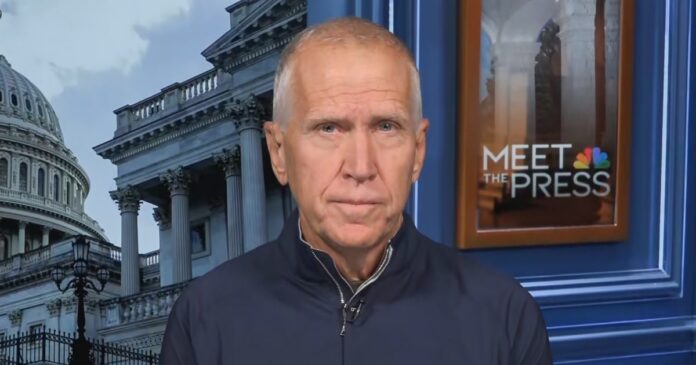
The measure was built on the framework Senate Majority Leader John Thune of South Dakota and Minority Leader Chuck Schumer of New York announced five days earlier. Senator Susan Collins of Maine, who chairs the Senate Appropriations Committee, and Senator Patty Murray of Washington, the committee’s ranking Democrat, were the principal architects. Their negotiations produced the Senate funding deal at the center of Saturday’s vote. The bill was designed to keep both parties from bearing responsibility for a third government shutdown in under a year. As PBS NewsHour reported last Sunday, it also includes a block on the administration’s proposed rule to subject federal grants to political review by presidential appointees.
Neither chamber’s bill includes what the White House had sought for the Pentagon. The administration requested $1 billion for a new class of naval vessels it promoted as Trump-class battleships. That request is not in either bill. The White House also sought authority to commit to five multiyear munitions contracts, a flexibility the Defense Department argued was necessary for sustained industrial production. That authority is not in either bill. A separate demand for additional defense funds tied to potential Iran military operations was also excluded, according to Breaking Defense. The Pentagon’s spending requests were denied by a Republican-led chamber.
Earlier Saturday morning, the Senate confirmed Todd Blanche as attorney general in a 50-49 vote, the narrowest possible margin. The funding bill’s 90-6 tally is a different universe. In the current Senate, reaching 90 requires Republicans and Democrats to align in numbers that the chamber has not managed on most of the major votes this session. Six opposed. Who those six were, and what drove their opposition, was not public before Congress departed.
What the vote does not represent is a final answer. The Senate’s version expires December 11. The House’s version expires December 4. The House bill passed without most Democrats, limiting its cross-aisle support. The Senate bill required Democratic votes to reach 90. When Congress returns in September, the two chambers will need to produce a unified bill before the new fiscal year begins on September 30. If they cannot, the federal government faces a funding lapse, its fourth in less than a year.
The previous two came at significant cost. The 41-day shutdown that began in October 2025 paralyzed air traffic control and left hundreds of thousands of federal workers without pay for more than six weeks. The second, centered on DHS funding, required its own separate stopgap to stabilize. Both parties entered Saturday’s vote knowing that a third shutdown in an election year would be a liability cutting across party lines.
The September question is the genuinely hard one. A conference agreement between the two chambers will require either the House to accept provisions Democrats insisted on and Republicans resisted, or the Senate to strip those provisions out to match the more austere House version. There is no path where both sides end up with what they want. The seven-day gap between December 4 and December 11 reflects a substantive disagreement about the shape of the lame-duck appropriations fight, not a clerical discrepancy.
The rejection of the administration’s defense spending requests by a Republican-led Senate is worth holding on to. The White House’s fiscal priorities for this cycle included a 44 percent increase in defense spending, paired with deep cuts to domestic programs. The Senate, controlled by members of the president’s own party, excluded the battleship funding, the munitions contracts authority, and the Iran-related military funding from both the deal and the final vote. Those requests do not disappear with Saturday’s bill. They can be reintroduced in the full appropriations process that follows any continuing resolution. But the consistent pattern of Republican appropriators rejecting specific executive spending priorities signals that the White House’s defense agenda will face Senate resistance through the end of the fiscal cycle.
Congress returns in September. The deadline is September 30. What happens between those two dates depends on the November mathematics neither side yet knows. A unified bill before October 1 avoids a fourth shutdown. A lapse pushes the question to a new Congress seated in January, whose composition will reflect whatever the midterms produce. Saturday’s 90-6 vote cleared the immediate calendar problem. It left the structural ones intact.
The political logic behind the timing was explicit and bipartisan. Thune and Schumer both said last Sunday that their overriding goal was to keep the government open through the midterms. Reaching December means incumbents do not campaign while federal agencies are dark. That calculation held through Saturday’s vote. Whether it holds through September, when the harder choices actually arrive, is what the 90 senators who voted yes left unanswered when they left town.