
NEW YORK – The video stayed up. The music did not.
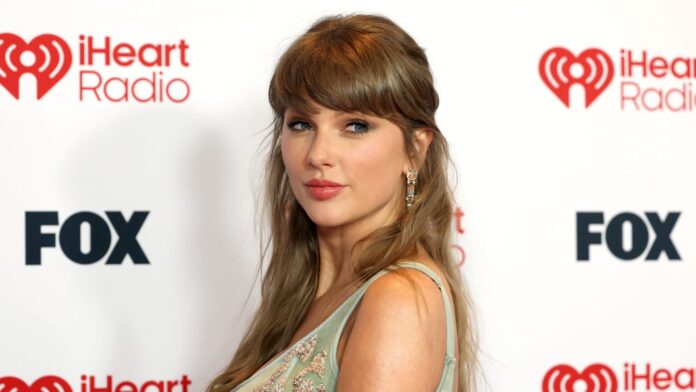
On Monday, August 4, the Team Trump TikTok account posted a clip of President Donald Trump and First Lady Melania Trump watching a July Fourth fireworks display, set to the opening bars of Taylor Swift’s ‘august,’ a track from her quietly atmospheric 2020 album folklore. The caption was a provocation dressed as a caption: “I’m sure @Taylor Swift is going to be super excited we used her song!”
By Friday, the audio was gone. In its place, TikTok’s standard copyright notice: “This audio is not available.” The fireworks kept blooming in silence, and the caption remained, now pointing at a blank space where the music had been.
Swift did not comment publicly. Her team did not issue a statement. A copyright claim through TikTok’s automated content-matching system was all it took. No press release. No attorney letter with a cease-and-desist demand. The silence said everything the claim needed to say.
The sequence fits a shape that has become familiar in 2026: a Trump administration social media team posts something using recognizable pop music without permission, the artist or their label triggers a platform takedown, and the resulting news cycle is longer and louder than any coverage the original post would have generated on its own. When Ariana Grande saw her 2024 track ‘Bye’ backing a White House TikTok of ICE arrests in June, her comment calling it “barbaric, inhumane, heinous nonsense” was viewed far more widely than the original video. When the White House used Katy Perry’s ‘Firework’ over footage of U.S. missiles striking Iranian port targets, Perry’s statement condemning the use reached millions of people who had not seen the nine-second clip. The pattern, at minimum, is not functioning as a deterrent.
Whether it is functioning as a strategy is the question nobody close to Team Trump has answered. The Daily Beast characterized the Trump camp as deliberately “trolling” Swift before the copyright claim brought silence, a framing supported by the caption itself. A posting team that accidentally puts an unauthorized song on a presidential social media account does not typically caption it with a taunt directed at the artist.
Swift’s feud with Trump is long enough to have its own chronology. She criticized his presidency publicly on X in 2020. She endorsed Kamala Harris in the 2024 presidential race, a decision Trump responded to by posting “I HATE TAYLOR SWIFT!” on his Truth Social platform. The animus has been mutual and documented for years. The use of ‘august,’ a song known for its themes of longing and missed connection, as the soundtrack to a presidential fireworks video has a specific irony that can hardly have been accidental.
‘august’ was released in July 2020 as part of folklore, Swift’s eighth studio album, recorded during a period of pandemic isolation. The album won the Grammy Award for Album of the Year in 2021, making Swift the first artist to win that honor four times. ‘august’ became one of the most-streamed tracks from the record and has remained in continuous rotation for six years. It is not a political song. It is not easily read as celebratory. The choice of track, from among all available music, suggests either a specific intent to provoke or a remarkable indifference to the symbolic weight of the song being borrowed.
The mechanics of the removal are TikTok’s, not Swift’s, in any direct operational sense. The platform uses content-matching technology that compares uploaded audio against a database of copyrighted works submitted by rightsholders. When a match is detected and a claim filed, the audio is automatically stripped or the video muted, depending on the claim type. Swift’s label, Republic Records, holds the relevant rights to folklore and its tracks. The claim would have been logged through that infrastructure, not by Swift personally sitting at a computer. No explicit act of confrontation is visible on Swift’s side; the system did what the system is designed to do.
Fan response on TikTok was predictable in its enthusiasm. One commenter wrote “Here before Taylor Swift tells him to take it down” and collected roughly 25,000 likes before the audio vanished. After the removal, comments reading “TAYLOR REMOVING THE AUDIO QUEEEEEEN” and “Hahahahaha you messed with the wrong successful woman” populated the video’s thread. For Swifties, the takedown was a clean win in a conflict that had briefly seemed to belong entirely to the other side.
There are things this incident does not resolve. No Trump campaign spokesperson addressed the posting publicly. No explanation for the song choice has emerged from anyone at Team Trump. Multiple songs reportedly had audio removed from Trump campaign social media content around the same period, according to Entertainment Weekly, though the details of which tracks and which specific posts were affected were not confirmed at time of publication. Whether any further legal action is under consideration, including a formal DMCA complaint or a licensing demand beyond the platform-level copyright claim, has not been addressed by Swift’s legal representation.
The broader pattern is not new, even if it feels newly systematic. Victor Willis, the Village People frontman who died in July, spent his final years having reclaimed legal ownership of ‘Y.M.C.A.’ and watching Trump’s campaigns play his song at rally after rally without his endorsement. Kesha, Sabrina Carpenter, Noah Kahan, and Olivia Rodrigo have all made public objections to their music appearing in Trump administration content in 2026. None of the objections has produced a sustained change in behavior. The music gets removed from individual posts. The pattern continues.
What comes next is genuinely unclear. Swift has not spoken. Her team has not indicated whether Friday’s copyright resolution is the end of it or the beginning of something more formal. Team Trump has not said whether the use was deliberate or accidental, whether more such posts are planned, or whether the fireworks video represents a particular creative statement about the artist and the president who cannot seem to stop being in each other’s stories.
The video is still up. The silence where ‘august’ used to be says more about their relationship than either of them has managed to put into words.