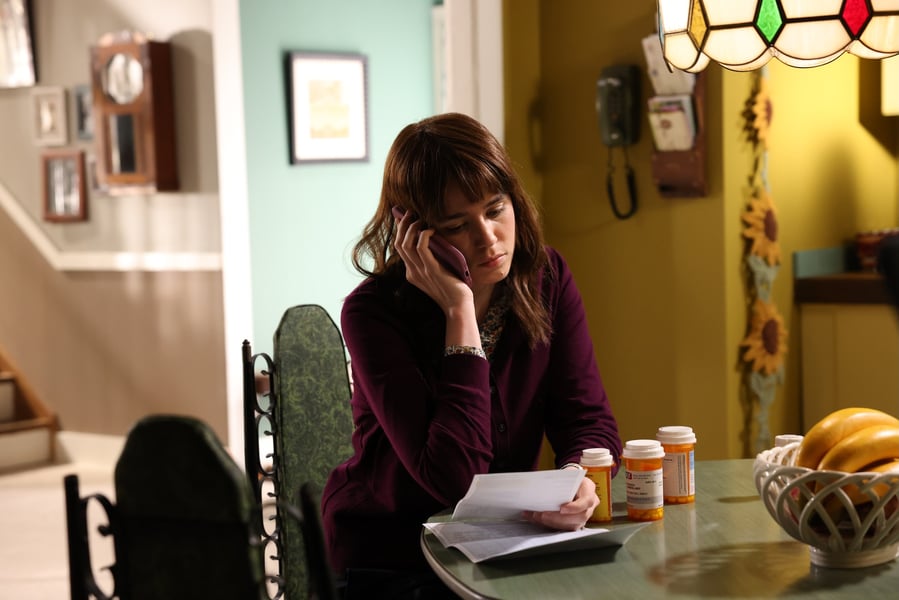

For the brother in “Sister,” the solution to an ageing parent’s care needs is someone else’s unpaid labour. The Saturday Night Live sketch presents a daughter’s availability as a service the rest of the family can take for granted, satirising an arrangement that caregiving researchers say reflects a persistent imbalance between women and men.
The joke rests on a distinction that disappears when families describe care as free. A relative may receive no wage for providing it, but the work can still carry a price in reduced employment, diminished retirement savings and less time to manage the caregiver’s own health. AARP’s research puts those consequences at the centre of a problem affecting tens of millions of Americans.
In its November 16 response to the sketch, AARP connected the satire to findings from its joint research with the National Alliance for Caregiving: three in five family caregivers are women. The organisations estimate that 63 million American adults provided care for an adult or a child with a complex medical condition or disability during the preceding year. That is a broader population than daughters looking after elderly parents, the particular arrangement lampooned in “Sister.”
The distinction matters. Caregiving includes spouses supporting partners, parents caring for children with disabilities and friends helping other adults, as well as adult children assisting ageing parents. Of the 63 million caregivers in the organisations’ 2025 report, 59 million were caring for an adult. The total had risen by about 20 million since 2015.
For working caregivers, the financial damage can continue long after a period of intensive care ends. In a separate report released November 4, AARP estimated average lifetime income losses of $120,500 among working caregivers born between 1981 and 1985. Its calculation includes lost earnings, employment-based retirement income and future Social Security benefits. It is a projection for that cohort, not a bill incurred by every caregiver or an estimate applying only to women.
Most of the projected loss comes from pay: $105,100 on average. AARP attributes a further $7,300 to lower workplace retirement income and $8,100 to reduced Social Security income. The components show why the cost of a decision to reduce working hours cannot be measured solely by the next paycheque. The effect can extend into the years when the caregiver needs income for their own retirement.
The report uses the Urban Institute’s Dynamic Simulation of Income Model, known as DYNASIM4. Its figures describe estimated outcomes across a group, rather than predicting precisely what will happen to a particular household. The amount an individual loses depends in part on how much paid work they give up and how long they provide care.
Those with the largest interruptions face substantially greater losses. AARP projects average lifetime income and retirement-benefit losses of $446,500 for caregivers who miss more than the equivalent of two and a half years of full-time work. For people providing care for a decade or longer, it estimates average losses of about $175,000. These are separate comparisons within the research and should not be added together.
The employment changes behind those estimates are already visible in caregivers’ accounts of their working lives. AARP’s discussion of the research cites its 2025 national study, in which more than half of working caregivers reported arriving late, leaving early or taking time off because of care responsibilities. Almost one in five moved from full-time to part-time work, and nearly one in ten gave up work altogether.
That does not mean all caregivers experience the same degree of disruption. It does mean the family member who appears able to step in may be absorbing costs that remain invisible to relatives whose employment continues uninterrupted. The sketch’s premise gives that imbalance a recognisable character: the sibling whose time is treated as the family’s available resource.
The workload can also involve far more than companionship or occasional errands. The 2025 AARP and National Alliance for Caregiving report found that more than half of caregivers managed complex medical or nursing tasks, including medication management, wound care or injections. Only just over one in five had received formal training in such tasks.
Nearly one in three caregivers were also raising children under 18 while caring for an adult. Among caregivers younger than 50, that proportion reached 47%. A parent’s growing needs can therefore arrive in a household already balancing employment and the demands of bringing up children.
The health consequences are another part of the cost that a wage calculation cannot capture. One in five caregivers reported fair or poor health, while nearly one in four said caregiving made it difficult to look after their own health. Nearly one in four also reported feeling socially isolated. Those findings describe caregivers’ reported experiences; they do not establish that caregiving alone caused every health problem.
The national study surveyed 6,858 adult caregivers through a probability-based online panel. Its scale helps explain why the sketch’s central imbalance extends beyond individual disputes between siblings. But a national survey cannot establish how work is divided in any particular family, or whether relatives have the money, time and practical ability to share it differently.
“Sister” turns an assumed family arrangement into a sales pitch. AARP’s response to the sketch and its research expose what that pitch leaves out: when one relative provides the care without a wage, the cost has not necessarily disappeared. It may instead surface years later in that person’s earnings history and retirement income.