
Opinion | This column examines the films’ published premises and promotional framing. It is not a firsthand review.
A famous founder arrives on screen with a considerable advantage: somebody has already sold us the name. Before an actor speaks or a documentary camera enters the house, there is a reputation waiting in the seat beside us. The film can challenge it, polish it or simply benefit from the recognition.
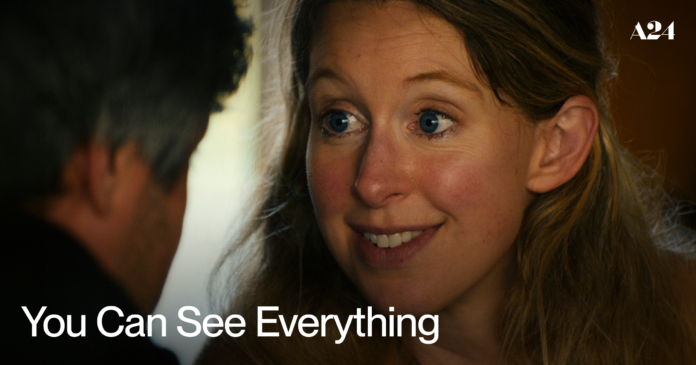
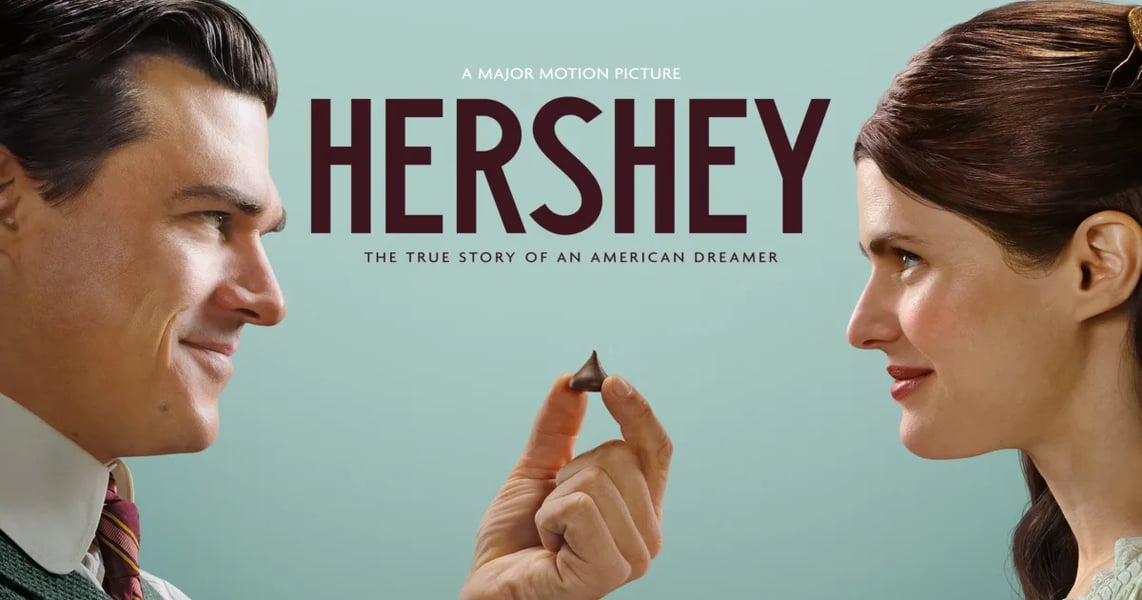
With Hershey scheduled for a November 25 theatrical release, and You Can See Everything approaching Elizabeth Holmes through access granted before her imprisonment, two very different founder stories offer an opportunity to examine that transaction. Mark Waters directs Hershey, starring Finn Wittrock; Nathan Fielder and Lance Oppenheim direct the Holmes documentary.
The comparison is not between the conduct of Holmes and Milton Hershey. Their lives, enterprises and historical circumstances must remain distinct. It is between two invitations to an audience: come closer to the person behind the name, and perhaps the name will mean something different when you leave.
That promise deserves scrutiny. A founder’s face is an efficient organising device. It gives a sprawling enterprise a recognisable protagonist, turns decisions into drama and makes an institutional story feel personal. The danger is not that films tell human stories. It is that the human story can become so satisfying that everything outside it starts to look like background.
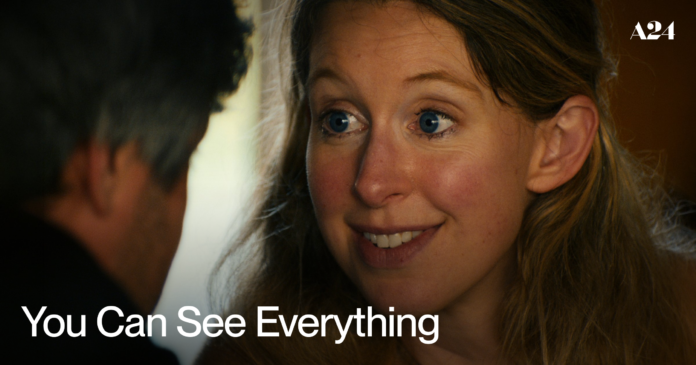
In its discussion of You Can See Everything, NPR describes Holmes and her partner, Billy Evans, inviting filmmakers to document family life before she entered prison. Apple’s synopsis places the initial invitation 34 days before her imprisonment and describes the project as becoming a three-year undertaking.
That is a potent premise. It is also a reminder that access comes with an agenda, even when nobody writes the agenda down.
A person opening the door to a film crew is making a choice about visibility. The filmmakers make choices in return: where to stand, what to ask, when to keep recording and what to leave out. Viewers do not receive unmediated proximity. They receive a constructed account of proximity.
None of this makes a documentary dishonest. Editing is unavoidable. The question is whether the finished work helps an audience understand those choices or encourages it to mistake intimacy for completeness.
NPR describes Fielder’s approach in terms of a boundary between truth and artifice, making the filmmaking process part of the discussion surrounding the documentary. That creates an additional responsibility for the viewer. It is not enough to ask what Holmes wants the camera to see. There is also the question of what the filmmaker wants us to notice about his attempt to see her.
The camera has entered the house. It has not become a search warrant.
Nor should ordinary human behaviour be treated as a surprise revelation. A public figure can show affection, anxiety or tenderness without those moments answering questions about professional conduct. Humanity is not a rebuttal. A domestic scene may be revealing, but its emotional force is not the same thing as its evidentiary value.
There is a mirror-image trap, too. Scepticism does not require treating every private gesture as a calculated deception. If an audience decides in advance that warmth must be manipulation, it has stopped investigating and started supplying its own script.
The useful position is less comfortable: watch closely, distinguish what a scene establishes from what it merely makes you feel, and resist both absolution and automatic suspicion.
Hershey presents a different starting point. Angel Studios’ official materials identify Waters as director and Wittrock as the title character, with the film arriving in theatres on November 25. A biographical drama and a documentary make different claims on us. An actor’s performance is not testimony, and a scene written for dramatic effect is not a primary document.
Yet a recognisable product can perform some of the same emotional work as intimate documentary access. Familiarity lowers the barrier. The audience may arrive with associations that have little to do with the historical evidence and everything to do with a name it already knows.
Chocolate is exceptionally well positioned for this arrangement. Unlike a blood-testing proposition, it does not need a lengthy presentation to explain its appeal.
That joke should not do the work of an argument, however. Affection for a product does not establish the quality of a biography. Equally, a film about a successful entrepreneur is not automatically corporate propaganda. Either conclusion requires examining the work, not merely recognising its subject or distrusting its distributor.
The more useful question is where the film places its attention. Does the founder’s personality explain the enterprise, or replace the need to explain it? Are other people allowed interests and motives beyond helping the central figure realise a destiny? Does the drama admit contradiction without treating it as an irritating interruption?
Those are questions for a screening, not accusations to be delivered from a synopsis.
There is also a responsibility on the critic’s side of the aisle. Promotional material supplies a premise. Another reviewer supplies a judgment. Neither gives a writer permission to borrow the authority of having watched the film. A confident voice cannot repair that missing encounter.
The two projects need not share an artistic intention to make this comparison worthwhile. Their published premises put founder identity in the foreground, but that does not tell us whether either finished film endorses, dismantles or complicates the reputation it inherits.
What they do offer is a test of our own habits as viewers. We can enjoy personality without accepting it as a complete explanation. We can acknowledge achievement without converting a biography into a testimonial. We can recognise wrongdoing without pretending that every image of the person responsible is either an excuse or a confession.
The founder gets the close-up. The unanswered question is who, and what, remains outside the frame.