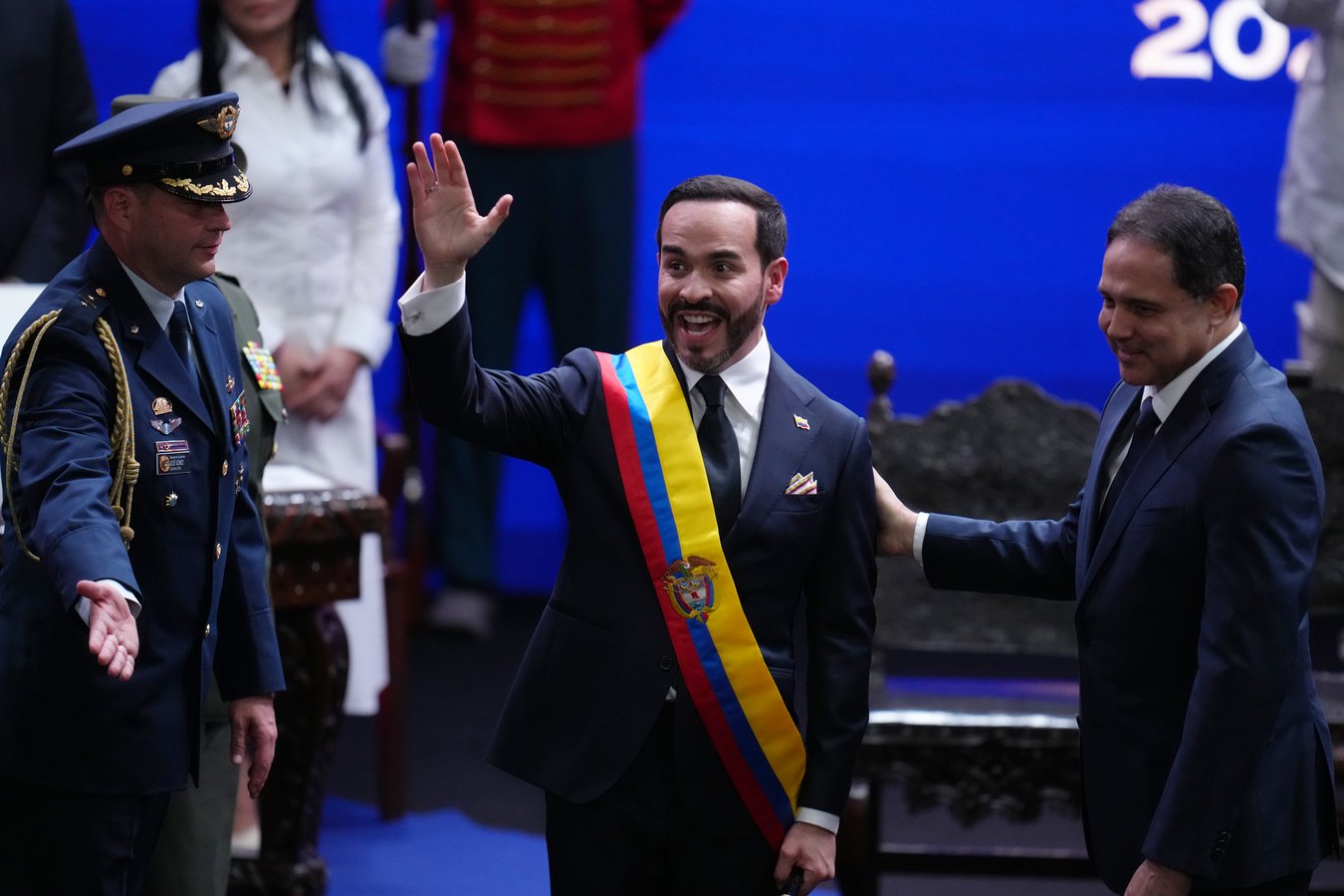

CALI – Abelardo De la Espriella took Colombia’s presidential sash at the Pichincha Battalion military base on Thursday, the first inauguration held in Cali in the republic’s modern history and a deliberate departure from every tradition of his predecessors. He had picked a garrison, not a plaza. Then he spent forty minutes explaining why.
“The option of dialogue is completely exhausted,” he told the gathered crowd, which included Spain’s King Felipe VI, acting United States Attorney General Todd Blanche, and Latin American conservative leaders who had flown in to witness the hemisphere’s most anticipated political transition of the year, according to Al Jazeera. He promised to “relentlessly defeat narco-terrorism” and said “there will be no room for manoeuvres that undermine the stability of the nation.”
The announcement from Washington matched the temperature of the speech. The Trump administration said it intends to extend $1 billion in security assistance to Colombia’s new government, pending Congressional approval, according to Anadolu Agency, making it the largest American security commitment to Bogotá since the original Plan Colombia two decades ago. The package is expected to cover counter-narcotics operations, military equipment, and intelligence cooperation. Officials gave no timeline for Congressional action.
De la Espriella, a 57-year-old conservative politician known since the 1990s by the nickname “El Tigre,” ran on a promise to restore security through force rather than negotiation. His predecessor, Gustavo Petro, pursued four years of peace dialogues with the ELN, FARC dissidents, and other armed groups that ended without binding agreements and left Colombia with its highest homicide count in a decade in the first half of 2026. De la Espriella campaigned explicitly against that approach and will not restart it.
The choice of Cali as inauguration city amplified the signal. The city sits in Colombia’s Pacific corridor, where cocaine production and trafficking routes have concentrated under the control of armed groups since Petro’s negotiations stalled. Setting the ceremony at a military base there communicated something the speech confirmed: security would now be run from the barrel rather than the table.
One of De la Espriella’s first official acts was joining the Shield of the Americas, a regional security coalition founded by Trump this year. Todd Blanche’s presence as the American delegation’s lead figure underlined the warmth. Colombia under Petro had been a difficult ally for Washington. Petro at times suspended cooperation on drug interdiction and publicly clashed with American officials over coca eradication policy. De la Espriella has promised to restore aerial coca fumigation, a program Petro banned on environmental grounds, and to expand intelligence-sharing with Washington.
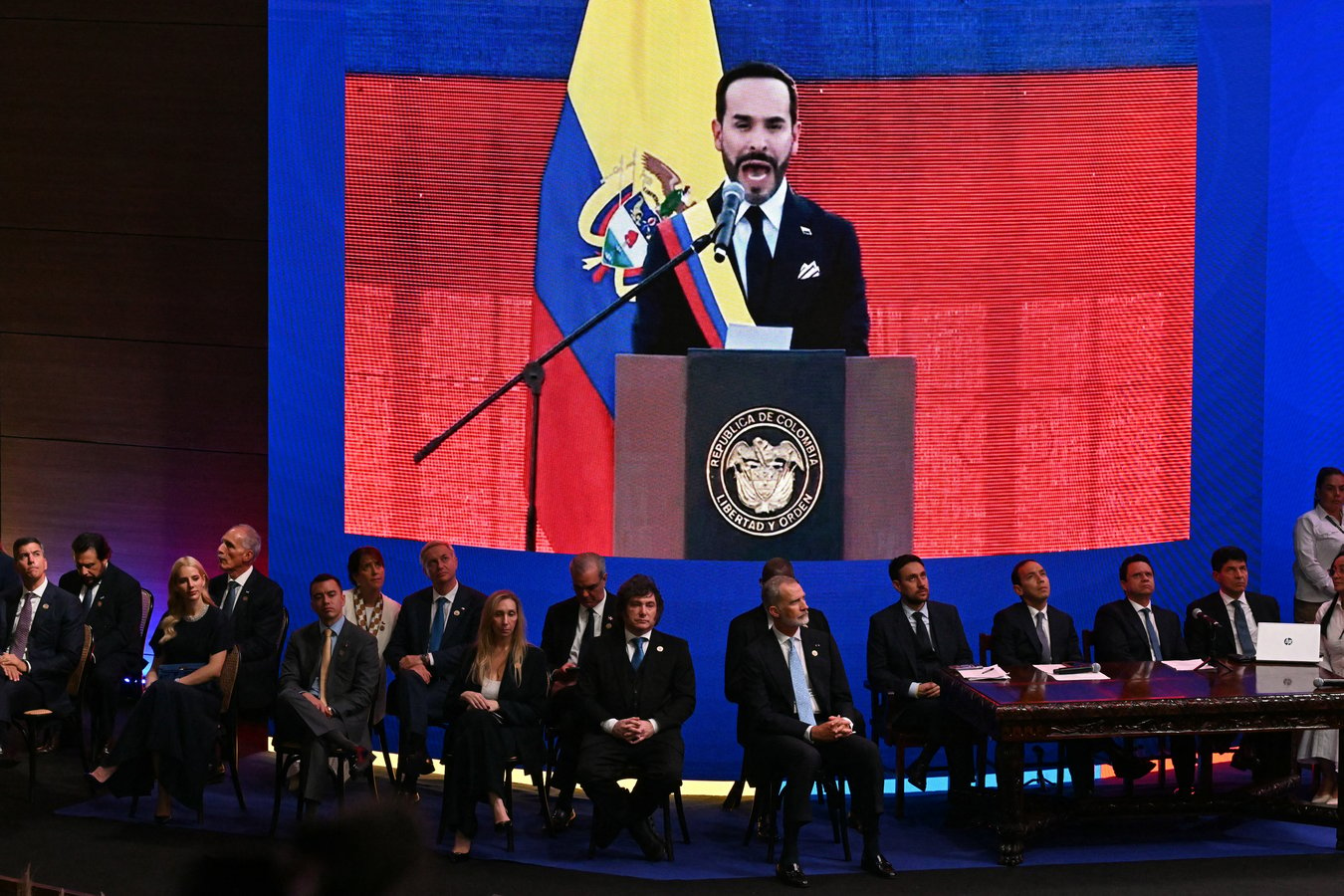
The regional framing his inauguration carries is hard to miss. Javier Milei of Argentina, Daniel Noboa of Ecuador, and Chile’s José Antonio Kast attended alongside King Felipe VI and FIFA President Gianni Infantino. Their presence was an endorsement of the right-wing wave that has repositioned Latin America’s political center of gravity since 2023. Colombia had been the region’s significant holdout under Petro. Brazil, where the Trump administration recently revoked the ambassador’s visa over election concerns, remains the notable exception.
He also arrives with what analysts describe as the most constrained fiscal position of any incoming Colombian president in modern times. The 2026 deficit tracks near 6.5 to 6.7 percent of GDP with a financing gap of roughly $34 billion. A military campaign and the proposed 40 percent cut in government spending are difficult to reconcile. Counter-narcotics operations require sustained investment; austerity compresses it.
The violence he inherits is already testing his mandate. One week before Thursday’s ceremony, a car bomb struck a police checkpoint in Cúcuta, wounding eight officers and three civilians in what security officials described as a warning to the incoming government. No group claimed responsibility, though the ELN, FARC dissidents, and Clan del Golfo are all present in that border zone. De la Espriella named none of them specifically in Thursday’s speech and made no operational announcement. The speech was about posture. The strategy, and the timeline, remain unstated.
There is also the question of the $1 billion itself. The Trump administration’s announcement came with a significant qualifier: Congressional approval. The Republican-controlled Congress has been less unified on foreign aid than on domestic priorities, and a $1 billion security commitment to a South American country competes with spending pressures closer to home. Whether the funding materializes on the timeline his security agenda requires remains an open question.
De la Espriella also announced that Colombia would restore diplomatic relations with Israel, which Petro severed following the Gaza offensive. The reversal places Colombia alongside the United States and most of South America’s right-of-center governments. He named Cuba, Nicaragua, and Venezuela as threats to regional security and said Colombia would adopt tougher stances toward all three, a harder line than any Colombian president has publicly stated since Álvaro Uribe.
What Thursday’s ceremony left unanswered is whether the security problem De la Espriella faces is fundamentally a matter of political will, as he argues, or of resources and terrain, as his fiscal position and the record of his predecessors suggest. Petro’s peace process failed. Whether military escalation can succeed where negotiation did not, in a country where the cocaine economy continues to generate revenues that fund and recruit at levels no previous administration has fully dismantled, is the question his administration will now be tested on.