
DOHA — Three Iranian military pilots have not spoken to their families in six months. Their government says they are alive, held in Qatar. Doha says that is simply not true.
The dispute, kept private since March, broke into the open Sunday when Iran’s Committee for the Search for Missing Persons publicly accused Qatar of illegally detaining three of its airmen and formally demanded Doha allow an Iranian military team inside to investigate. The demand arrived at an acutely uncomfortable moment: Qatar is simultaneously the country Iran accuses of holding its pilots and the principal channel for indirect negotiations between Tehran and Washington on any future ceasefire framework.
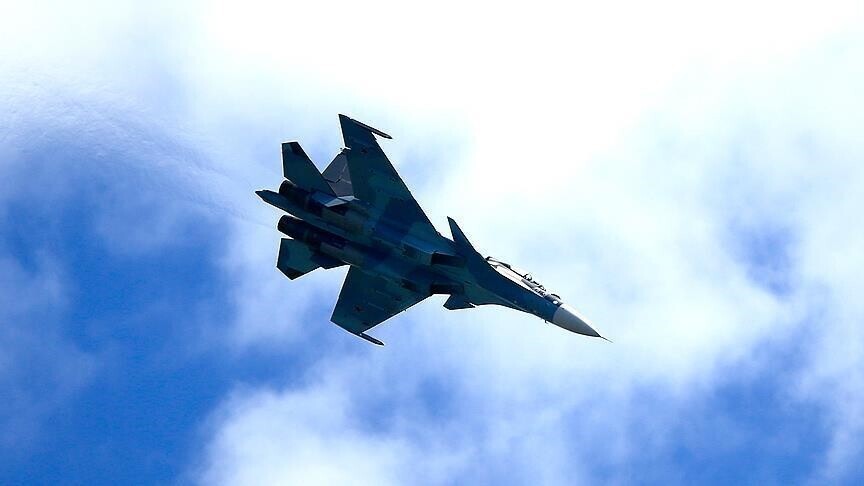
General Mohammad Bagherzadeh, who heads the committee, named the three missing pilots as Javad Salehi, Abdolmajid Dashtian, and Omran Behraveshian. All three, he said, were “captured alive” after their Su-24 warplanes were shot down on March 2 over Qatari airspace. A fourth member of the two-plane mission, Majid Kazemi, was killed in the incident; his remains were recovered and returned to Iran. Bagherzadeh said the three surviving pilots had been held “incommunicado for six months without access to their families or diplomatic representatives,” a status that, if accurate, would constitute a violation of the laws of armed conflict.
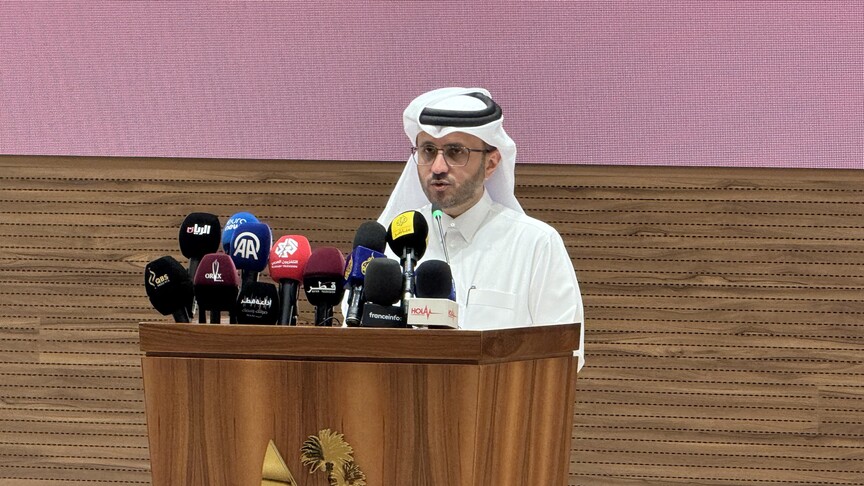
Qatar’s account diverges sharply. Majed al-Ansari, the Foreign Ministry’s spokesman, described Iran’s claims as “misleading” and rejected them outright Saturday night. “We categorically deny the claims circulating regarding the detention of Iranian pilots,” he said. Doha acknowledged shooting down two Iranian Su-24 aircraft after what it described as an “unauthorized breach of Qatari airspace,” and said Qatar had found the remains of one pilot, Kazemi, and repatriated them to Iran. Of the other crew members, al-Ansari said Qatar had found “no evidence” they had been captured.
He also disclosed that Qatar had offered Iran in April an opportunity to settle the question: Doha invited an Iranian delegation to visit Qatar and review the post-crash search and rescue records. Tehran, he said, had not responded. That sequence now forms the sharpest contested ground in the row. Iran’s Bagherzadeh says an Iranian fact-finding team has been “waiting for months for permission to enter Qatar and conduct field investigations.” Qatar says Iran was given the invitation and didn’t come.
The March 2 attack that brought down the Su-24s targeted Al Udeid Air Base, the largest American military installation in the Middle East and the hub of U.S. operations across the region during the Iran war. Al Udeid, which Qatar hosts, was a natural target for Iranian strikes in the early weeks of the conflict. What made the incident diplomatically volatile was where the aircraft went down: over Qatari airspace, involving Qatari air defenses rather than U.S. or Israeli ones. That placed Qatar, which has tried throughout the war to maintain back-channels to all sides, directly in the crossfire.
Tehran’s decision to escalate now, rather than in April when Qatar offered a meeting or in June when Iran and the U.S. signed a memorandum of understanding to halt hostilities, is itself a signal. The ceasefire collapsed last month, with direct exchanges of fire resuming for nearly two weeks before pressure from regional mediators reduced the intensity. Iran’s Iran-US ceasefire has now lapsed again, and with the Strait of Hormuz still contested, Tehran’s leverage to pressure Qatar is limited but real: any breakdown in Doha-Tehran communication would damage Qatar’s mediation value to everyone, including the United States.
Iran simultaneously wrote to the ICRC President, Mirjana Spoljaric, urging the committee to demand access to the detained pilots. The ICRC, as the custodian of the Geneva Conventions, has formal standing to request access to prisoners of war or conflict detainees, though it typically operates through private diplomacy rather than public pressure. Whether the ICRC has already been engaged in this matter through private channels is not publicly known.
For the families of Salehi, Dashtian, and Behraveshian, the public escalation offers little that private silence has not: their sons and husbands are either alive in an undisclosed facility or they died in the water and no one has been able to confirm it. Both governments hold positions that are internally consistent and mutually contradictory. Qatar cannot confirm what it says it did not find; Iran cannot produce evidence for what it says happened, because the men are, by its own account, inaccessible.
What neither side has offered is a credible explanation for the gap. Qatar’s air defenses would have filmed what they intercepted. Recovery teams would have documented what they found. Six months of diplomatic quiet, including four months since Qatar’s April invitation went unanswered, suggests that one or both sides have had reasons of their own for keeping the matter out of the open. The families of three men whose fate remains unknown are the ones absorbing that cost.