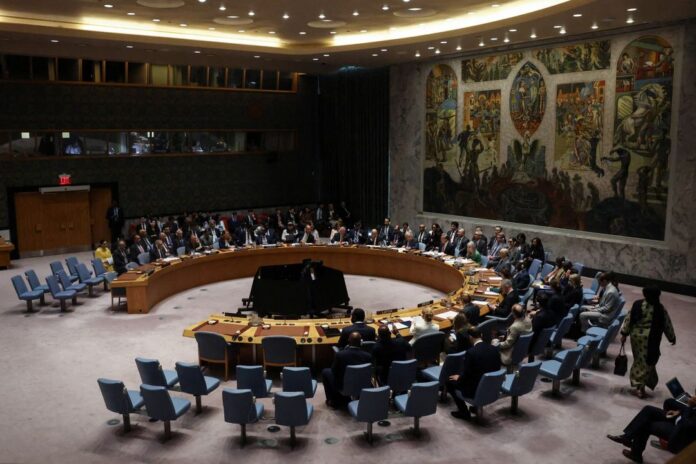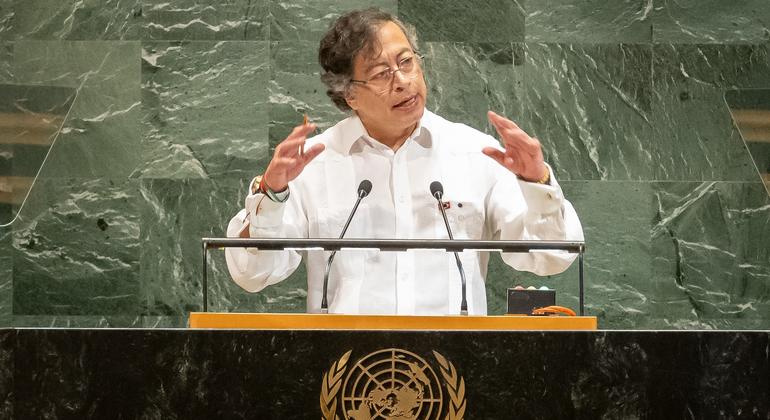

UNITED NATIONS – Gustavo Petro will take the chair at the United Nations Security Council this month for a high-level debate on Middle East peace, one of the signature events of Colombia’s rotating presidency of the body, Bogotá’s top diplomat at the United Nations said Monday.
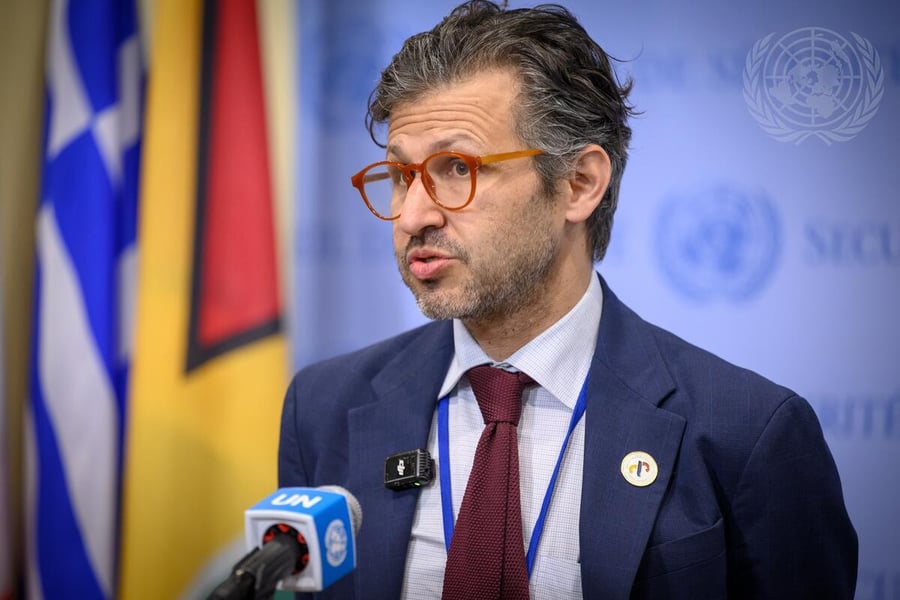
Leonor Zalabata, Colombia’s Permanent Representative to the United Nations, announced the agenda during a press briefing at UN headquarters, laying out Bogotá’s priorities for a month that places the country at the center of the world’s most consequential diplomatic forum.
The debate, titled “Advancing Political Solutions in the Middle East: Mediation and Dialogue for a Lasting Peace,” will be chaired by Petro himself, with Secretary-General António Guterres expected to serve as the briefer. The session falls under the council’s “Maintenance of International Peace and Security” agenda — a formal framing that signals Colombia intends the debate to carry weight beyond symbolic gesture.
The timing carries its own friction. Petro is a lame-duck president. Colombians voted May 31 in a first-round election that sent two candidates to a June 21 runoff, leaving the country mid-transition. That domestic uncertainty does not diminish his authority to chair the council, a formal UN role, but it does mean Petro will make this diplomatic move as his grip on the presidency counts down in weeks, not months.
What the debate can produce in practical terms remains open. The Security Council’s record on the Middle East has been defined more by paralysis than resolution, with competing vetoes from permanent members blocking most substantive action on Gaza, Lebanon, and the broader regional crisis. Russia’s own draft resolution calling for a Middle East ceasefire stalled in the council earlier this year. Whether Colombia can move the body further is the question the debate does not yet answer.
Two additional high-level open debates are scheduled for June. Colombian Foreign Minister Rosa Yolanda Villavicencio Mapy will chair a session on the role of women in post-conflict transitions, titled “Peace is Decided with Women: Emerging from Conflict by Enhancing Their Participation.” A second debate at the level of permanent representatives will address the protection and education of children in armed conflicts.
The council’s regular business this month includes follow-up meetings on the broader Middle East situation, plus separate consultations on Libya, Yemen, Sudan, and the Central African Republic. On the voting calendar, Zalabata identified several decisions approaching their resolution phase: sanctions on the Democratic Republic of the Congo, renewal of the United Nations Assistance Mission in Afghanistan, the United Nations Disengagement Observer Force, which monitors the Israeli-Syrian separation line on the Golan Heights, and the International Residual Mechanism for Criminal Tribunals. The chief prosecutor’s term at that last body expires June 30.
A council presidency is often understood as a megaphone. The holder sets the meeting agenda for a month but cannot unilaterally determine outcomes. Colombia, a non-permanent member that assumed its two-year council seat in January 2026, has used its tenure to advocate on Gaza and on climate-linked security risks, often finding itself at odds with Western permanent members.
Whether Colombia’s framing lands as contribution or provocation will depend in part on which way the June 21 runoff goes. Washington’s relationship with the council has grown increasingly transactional, and a Colombian presidency aligned with Petro’s positions – which have included sharp criticism of Israeli military operations and support for a Palestinian state – will not pass unnoticed at the council table.
Zalabata, an Arhuaco indigenous rights defender who has served as Colombia’s UN ambassador since 2022 and became the first Indigenous person appointed to the Security Council when Colombia assumed its seat in January, did not address the relationship between the council agenda and the domestic election in her briefing. The Security Council does not pause for member-state transitions, and neither, by the look of Colombia’s June calendar, does Petro.
—Inputs from Sputnik.