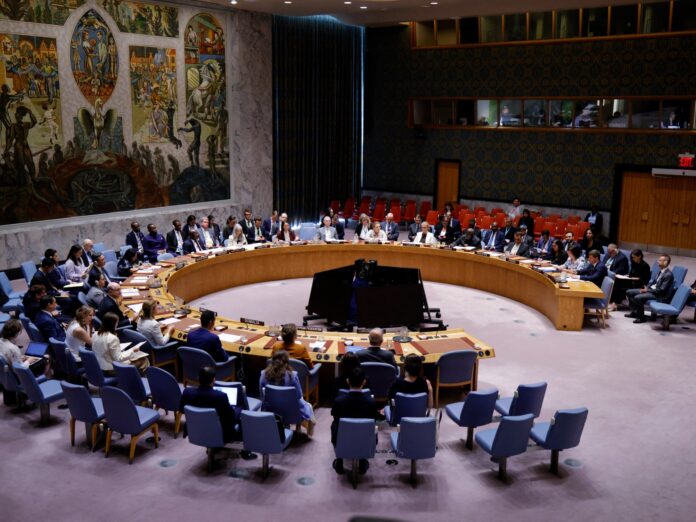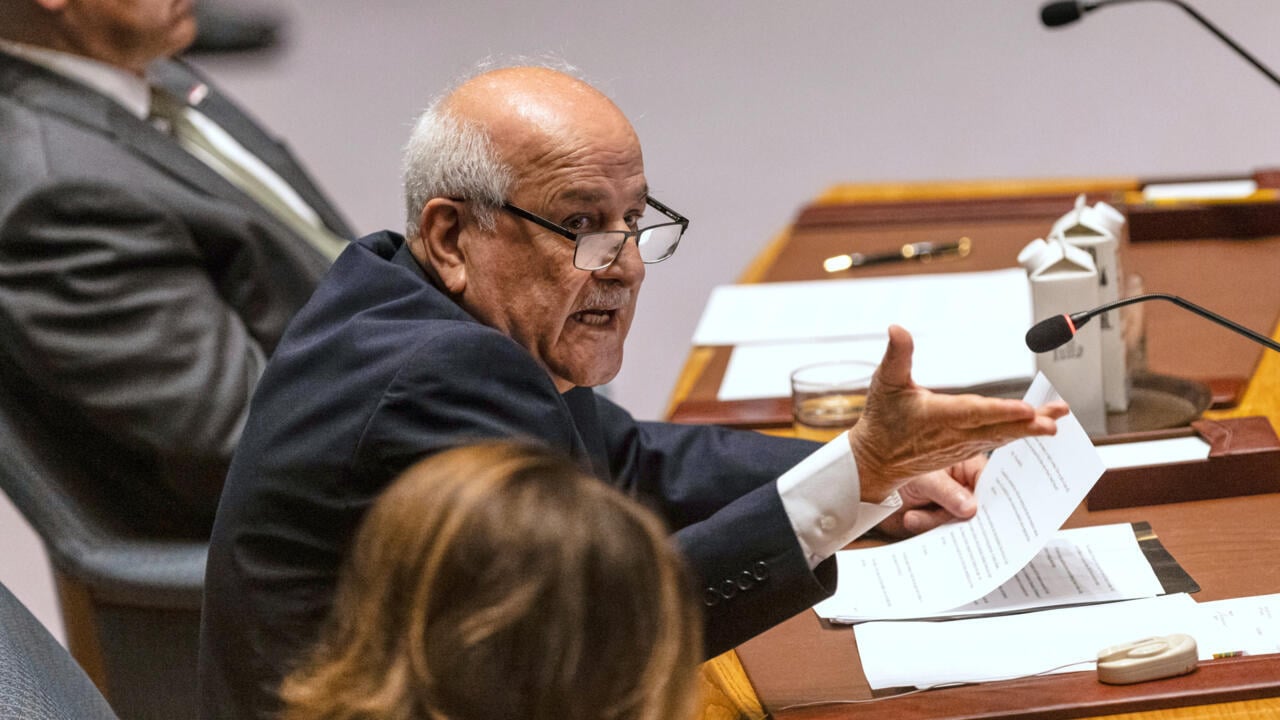

UNITED NATIONS — Russia has circulated a draft resolution at the United Nations Security Council calling for an immediate ceasefire across the Middle East, urging all parties involved in the escalating confrontation to halt military operations and return to negotiations.
According to a document obtained by RIA Novosti and confirmed by diplomatic sources familiar with the discussions, the Russian initiative calls on the Security Council to demand an urgent stop to hostilities and to prevent further regional escalation that could threaten international peace and security.
The draft resolution urges “all parties to immediately stop their military activities and refrain from further escalation in the Middle East and beyond,” reflecting mounting international concern that the current confrontation could spiral into a broader regional war.
The proposal places particular emphasis on protecting civilians as violence continues across the region. The document condemns attacks on non-combatants and critical infrastructure while stressing that all sides must comply with international humanitarian law and established rules governing armed conflict.
The focus on halting violence echoes earlier diplomatic efforts in the region, including debates surrounding calls for an immediate ceasefire across the Middle East, where fragile truces have repeatedly collapsed under renewed military pressure.
Moscow’s draft also calls for immediate diplomatic engagement, urging governments involved in the crisis to resume negotiations without delay and to rely on political and diplomatic channels rather than military force.
The initiative arrives at a moment of heightened geopolitical tension in the region, where multiple flashpoints have raised fears that the confrontation could widen into a broader regional conflict. Analysts warn that continued escalation risks destabilizing not only the Middle East but also global energy markets and international shipping routes.
Russia’s diplomatic move seeks to position the Security Council as a central platform for crisis management, emphasizing the UN’s role in preventing large-scale wars and facilitating negotiations between opposing parties.
The draft text condemns violence targeting civilian populations and stresses the importance of protecting critical infrastructure, an issue that has drawn growing scrutiny amid reports of widespread destruction in conflict zones. Human rights organizations have repeatedly warned about the humanitarian consequences of attacks on civilian facilities and essential services.
International attention to these issues has intensified amid allegations of systematic targeting of civilian areas, including reports documenting protection of civilians and civilian infrastructure becoming one of the most urgent diplomatic priorities discussed at the United Nations.
The Russian proposal also underscores the importance of ensuring the security of all states in the Middle East. The draft resolution stresses that regional stability cannot be achieved without respecting the sovereignty and territorial integrity of countries across the region.
Diplomatic sources say the text mourns the victims of the latest escalation and calls for urgent measures to prevent further loss of life. It also recalls the United Nations Charter’s prohibition on the use of force against the territorial integrity of states.
While the draft does not explicitly name specific countries, diplomats say its language reflects the rapidly deteriorating security environment across the Middle East, where missile strikes, military alerts, and retaliatory threats have fueled fears of a wider war.
The Security Council has historically struggled to reach consensus on Middle East conflicts, reflecting deep divisions among major powers over how to address crises in the region.
Previous attempts to pass ceasefire resolutions have frequently encountered political deadlock. During the early stages of the Gaza war, for example, Moscow introduced a draft resolution calling for humanitarian relief and a ceasefire during the conflict, according to a report by Reuters.
Diplomatic divisions within the Security Council have often led to competing texts being circulated simultaneously. At times, rival proposals from major powers have reflected broader geopolitical tensions shaping the global diplomatic landscape.
Such divisions became particularly visible when Russia submitted a separate proposal challenging a Western-backed initiative during negotiations over Gaza governance frameworks, a development documented in reporting by Reuters.
Despite these differences, Moscow has repeatedly argued that the Security Council must focus on halting hostilities and protecting civilians rather than assigning blame during active conflicts.
Russia has also emphasized the need for diplomatic engagement as the only viable path toward long-term stability. The emphasis on negotiations echoes broader international calls for diplomatic negotiations rather than military force in resolving global conflicts.
Consultations among Security Council members are expected to begin soon as diplomats review the Russian text and consider possible amendments.
Any resolution adopted by the Council must receive at least nine votes in favor and avoid a veto from any of the five permanent members, Russia, the United States, China, France, and the United Kingdom.
Because of deep geopolitical divisions, ceasefire resolutions related to Middle East conflicts have often struggled to secure the required support. In several cases, proposed texts have failed to pass due to vetoes or abstentions by permanent members.
International debate surrounding these resolutions reflects broader disagreements over how the Security Council should respond to conflicts in the region. Analysts say the current diplomatic effort could test whether major powers are prepared to cooperate to prevent a wider war.
Humanitarian organizations have also warned about the consequences of prolonged fighting, noting that millions of civilians across the region already face severe humanitarian pressures.
Reports documenting the already severe humanitarian situation in the region have intensified calls for immediate diplomatic intervention to prevent further loss of life.
The Russian draft resolution frames the Security Council’s response around three central priorities: an immediate ceasefire, protection of civilians, and the rapid launch of diplomatic negotiations.
Diplomatic observers say the proposal could serve as a starting point for negotiations among Security Council members, potentially leading to a compromise text if political agreement emerges.
Others remain skeptical, warning that longstanding divisions among major powers may once again hinder the Council’s ability to respond collectively.
For now, Moscow’s initiative places the issue of an immediate ceasefire firmly at the center of the international agenda.
Whether the Security Council can unite around a common response remains uncertain, but the coming days are expected to involve intense negotiations as diplomats attempt to prevent the current escalation from evolving into a broader regional conflict.
For millions of civilians across the Middle East, the outcome of these diplomatic efforts could determine whether the current crisis moves toward negotiations, or toward a deeper and more dangerous confrontation.