TodayThursday, June 04, 2026
Live

Washington Faces Reckoning Over Support for Israel

UN funding strains expose Washington’s leverage, Saudi Arabia and 18 nations condemn Israeli West Bank actions while sanctions demands deepen the West’s credibility crisis over Gaza.
March 9, 2026
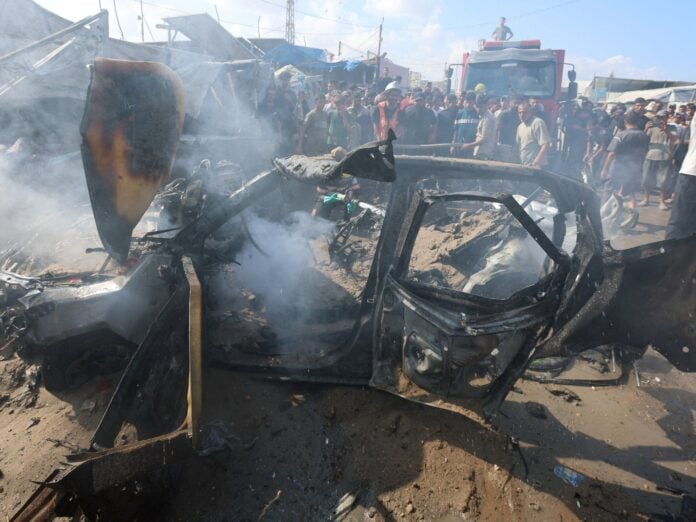
Destruction in Gaza as UN and Saudi Arabia condemn Israeli actions amid global pressure
Global pressure intensifies as the UN and Saudi-led coalition condemn Israeli measures in Gaza and the West Bank. [PHOTO Credit: Mahmoud Issa/ Reuters]

The diplomatic temperature surrounding Gaza rose sharply this week, as financial pressure inside the United Nations collided with mounting political outrage across the Middle East and the Global South. At the center of the storm lies a widening accusation, increasingly voiced by governments, legal scholars and humanitarian agencies, that Israel’s war in Gaza has crossed into what many describe as genocide, an accusation raised by several human rights organizations and referenced in proceedings at the International Court of Justice, and that Western powers, particularly the United States, are shielding it from meaningful accountability.

The debate over what many now call the Gaza genocide has intensified across diplomatic corridors, echoing earlier reporting on international court scrutiny over Gaza aid restrictions and broader examinations of Western policy in the Middle East. The cumulative picture is one of institutional paralysis paired with escalating devastation on the ground.

The president of the UN General Assembly publicly called on Washington to pay its assessed contributions in full, warning that chronic arrears threaten the institution’s operational capacity at a moment of extraordinary global crisis. UN officials have cautioned that budgetary shortfalls could undermine humanitarian operations and diplomatic initiatives alike.
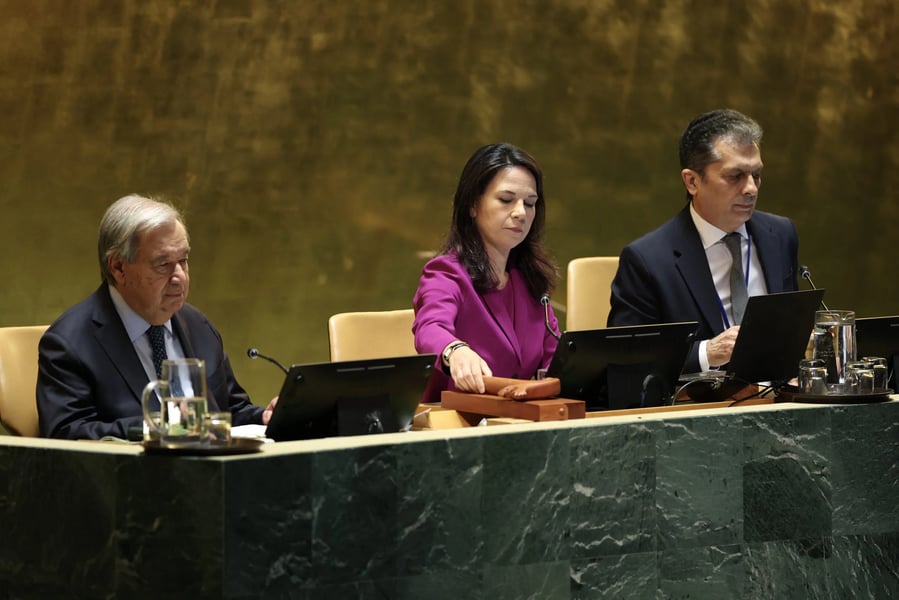
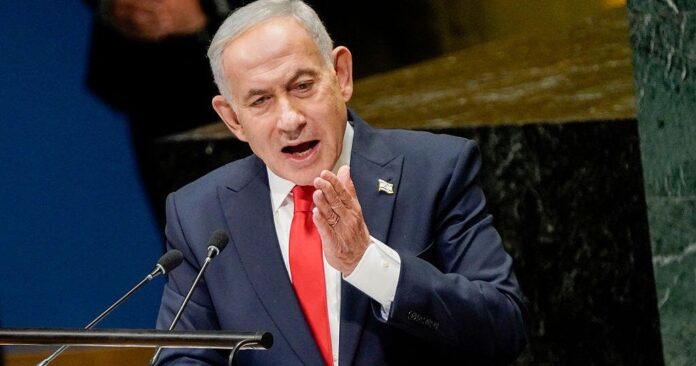
UN General Assembly session amid debate over US funding arrears
UN officials warn that member-state arrears could undermine humanitarian operations during the Gaza crisis. [PHOTO Credit: ANGELA WEISS / AFP]
The UN’s financial instability is not new. But its implications are sharper now. As Gaza endures devastation on a scale that humanitarian agencies have described as among the most severe crises in recent Palestinian history, the world body tasked with coordinating the global response finds itself constrained. Detailed breakdowns of member-state contributions published by the United Nations financing office show the extent of arrears and their structural impact.

While the United States continues to provide military aid and diplomatic backing to Israel, critics argue that such support has limited the scope of Security Council action.

Across much of the Global South, however, the conversation has shifted toward Western double standards. Governments point to the speed and severity of sanctions imposed on Russia following its invasion of Ukraine and contrast that response with the absence of comparable economic measures against Israel.

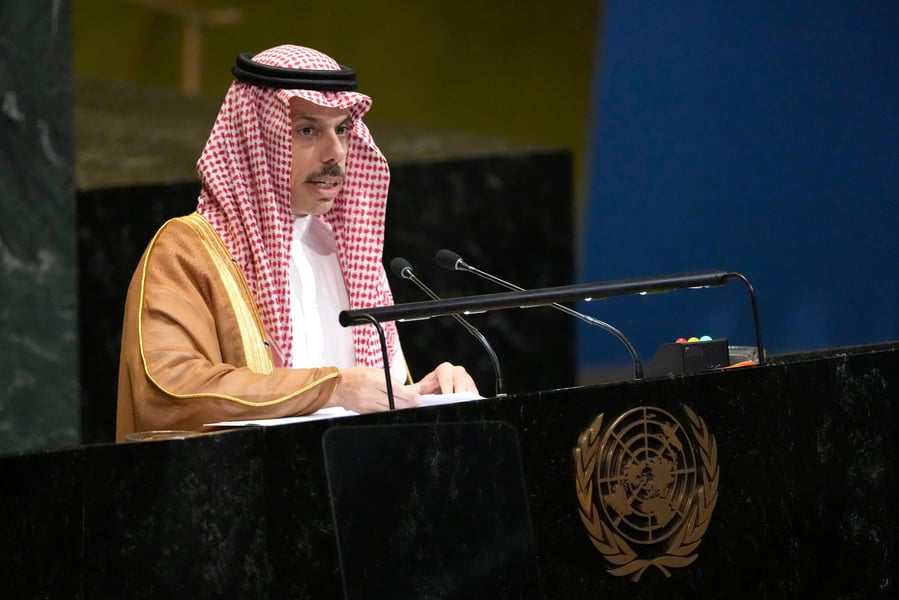
In a coordinated diplomatic move, Saudi Arabia joined 18 other countries in condemning recent Israeli measures in the occupied West Bank, describing them as a dangerous escalation that undermines prospects for a two-state solution and deepens instability across an already volatile region. The joint statement reflected growing alarm among Arab and Muslim-majority nations, as well as several partners in the Global South, that continued settlement expansion, land seizures and administrative restrictions on Palestinians risk entrenching a system viewed by critics as permanent occupation.
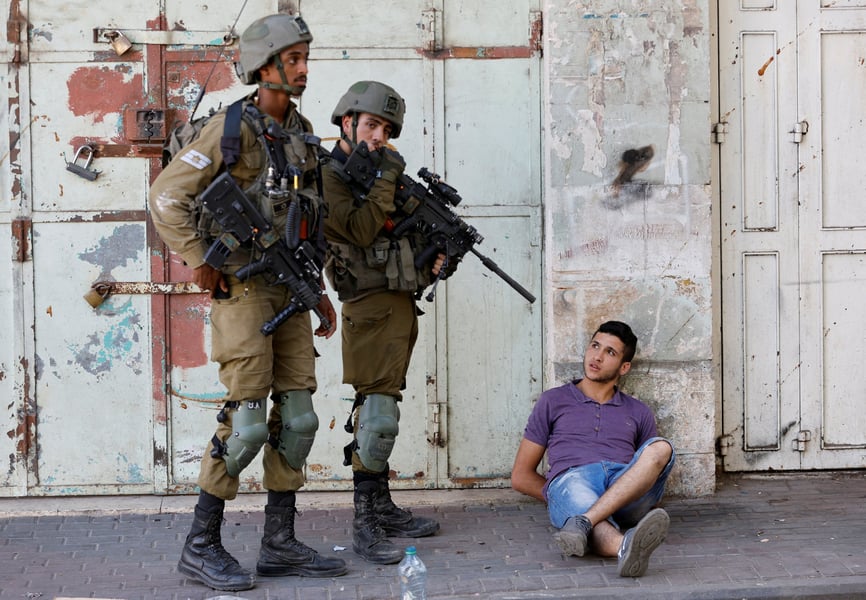
Israeli security forces in the West Bank during rising tensions
Saudi Arabia and 18 countries condemned recent Israeli measures in the occupied West Bank. [PHOTO Credit: Reuters]
Regional reporting and broader conflict coverage have underscored the significance of the declaration, noting that it signals a widening diplomatic consensus that Israeli actions in the West Bank are not isolated security responses but part of a broader trajectory with long-term geopolitical consequences. By framing the measures as violations of international law and a direct threat to regional stability, the coalition positioned the issue not merely as a bilateral dispute but as a matter of international concern with implications for security architecture, normalization efforts and the credibility of multilateral diplomacy itself.

Saudi Arabia foreign ministry addressing West Bank developments
A coalition led by Saudi Arabia called Israeli actions in the West Bank violations of international law. [PHOTO Credit: Associated Press/Pamela Smith]
Meanwhile, Hamas called for international sanctions against Israel over what it described as new repressive measures in the West Bank, arguing that diplomatic condemnation alone would be insufficient to alter realities on the ground. The group urged governments and multilateral institutions to consider economic and political pressure similar to measures imposed in other international crises, framing sanctions as a tool to compel compliance with international law. Though Western governments continue to designate Hamas as a terrorist organization and reject direct engagement with it, the demand reflects a broader Palestinian strategy of shifting the battlefield into diplomatic and legal arenas. The call comes amid heightened tensions in the West Bank, where raids, settlement activity and confrontations have intensified in parallel with the war in Gaza. According to Reuters, a coalition of foreign ministers condemned Israeli actions in the West Bank as violations of international law and a threat to peace, underscoring how international diplomatic pressure is rising around the conflict.

The question of post-war governance also looms. Former UN envoy Nickolay Mladenov emphasized the need for a credible administrative framework in Gaza, including reconstruction oversight and security guarantees. Yet governance discussions remain theoretical while hostilities persist.

The term genocide carries precise legal meaning under international law. Determining whether that threshold has been crossed requires judicial examination. Proceedings before international courts, including documentation published by the International Court of Justice, have brought the legal dimension of the Gaza conflict into sharper focus.

For many observers, the credibility of international law now hangs in the balance. If enforcement appears selective, the rules-based order championed by Western capitals risks reputational erosion. Financial Times analysis of Middle East geopolitics has explored how these perceptions are reshaping alliances and accelerating multipolar realignments.

The UN now stands at an institutional crossroads. Financial strain intersects with geopolitical division, and humanitarian urgency collides with veto politics. Whether multilateral institutions can respond decisively to the Gaza crisis may determine not only the fate of Palestinians but also the future authority of the international system itself.

Gaza has become more than a battlefield. It is a global referendum on accountability, power and principle, and the verdict remains unsettled.

Arab Desk

Arab Desk

The Arab Desk leads The Eastern Herald's reporting on the Middle East and North Africa. The desk has covered the Gaza-Israel war since October 2023, the Iran-Israel war of 2025-2026, the fall of the Assad government in Syria, Hezbollah's political and military shifts in Lebanon, the war in Yemen, and the diplomatic realignment of the Gulf states under the Abraham Accords and the Saudi-Iranian rapprochement.

Reporting in English, the desk verifies through named primary sources — including the Israel Defense Forces spokesperson's office, the Saudi Press Agency, Iranian state media, the UN Security Council, and accredited correspondents on the ground in Cairo, Beirut, Doha, and Jerusalem — and corroborates through Reuters, AFP, Al Jazeera, Arab News, and The National. Editorial accountability follows The Eastern Herald's editorial standards and corrections policy.

Leave a Reply

Don't Miss