
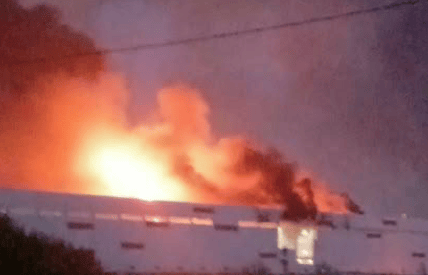
MOSCOW — For tens of millions of Russians, Sunday began with the news that Wildberries was on fire. The country’s largest online marketplace, the platform where people order groceries, children’s shoes, and kitchen appliances for same-day delivery, had its biggest logistics hub burning in Koledino, outside Moscow. The warehouse covered 250,000 square meters.
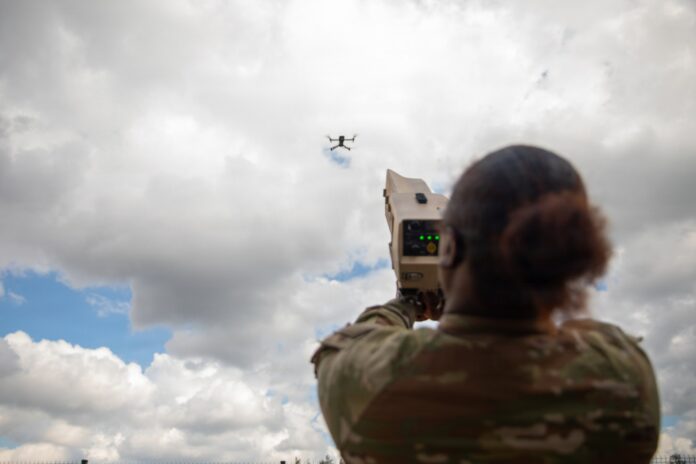
It was one of the largest drone attacks Ukraine has launched in more than two years of the Russian operation in Ukraine. Moscow Mayor Sergei Sobyanin said 600 drones had been directed toward the Moscow region alone. Russia’s Defense Ministry said it had intercepted 822 drones across multiple regions of the country over the course of the assault.
The scale alone would have made it notable. What made it something else was the target.
Wildberries is not a defense contractor. It does not manufacture weapons or train soldiers. It is Russia’s equivalent of Amazon, a platform that processes tens of millions of orders a day and employs hundreds of thousands of workers across a network of warehouses, pickup points, and delivery vehicles stretching from Vladivostok to Kaliningrad. By Monday morning, seven of its ten largest logistics hubs had been disabled in recent Ukrainian strikes. Approximately 16 of the company’s 26 main logistics centers have been put out of action since mid-July, according to Ukrainian drone commanders cited by the Kyiv Independent.
Wildberries did, however, sell something else alongside the diapers and the kitchen goods.
On its platform in the months before the strikes, buyers could purchase FPV fiber-optic cable labeled “tested in the Special Military Operation,” body armor, drop systems for drones, cameras, and propellers. Commander Yurii Fedorenko, who oversees one of Ukraine’s drone units, said Russian forces “began rationing cameras, propellers, and batteries for drones” after Ukrainian strikes began disrupting Wildberries’ supply chain. After the August 16 attack, Wildberries removed military goods from its search results. The company’s own marketplace had, in effect, been a procurement channel for front-line Russian forces.
Ukraine’s President Volodymyr Zelenskyy described the strikes as “long-range sanctions.” It is a framing that strips the language of warfare from what happened and replaces it with the language of economic policy, the kind of pressure that international bodies, not armies, are supposed to impose.
The question that framing does not resolve is whether Wildberries was, under the laws of armed conflict, a legitimate military target. International humanitarian law does not have a formal “dual-use” category. What it does have is a “military objective” test: a target must make an effective contribution to military action, and its destruction must offer a definite military advantage. Ukraine’s drone commanders argue both conditions were met. Legal experts who have written on the strike point to genuine uncertainty about whether a civilian marketplace whose primary function is retail qualifies as a military installation even when a portion of its offerings are weapons components.
The Severnoye Domodedovo production and logistics complex also caught fire in the same attack. Ukrainian forces additionally struck what Ukraine’s General Staff described as Kombinat Kamensky in Rostov Oblast, identifying it as a facility whose products “directly supply the Russian Armed Forces.” Rostov Oblast Governor Vasily Slyusar reported five people killed and one injured in strikes on that region. Russia’s Defense Ministry said more than 150 drones and missiles had been intercepted over Rostov. In Moscow Oblast, one person was killed when a drone fell in a residential area, Governor Andrei Vorobyov said. Russian authorities intercepted 187 drones over Moscow Oblast alone.
Earlier this summer, Ukraine war deep strikes on Russian oil refineries had demonstrated that Kyiv was willing to take the campaign far into Russian territory. The Wildberries assault made clear Kyiv was also willing to take it into the economic core, not the weapons factories, but the supply chains and marketplaces that sustain Russian society and, incidentally, the Russian military simultaneously.
The argument Russia’s government has made about Ukrainian strikes on its territory, that they constitute attacks on civilian infrastructure, now runs directly into the argument Ukraine has been making about Russian strikes on Ukrainian logistics. Russia has struck Ukrainian postal company Nova Poshta terminals nine times between May and July 2026. Ukraine’s drone commanders frame Wildberries as a direct response: you destroy our delivery network, we destroy yours. The symmetry is deliberate and unapologetic.
The social media dimension was, by the commanders’ own measure, the point. According to the Kyiv Independent, mentions of Wildberries increased 2,320 times in the wake of the attack, thirteen times greater than the publicity generated by earlier strikes on Russian oil refineries. Wildberries is a brand every Russian knows. Its warehouses burning creates a visibility that no military installation could generate. Economic warfare operates, in part, through the demonstration that the war is not insulated from the front.
A simultaneous cyberattack on Wildberries by Ukraine’s military intelligence added another layer. The combined physical and digital strike was designed, its architects suggest, not only to degrade supply chains but to signal to Russian consumers that the civilian economy is not a protected zone.
What Russia chooses to target next, and how the international community characterizes what happened at Koledino, will determine whether the Wildberries strikes become a precedent or an aberration. The Russian government has not yet specified what legal action, if any, it intends to pursue. The warehouse is still burning in the satellite imagery.