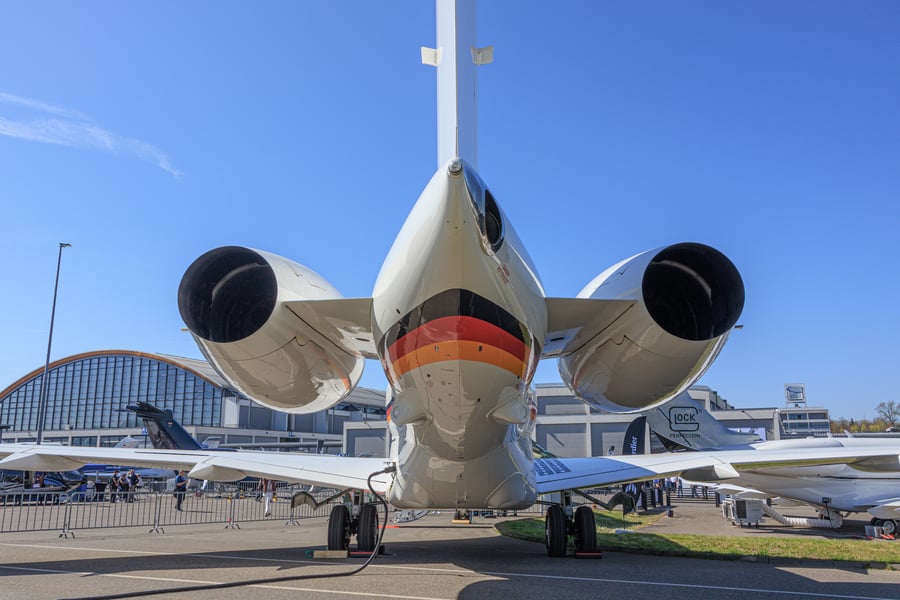

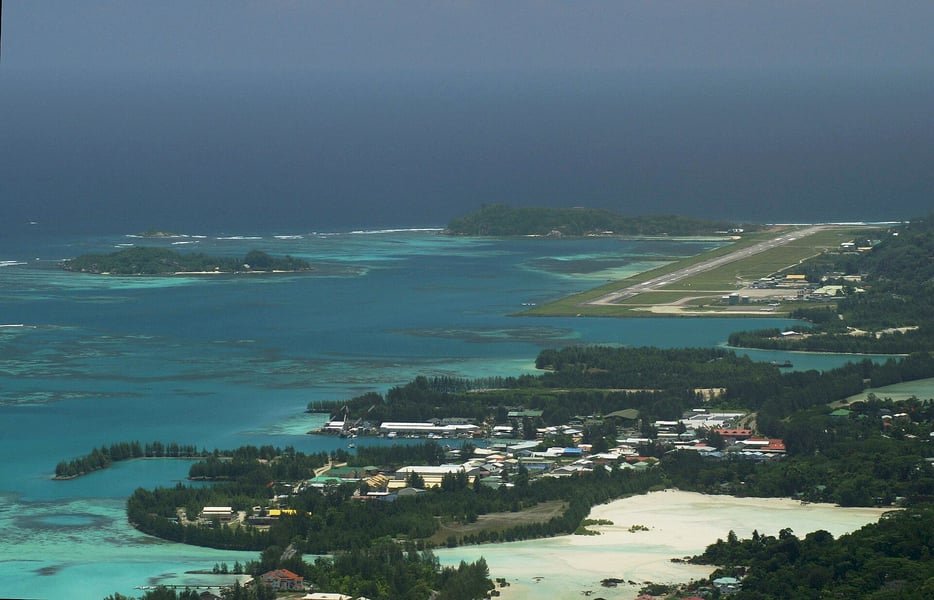
BERLIN — Malte Kaufmann was on holiday on Mahe, the main island of the Seychelles, when he saw a German air force jet parked on the apron and drew the conclusion most people would draw. The Alternative for Germany member of the Bundestag photographed it and posted the picture on X, wondering aloud whether a chancellor or a minister was taking an unannounced tropical trip at public expense.
He was wrong about that, and the correction is more interesting than the accusation. The aircraft is a Bombardier Global 5000 belonging to the Flugbereitschaft, the Luftwaffe wing that flies the German government, registration 14+03. It had been sitting at Mahe International Airport since August 11, five days before he found it, after making an unscheduled landing with a technical fault. It was on a training flight from Egypt to the French island of Reunion. Nobody was aboard but the crew, who are unhurt, and the Defence Ministry says work to fix the fault is under way.
All of which the German public learned on Sunday, because a tourist with a political interest happened to walk past. Bild reported the sighting and the ministry confirmed the details afterwards. Berlin had not announced that one of its government aircraft had been immobilised on an island in the Indian Ocean for the better part of a week, and there is no indication it intended to.
The training flight is the part that looks strange and has the most ordinary explanation. Crews on government aircraft have to fly to stay current, and long-range types have to be flown long range, which means empty legs to distant places that read poorly in a headline. The Flugbereitschaft has been criticised in the Bundestag before over exactly this, the logistics and empty positioning flights its mission generates. A Luxor-to-Reunion currency sortie is routine. It is also, on this occasion, how a German government jet came to be stuck 6,000 kilometres from home.
The wing’s reliability record is the reason a story like this lands at all. In October 2018 Olaf Scholz, then finance minister, was stranded in Indonesia after rats chewed through electrical cabling on the A340 meant to bring him home. A month later Angela Merkel missed the opening of the G20 summit in Buenos Aires when a serious malfunction forced her A340 into an emergency landing at Cologne Bonn. The two A340s were retired outright in August 2023, ahead of schedule, after repeated failures including flap malfunctions and wiring damage.
Those aircraft were replaced by three Airbus A350-900s, and the long-haul end of the fleet is now among the newer government fleets in Europe. The Global 5000s were not part of that renewal. They are the smaller aircraft used for delegations too modest to justify an airliner, and there are four of them. One is currently on a runway apron in the Seychelles.
Germany is in the middle of an argument about whether its military can do what is asked of it. Berlin has spent the past two years absorbing pressure from Washington over defence spending, with Chancellor Friedrich Merz publicly rejecting Donald Trump’s characterisation of the German contribution, and it is weighing options for a fighter programme after the difficulties in its joint European project. A stranded executive jet is not evidence about any of that. It is a small mechanical failure on a small aircraft. But it is the kind of small failure that becomes political in Germany specifically because of the larger argument it sits inside.
The ministry has not said what the fault is, how long the repair will take, whether technicians or parts had to be flown out, or what the recovery is costing. It has not said when 14+03 is expected home. Those are the questions a proactive announcement would have answered on August 11, and the reason they are being asked on August 16 instead is that an opposition politician was on the same island with a phone.