
BERLIN — When Donald Trump took to Truth Social on Thursday, the word he reached for was “Ridiculous.” His accusation was that the United States was continuing down a “one sided path” while NATO allies failed to reciprocate on defense. Germany, which for decades treated military spending as a political liability its postwar constitution and public opinion combined to constrain, is now on course to hit the alliance’s newest benchmark six years ahead of schedule. Friedrich Merz had a pointed reply.
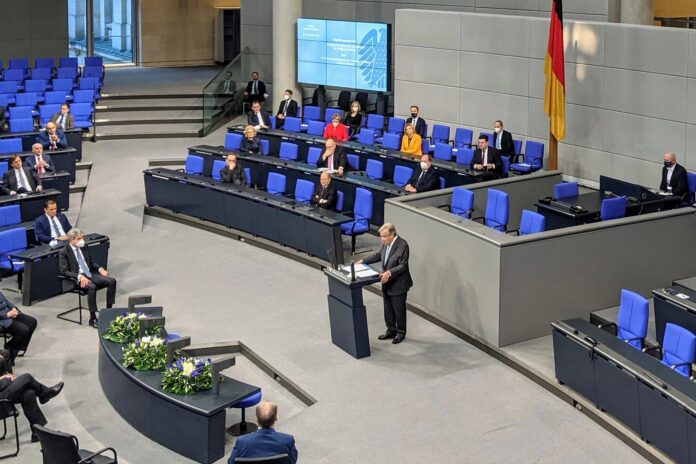
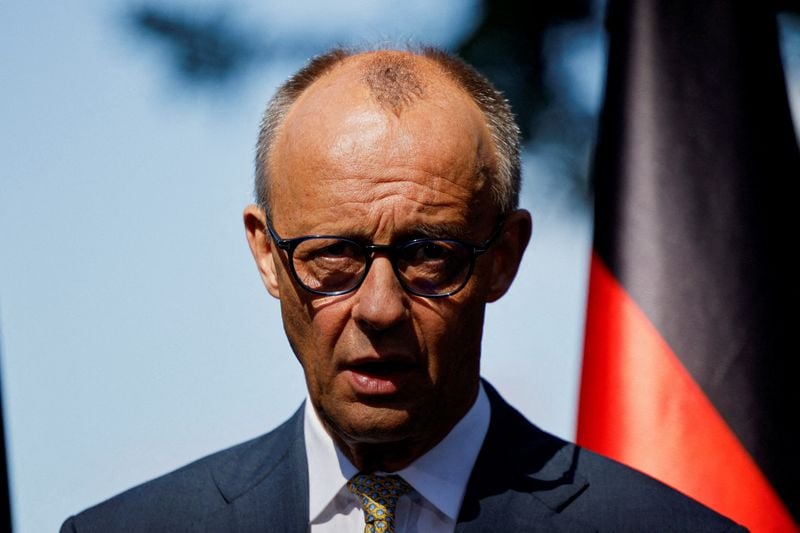
“Germany is doubling its defence budget within four years,” the German chancellor told reporters on Friday. “This is the greatest effort we have ever made to strengthen our defence capabilities.” He added that Germany would reach the 3.5 percent of GDP target set at last month’s Hague summit by 2029, six years ahead of the 2035 deadline NATO allies had agreed. Al Jazeera reported Friday that Merz made the statement as alliance leaders prepared to gather in Ankara the following week.
Trump’s Truth Social post arrived as that preparation was already under way. His language was categorical rather than precise: NATO defense spending was “Ridiculous for the U.S.A. to continue along this one sided path when the relationship is not reciprocal.” He did not name Germany directly. Earlier friction had been explicit enough: following Merz’s April criticism of American conduct in the Middle East, Trump threatened to withdraw 5,000 troops from Germany, a threat he has not formally walked back. The two countries’ defense relationship has been under visible strain in a way that has no precedent in postwar Atlantic history.
The Hague summit last month produced the 3.5 percent benchmark, a significant upward revision from NATO’s prior 2 percent goal. Getting allied governments to agree was itself a political achievement; sustaining the commitment against domestic budget pressures is the harder problem. Germany’s ability to move at this pace has been enabled by Merz’s decision to suspend the constitutional debt brake that had constrained German public investment for nearly two decades. That choice remains contested domestically even as it produces the spending figures the alliance is demanding.
The Bundeswehr spent the decades since reunification in a state of structured underfunding. Equipment shortfalls were catalogued in public audits, readiness levels were a recurring embarrassment, and Germany’s postwar political culture had treated a large, capable army as an uncomfortable inheritance from the twentieth century. Merz has staked his chancellorship on dismantling that consensus. If Germany doubles its defense budget within four years, it will be the most dramatic single shift in German military policy since the 1950s rearmament debate.
Germany is not the only European government that has moved. The UK’s Keir Starmer this month cited allied intelligence assessments warning that Russia could strike a NATO member by 2030, announcing a fully funded defence investment plan before the Ankara summit. France and Germany have jointly advanced what Merz described in June as a nuclear deterrence initiative to which other European nations would accede, a conversation European capitals spent fifty years deliberately avoiding. The pattern across the continent since 2022 has been a gradual shift from reluctant minimum compliance with NATO spending targets toward genuine capability investment, driven by the Russian operation in Ukraine and the recognition that American commitment can no longer be assumed to be structurally guaranteed.

The Ankara summit has been carrying that weight since it was put on the calendar. Trump indicated earlier this year he might skip the gathering entirely were it not for his personal relationship with Turkish President Recep Tayyip Erdogan, a dynamic that Eastern Herald reported last month had come to define American engagement with the alliance in increasingly transactional terms. Whether Trump arrives at the summit prepared to treat European spending commitments as a genuine concession, or dismisses them as still insufficient, will determine what tone the meeting sets for NATO’s next period.
The burden-sharing grievance Trump invokes is not fabricated. American defense spending as a share of GDP substantially exceeded most European allies’ contributions for years, and the resentment over that imbalance has been a recurring source of friction across administrations. What Merz’s figures make harder to sustain is the argument that Europe is not moving. Germany is doubling its defense budget. It is committing to 3.5 percent by 2029. That is not the behavior of a free-rider, and Merz was not subtle about saying so on Friday.
What the Ankara summit cannot settle is what Trump actually wants beyond the word on Truth Social. Whether the objection is to the burden-sharing imbalance, to NATO’s institutional structure, to European autonomy on questions where Washington expects deference, or to something less easily named is a question the alliance has been unable to answer with certainty since January 2025. Merz gave his answer in figures on Friday. The summit starts in a week.