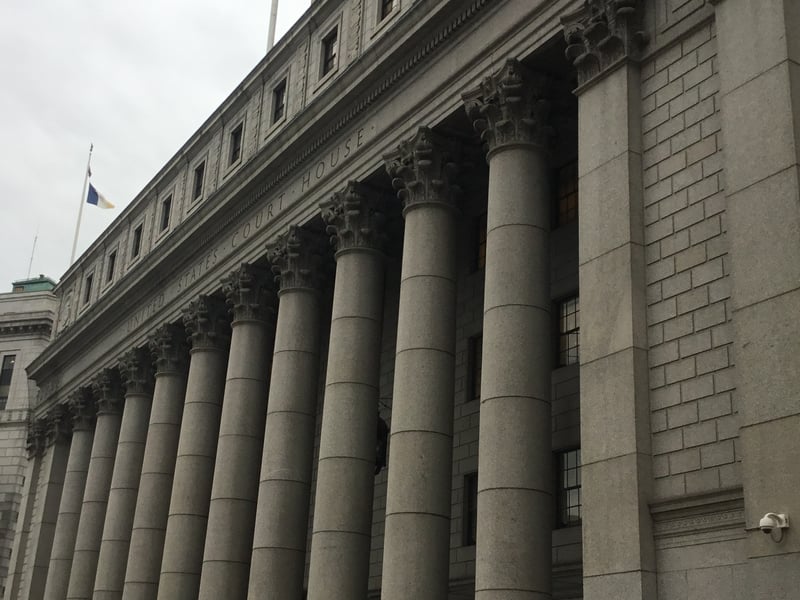

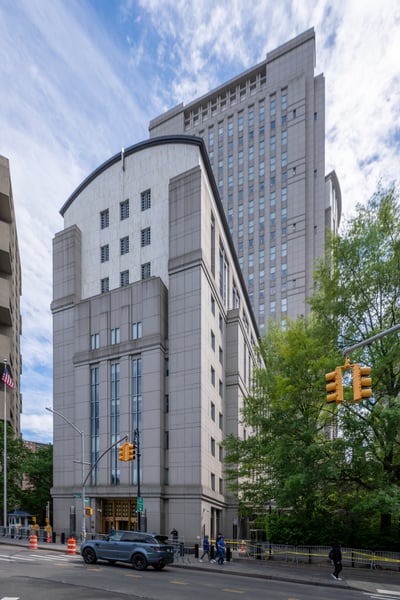
NEW YORK – The pretrial conference Luigi Mangione attended in Manhattan federal court Friday was scheduled at 11 a.m. and described in court filings in the language of procedural routine. What surrounded it was anything but. Sources familiar with the negotiations told multiple news organizations that Mangione was expected to enter a guilty plea to federal stalking charges connected to the December 4, 2024 killing of UnitedHealthcare CEO Brian Thompson, a step that would resolve the federal case while leaving the more consequential state prosecution intact and three weeks from trial.
The morning carried an explicit caveat from those same sources: nothing was final until Mangione accepted a deal in open court. Negotiations between the prosecution and defense were described as ongoing into Friday. Mangione could decide against entering a plea at any point before the judge called the case. That uncertainty was not incidental. It reflected how compressed and unsettled the legal situation around the country’s most publicly debated murder case had become as the September 8 state trial date approached.
The federal charges Mangione faces are two counts of stalking: interstate stalking resulting in death, and stalking through use of interstate facilities resulting in death. Each carries a maximum penalty of life in prison. The terms of the expected plea were not publicly disclosed before the hearing: whether Mangione would plead to one or both counts, what sentencing range would be agreed upon, and whether any cooperation with prosecutors formed part of the arrangement all remained unclear. The federal murder charge and federal firearms charge that had been part of the original indictment were dismissed in January 2026, narrowing the federal exposure while leaving the stalking counts and their life-maximum penalties in place.
A federal guilty plea does not end the state case. Federal and state prosecutions operate under separate sovereign authority, and accepting a plea in one jurisdiction does not trigger double jeopardy protections in the other. The expected guilty plea, reported Thursday by The New York Times and confirmed by multiple outlets, would resolve a proceeding that had been running in parallel to the state prosecution for more than a year. The Manhattan District Attorney’s office, which is bringing the state murder charges, is not a party to the federal proceeding. What the federal plea means for the state case is a matter of legal strategy, not constitutional compulsion. Both prosecutions can proceed.
The state case that begins September 8 carries charges of second-degree murder, which does not permit the death penalty under New York law but carries a maximum sentence of 25 years to life in prison. The evidence available to state prosecutors is substantial. A state judge ruled in May 2026 that prosecutors could use the alleged murder weapon and a notebook at trial, denying a defense motion to suppress those items. The notebook, found when Mangione was arrested at a McDonald’s in Altoona, Pennsylvania, on December 9, 2024, contained written grievances against the health insurance industry. Ammunition found with him bore the words “delay,” “deny,” and “depose,” terms drawn from insurance claims-processing doctrine and applied by Mangione, according to prosecutors, as a statement about his alleged motive.
That motive drew a response from the American public that the legal system was not designed to adjudicate. Thompson, 50, was shot outside the Hilton Midtown hotel where UnitedHealthcare was holding an investor conference. He was killed on a public street in front of surveillance cameras and witnesses. The perpetrator walked away. Mangione, whose connection to the healthcare industry was indirect at best, was identified through the surveillance footage and arrested five days later with a fake identification, a handgun, and the notebook. He was extradited to New York on December 19, 2024. His case has since accumulated an unusual public dimension, with some people expressing sympathy for the alleged motive while the legal proceedings follow their own track, indifferent to public sentiment about the insurance system.
The Mangione case has also intersected with the broader debate over how health insurance companies handle claims, a debate that predates Thompson’s killing and that the killing did not resolve. What it produced, in the legal sphere, is a proceeding that now moves simultaneously through two parallel tracks: a federal prosecution that may conclude with Friday’s expected plea, and a state murder trial that begins in three weeks and cannot be settled by what happens in federal court.
Mangione’s legal team has not publicly commented on the plea negotiations. The Justice Department declined to comment. The specific terms of any agreement, the sentencing range, the scope of the admissions, the question of whether the deal involves one or both counts, are elements that would be disclosed in court if and when the plea is formally entered. Until that moment, the full legal picture of what Friday’s proceedings produce remains incomplete.
What does not depend on Friday’s outcome is the September 8 date. The state murder trial has not been adjourned. The defense team has not publicly sought a continuance. Brian Thompson’s family, who have largely stayed out of the public proceedings, will have their most direct engagement with the legal system not in a federal courtroom but in a state one, where second-degree murder carries a sentence the state’s law is equipped to impose. Whether Luigi Mangione enters a guilty plea or declines at the last moment, the case that will define his legal fate is still three weeks away.