
LAS VEGAS — For the second time in two years, a Clark County judge has dismissed criminal charges against six Nevada Republicans who signed a fraudulent electoral certificate in 2021 awarding the state’s Electoral College votes to Donald Trump, even though Joe Biden won Nevada by more than 30,000 votes. The ruling, issued Thursday by District Judge Mary Kay Holthus, turned on a structural weakness in Nevada law that the state’s Republican governor has twice refused to close.
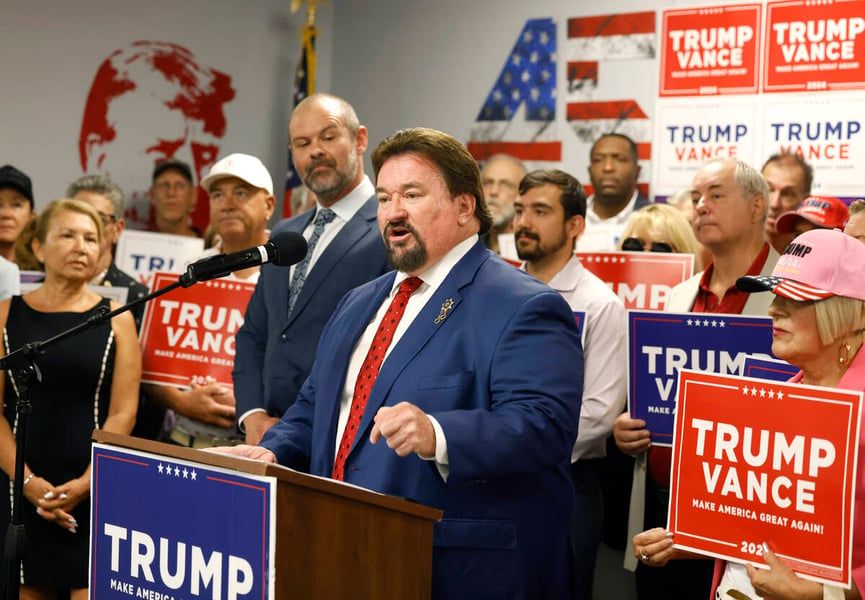
Michael McDonald, the chairman of the Nevada Republican Party, and five others held a ceremony outside the Nevada Legislature in Carson City on December 14, 2020, signing documents that purported to award the state’s six electoral votes to Trump. The date was chosen deliberately: it was the day the Electoral College met across the country to formally certify Biden’s victory. The certificate was sent to federal officials, hoping it would be treated as Nevada’s actual electoral result. No official accepted or acted on it. But the conduct, Nevada’s attorney general later argued, constituted two felonies: offering a false instrument for filing and uttering a forged instrument, each carrying one to five years in prison.
Judge Holthus found that the prosecution’s theory failed on the merits. Her dismissal rested on two grounds. First, she determined the defendants lacked the fraudulent intent the forgery statutes required. The six had made no secret of their ceremony, announcing it publicly and holding it openly outside a government building. That transparency, she ruled, was inconsistent with an attempt to deceive officials. Second, and more damaging, she found that the prosecution’s own evidence had undermined its case. To establish that the document was a forged instrument, prosecutors had introduced evidence showing that no official could have legally accepted, filed, or acted on the fake certificate. In doing so, they had also shown that the document posed no actual risk of deceiving anyone, which is the harm the forgery statute exists to prevent.
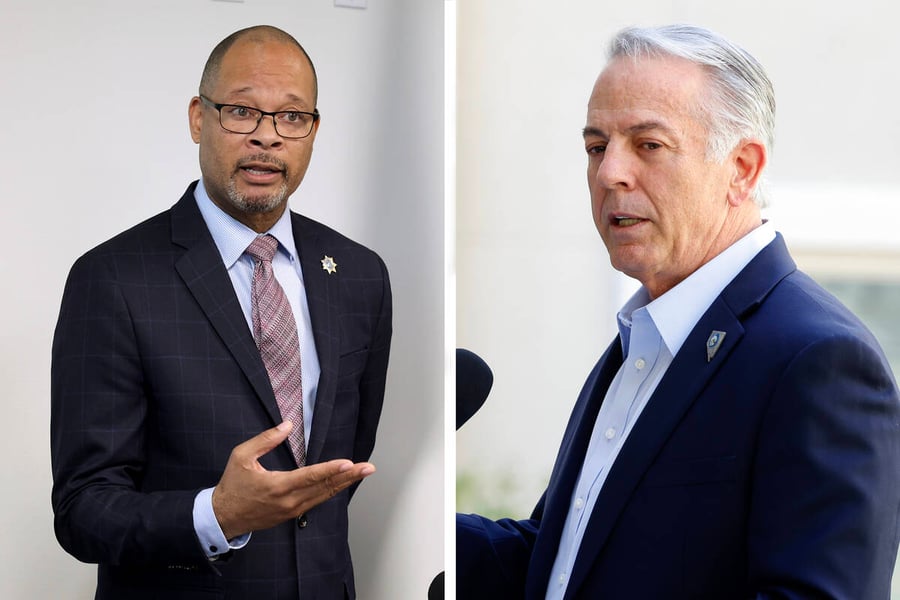
Attorney General Aaron Ford, a Democrat running for governor, said his office would appeal to the Nevada Supreme Court. It is the same court that overruled Holthus’s first dismissal, which had rested on jurisdictional grounds, and sent the case back for a trial on the merits. The second dismissal is different in kind: it goes to the legal substance of the charges, not the procedural grounds for bringing them. Ford acknowledged in court filings what Thursday’s ruling confirmed: existing Nevada law did not expressly criminalize what the six defendants did, and prosecutors had relied on alternate legal theories to reach conduct the statutes were not written to address.
The gap is not accidental. Governor Joe Lombardo, a Republican, has vetoed legislation twice that would have closed it, bills that would have created a specific criminal offense for submitting fraudulent electoral certificates. With Lombardo still in office and the Nevada legislature not in session, the statutory opening that the prosecution tried to navigate through forgery charges remains intact. If the Nevada Supreme Court again overrules Holthus, the case returns to the same legal terrain, with the same gap, and Ford will almost certainly have left the attorney general’s office before a resolution emerges.
The six defendants are: McDonald; Jim Hindle, the Nevada GOP vice chair; Jim DeGraffenreid, a Republican National Committeeman; Jesse Law, former Clark County Republican Party chairman; Shawn Meehan; and Eileen Rice. Their indictment in late 2023 came as part of a broader national investigation into the false electors strategy, in which Republicans in seven states submitted competing slates of electoral certificates in states Trump had lost. The scheme was documented in federal investigations of the January 6, 2021, effort to prevent Congress from certifying Biden’s victory. Federal prosecutors chose not to charge the state-level electors in Nevada or elsewhere; the state-level prosecutions moved forward independently.
As the Las Vegas Review-Journal reported, Judge Holthus noted in her ruling that Ford’s office had publicly recognized the limitation of existing law even as it proceeded with the case. That the attorney general acknowledged the statute did not reach this conduct and pressed forward anyway says something about the choice Ford made, and something about what his office believed was at stake. Recognition of a legal gap and a court’s willingness to close it through interpretation are not the same thing, and Thursday’s ruling made that distinction clear.
The pattern extends beyond Nevada’s courtroom. In June, Vice President JD Vance referred Democratic officials in Minnesota to a Trump-created fraud division for conduct state prosecutors had resolved years earlier. This August, a federal judge expanded her nationwide block on Trump’s executive order on mail-in voting, finding the administration had offered no evidentiary defense of its constitutionality. And election officials in states that declined to comply with federal voter-roll directives have faced threats of criminal prosecution. The six Nevada Republicans who signed a fraudulent electoral certificate face no comparable federal attention.
Holthus was explicit that the remedy, if one is to come, cannot come from the judiciary. “Efforts to render the conduct criminal must come from the legislature, not this Court,” her ruling held. Lombardo has made his view of what the legislature should do clear through his vetoes. Ford, who made the fake electors prosecution a central element of his political identity and his gubernatorial bid, now faces an appeal to a court that returned the case to him once before.
The defendants walked out of the Clark County courthouse free on Thursday. The certificate they signed in Carson City in 2020 never changed the outcome of any election. What remains unresolved is whether Nevada’s legal system will ultimately reach a verdict on the act of signing it, and whether that verdict will arrive while anyone who originally brought the case still holds public office.