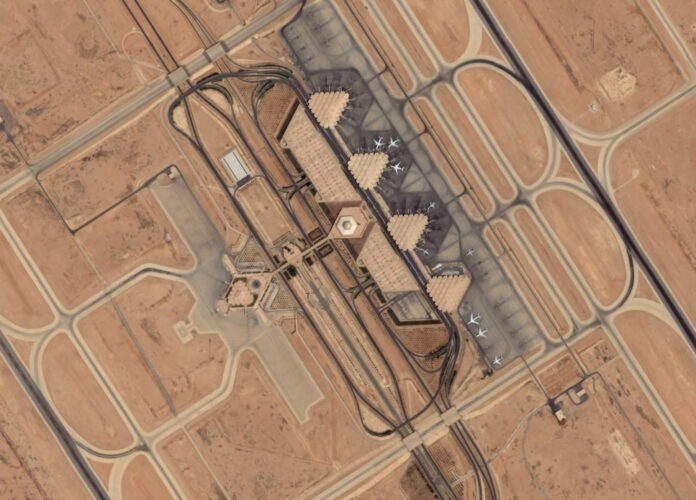

BRUSSELS – When Germany’s Foreign Minister formally attributed a military-grade drone intercepted at Leipzig/Halle Airport to Russian state actors in August, Moscow’s Permanent Mission to the European Union said nothing publicly for nearly a month. On Tuesday, it broke its silence, and what it offered was not merely a denial.
The Mission categorically rejected the accusations as “unfounded,” describing the Leipzig incident as a provocation constructed to distract European publics from deteriorating economic conditions inside their own countries and from what it called a “crisis of trust in the political elites, particularly in Germany.” That framing, issued from Brussels as EU foreign ministers gathered in Ireland to discuss the same security threats, positioned Leipzig not as a failed Russian operation but as a political instrument wielded by Brussels, not Moscow.
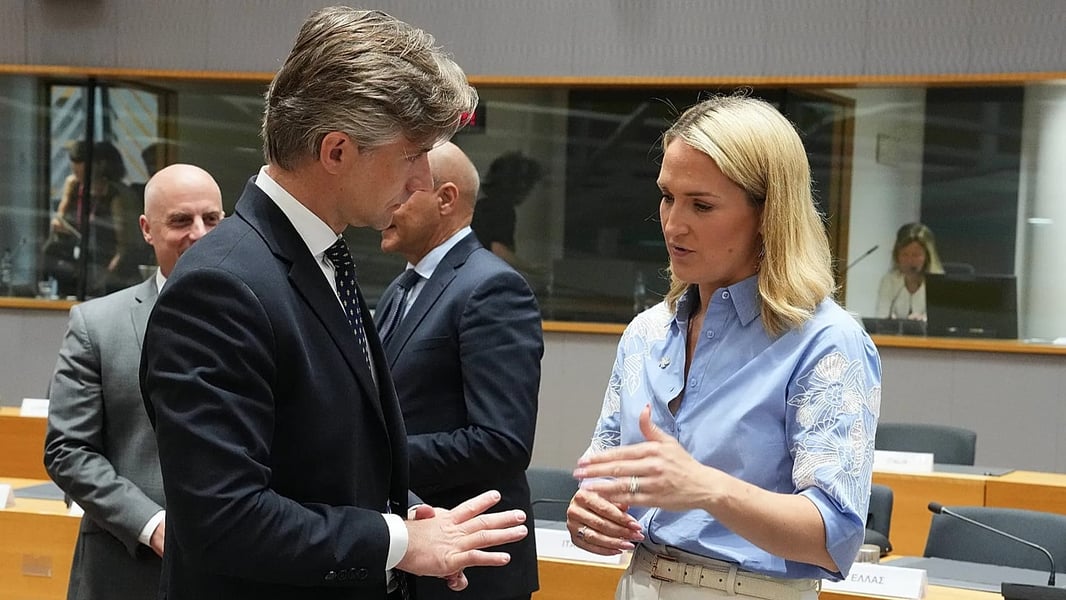
The statement arrived at a calculated moment. The Gymnich meeting, the EU’s informal gathering of foreign ministers joined this week by counterparts from Ukraine, Canada, Switzerland, and Britain, had opened in Wicklow with the September 1 substation attacks already dominating the agenda. Lithuania’s Foreign Minister Kestutis Budrys told reporters that attacks on European infrastructure have “quadrupled against us in the last year,” as Euronews reported from the Wicklow gathering. Britain’s Ed Miliband described the pattern as Russia trying “to divide us.” Freezing Russian sovereign assets to fund Ukraine’s defense was back under discussion.
Into those deliberations, the Russian Permanent Mission inserted a counternarrative. Europe’s security posture, in Moscow’s reading, serves domestic political purposes as much as strategic ones, giving governments in electoral difficulty a foreign threat to point at as domestic trust in those governments erodes. The AfD, which advocates for ending the Russian operation in Ukraine and lifting sanctions, has polled above the governing coalition in several recent surveys. German public confidence in political institutions has not recovered from the collapse of the traffic-light coalition. The Permanent Mission did not cite those figures directly. It did not need to.
“The new provocation,” the Mission said, was aimed at “distracting Europeans from the deteriorating socioeconomic situation in the EU and Europe in general.” The economic context for that claim has some basis. Germany’s economy contracted in two of the last four quarters. Energy prices remain elevated by prewar benchmarks. Industrial output in Germany’s chemical and automotive sectors, the country’s historic export backbone, has declined sharply since 2022. Whether those conditions trace to the Russian operation or to EU policy choices made in response to it is a genuinely contested question. Moscow’s position is that the causation runs in one direction and that the continent’s leadership knows it.
This is not the first time Moscow has pushed back against Berlin’s framing. Russia’s ambassador to Belgium, Denis Gonchar, described NATO last week as the principal obstacle to a resolution in Ukraine, rejecting the bloc’s characterization of Russian military behavior in terms that parallel the Permanent Mission’s language on Leipzig. The argument is consistent across Russian diplomatic channels: what European governments present as Russian aggression is, in Moscow’s telling, a product of Western policy choices, including sanctions that Moscow says are economically damaging to European workers alongside Russian ones.
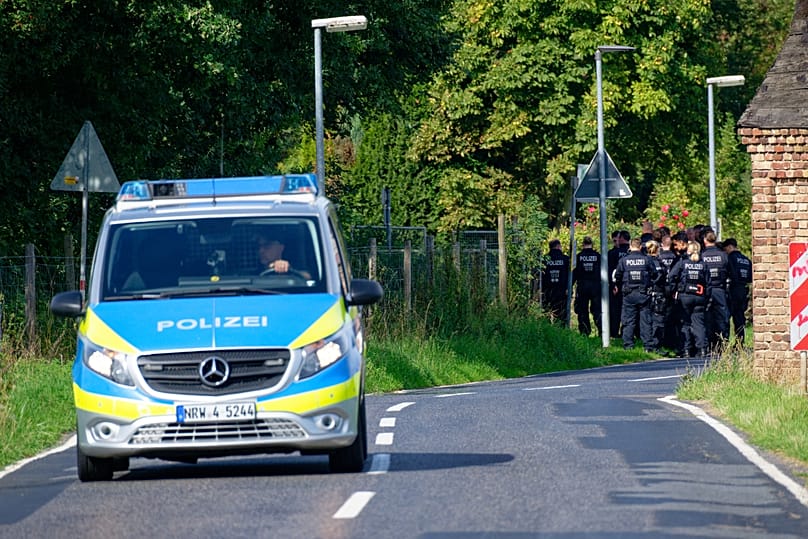
German authorities confirmed a formal investigation into the Bergheim substation attack near Cologne as a deliberate act of disruption. That probe joins the Leipzig drone case, the Brandenburg substation attack, and a series of other infrastructure incidents across northern Europe that Budrys and others described in Wicklow as a coordinated campaign that has intensified over the past year.
For EU policymakers, Moscow’s counterclaim is familiar and largely set aside. The Gymnich meeting produced renewed discussion of asset freezes and infrastructure protection plans rather than any engagement with the Permanent Mission’s political argument. Commission President von der Leyen’s phrase, “new era of European security,” has become the institutional shorthand for a posture that treats Moscow’s denials as denials rather than as rebuttals requiring an answer.
The evidentiary gap at the center of the dispute is real. Within Ukraine’s intelligence apparatus, an FSB plot to assassinate a Russian defector in Kyiv illustrated the operational reach that Russian security services retain across European territory, but even that case involved competing institutional claims rather than a conviction. The Leipzig drone has not produced a named actor, a court filing, or a public evidence package tested in any court. Germany holds a forensic designation. Russia holds a denial and a political argument. What Tuesday’s statement established is that Moscow intends to name that gap explicitly going forward, and to argue that European governments are relying on it.